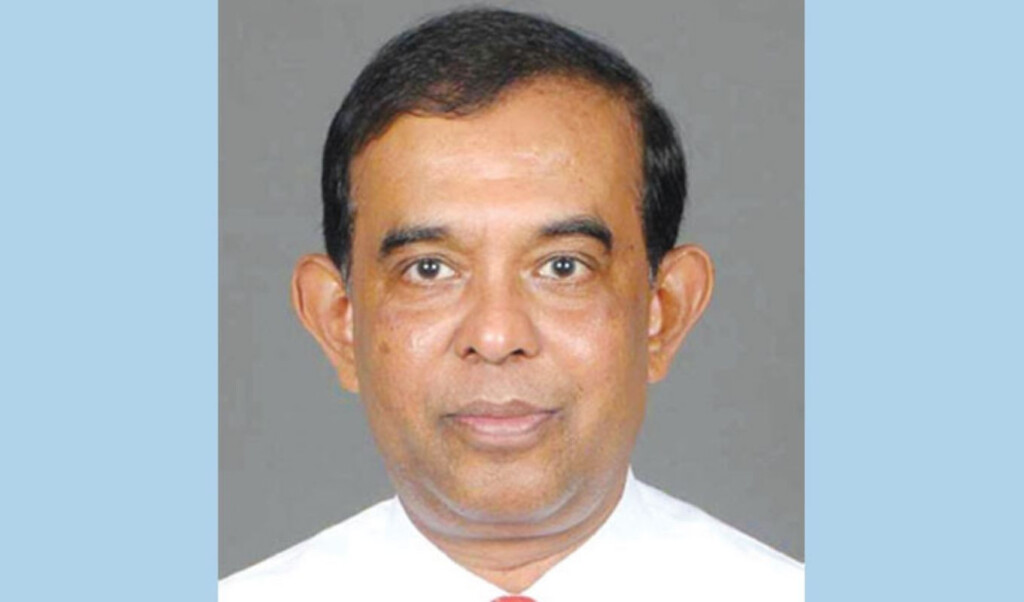
Dhaka’s commuting system has become significantly easier and faster thanks to the metro rail. The journey from Motijheel to Uttara, which used to take 3–4 hours, now takes only 31 minutes. The metro rail has thus become a major convenience for city residents. However, this progress is now facing challenges under Faruk Ahmed, Managing Director (MD) of Dhaka Mass Transit Company Limited (DMTCL). According to sources, his lack of transparency and managerial efficiency has put ongoing metro rail projects in uncertainty.
Construction of underground and elevated metro lines has encountered various complications, and work on several projects has come to a halt. Since MD Faruk Ahmed’s appointment, sources believe he has prioritized foreign interests over the development of Bangladesh’s metro rail system.
Reports indicate that he is focusing on handing over metro rail responsibilities to Indian companies and maintaining closer ties with India while neglecting longstanding development partners like Japan. After assuming office on August 5, he made major decisions based on advice from a few close associates rather than consulting senior officials, creating discontent and instability among staff.
Several officials stated that Faruk Ahmed previously worked in contracting and development businesses abroad. He has experience as a planner in Sydney Metro (2 years), Hong Kong (2 years), Saudi Arabia (1 year), and India (2 years). Since joining DMTCL, he has displayed uncooperative behavior and disregard for critical policy matters, often clashing with colleagues and consultants.
Although the metro master plan for Dhaka is slated for completion by 2030, projects are not progressing on schedule. Construction of two new lines is currently stagnant. According to the latest progress report released in September, only four of the twelve packages for MRT Line-1 show minor progress, while the rest have seen no advancement over the past six months. Progress on MRT Line-5 (North) is even slower.
In this context, the Japanese Embassy has urged the government to expedite construction. The projects rely on allocated loans and Japanese expert assistance, making timely implementation crucial. Once operational, MRT Line-1 will carry 800,000 passengers daily. MRT Line-5 (North), a 20 km line from Hemayetpur to Bhatara, is also scheduled for completion by 2030, backed by loans of $100 million and $54 million from JICA for Lines 5 and 1, respectively.
Chief Advisor Professor Dr. Muhammad Yunus has previously highlighted that Japan is a key strategic partner for Bangladesh, serving as a major bilateral development ally and contributing significantly to the country’s social and economic progress over many years.
In summary, while the metro rail is a blessing for Dhaka’s residents, current management and lack of transparency pose significant risks to the projects. Without prompt and effective implementation, achieving the 2030 targets will be challenging.