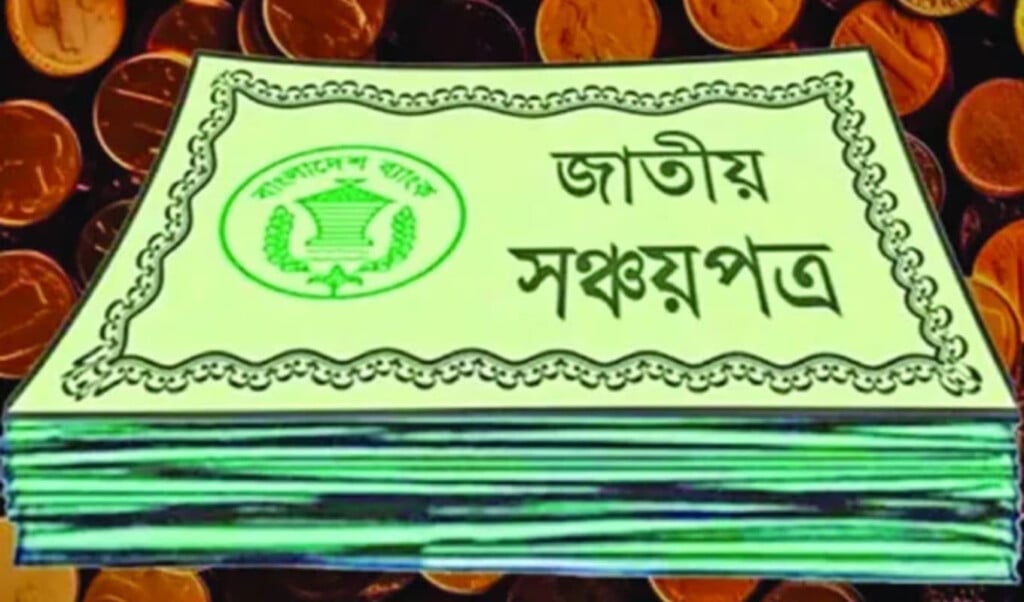
The government is considering a further reduction in profit rates on national savings certificates, with the revised rates expected to take effect from 1 January, pending approval from the Finance Adviser. The proposal, put forward by the Finance Division of the Ministry of Finance, reflects the authorities’ ongoing efforts to balance public borrowing costs with broader monetary and credit policy objectives.
Officials at the Finance Division indicated that once the proposal receives formal clearance, the Internal Resources Division (IRD) will issue a circular announcing the new rates. At present, the highest profit rate on savings certificates stands at 11.98 per cent, while the lowest is 9.72 per cent. Under the new proposal, average returns would be reduced by around 0.5 percentage points.
When asked about the proposal, Finance Adviser Salehuddin Ahmed said on Monday night that it had not yet reached him formally. However, he acknowledged that bankers have been pressing for a modest cut in savings certificate returns in order to support private-sector credit growth. “There is a demand from the banking sector to lower these rates somewhat. We will take a decision after considering the overall economic interest,” he said.
According to officials, the revised structure would continue the policy of offering comparatively higher returns on smaller investments, while larger investments would attract lower profit rates. Investments of up to Tk 750,000 would earn higher returns, whereas amounts above this threshold would be subject to reduced rates. This tiered approach is intended to protect small savers while discouraging excessive reliance on high-cost government borrowing.
On 30 June, as part of its income and debt management strategy, the government decided to review savings certificate profit rates on a regular basis. At that time, average rates were trimmed slightly, with a commitment to reassess them after six months. That six-month period ends on 31 December, paving the way for the proposed revision.
IRD Secretary Md Abdur Rahman Khan said it was too early to say whether rates would ultimately rise or fall. “The entire matter is now being examined by the Finance Division. Once their recommendation comes, we will issue the necessary circular,” he said.
Among the various instruments under the National Savings Directorate, the Family Savings Certificate remains the most popular. Current profit rates across major savings instruments are outlined below:
| Instrument | Investment up to Tk 750,000 | Above Tk 750,000 |
|---|---|---|
| Family Savings Certificate (5 years) | 11.93% | 11.80% |
| Pensioner Savings Certificate | 11.98% | 11.80% |
| Bangladesh Savings Certificate (5 years) | 11.83% | 11.80% |
| Quarterly Profit-based Certificate | 11.82% | 11.77% |
| Post Office Time Deposit (3 years) | 11.82% | 11.77% |
These rates were higher than 12 per cent before 1 July, underscoring the gradual downward trend. However, officials confirmed that there will be no change in profit rates for Wage Earner Development Bonds, US Dollar Premium Bonds, US Dollar Investment Bonds, or ordinary Post Office Savings Bank accounts.
The banking sector has welcomed the prospect of lower savings certificate returns. Abdul Hai Sarker, chairman of the Bangladesh Association of Banks (BAB), said that higher savings certificate yields naturally divert deposits into government instruments. “If the rates are reduced slightly, savings will return to banks, which will help boost private-sector lending,” he noted.
Data from the National Savings Directorate show that during the first four months of the 2025–26 fiscal year (July–October), the government borrowed a net Tk 2,369 crore through savings certificate sales. By contrast, net borrowing in 2024–25 was negative, at nearly Tk 6,000 crore. As of the end of October, the government’s outstanding liabilities from savings certificates stood at Tk 341,000 crore, highlighting their continued significance in public debt management.