Bangladesh’s journalism community is set to convene a nationwide convention in mid-January in response to a series of violent attacks on leading media organisations and senior editors, according to the president of the Newspaper Owners’ Association of Bangladesh (NOAB), A K Azad. The announcement comes amid growing concern that recent incidents represent a grave assault on press freedom and democratic values.
Speaking after a joint protest meeting, A K Azad said the convention would bring together journalists from across the country and serve as a platform to announce further programmes of action. The meeting was organised to protest against attacks, vandalism and arson at the offices of Prothom Alo and The Daily Star, as well as the harassment of Nurul Kabir, editor of New Age and president of the Editors’ Council.
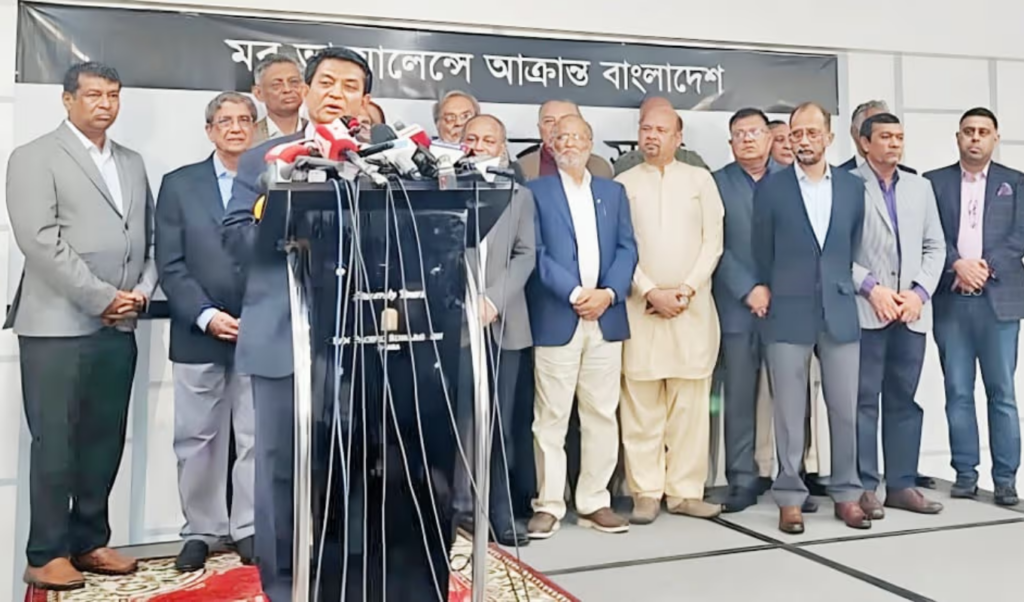
The protest event, titled “Bangladesh Under Mob Violence”, was jointly organised on Monday at the Pan Pacific Sonargaon Hotel in Dhaka by the Editors’ Council and NOAB. Leaders from various political parties, representatives of professional bodies, business organisations, journalists’ associations and members of civil society attended to express solidarity. Following the meeting, participants formed a human chain on the road in front of the hotel, underscoring their collective demand for justice and accountability.
Thanking attendees for their support, A K Azad said a common message had emerged from the gathering: unity is essential in resisting intimidation. “Our voices cannot be silenced,” he declared. “Based on your opinions and support, we will organise a grand convention of journalists from across Bangladesh in mid-January. From there, we will announce our next course of action.”
He further stated that protests would continue until those responsible for setting fire to Prothom Alo, The Daily Star, Chhayanaut and Udichi are brought to justice, and until journalists can freely exercise their right to freedom of expression.
Referring specifically to the attacks on The Daily Star, A K Azad revealed that its editor, Mahfuz Anam, had anticipated the risk of an attack after the assault on Prothom Alo. He had reportedly requested protection from various government agencies and individuals, but no effective response was forthcoming. “When assistance finally arrived, it was after the damage had already been done,” Azad said.
Political leaders echoed these concerns. BNP Secretary General Mirza Fakhrul Islam Alamgir remarked that the attacks were not limited to individual newspapers but constituted an attack on democracy itself. He described the incidents as a “black day for the media”.
Last Thursday night, Prothom Alo—the country’s largest daily—was targeted in what many have described as a planned and organised attack. Its offices were vandalised, set ablaze and looted, leaving the premises largely destroyed. On the same night, similar acts of arson and looting took place at The Daily Star, while Nurul Kabir was publicly harassed.
A summary of the key incidents is outlined below:
| Target | Nature of Attack | Outcome |
|---|---|---|
| Prothom Alo | Vandalism, arson, looting | Office severely damaged |
| The Daily Star | Vandalism, arson, looting | Property damage |
| Nurul Kabir (New Age) | Harassment | Condemned nationwide |
Observers and media rights advocates warn that unless swift and credible action is taken, such attacks risk creating a climate of fear that undermines independent journalism. The planned journalists’ convention is therefore being seen as a critical moment for collective resistance and the defence of press freedom in Bangladesh.