Wednesday, 5th August 2026

Khabor Wala Desk
Published: 30th December 2025, 3:12 PM
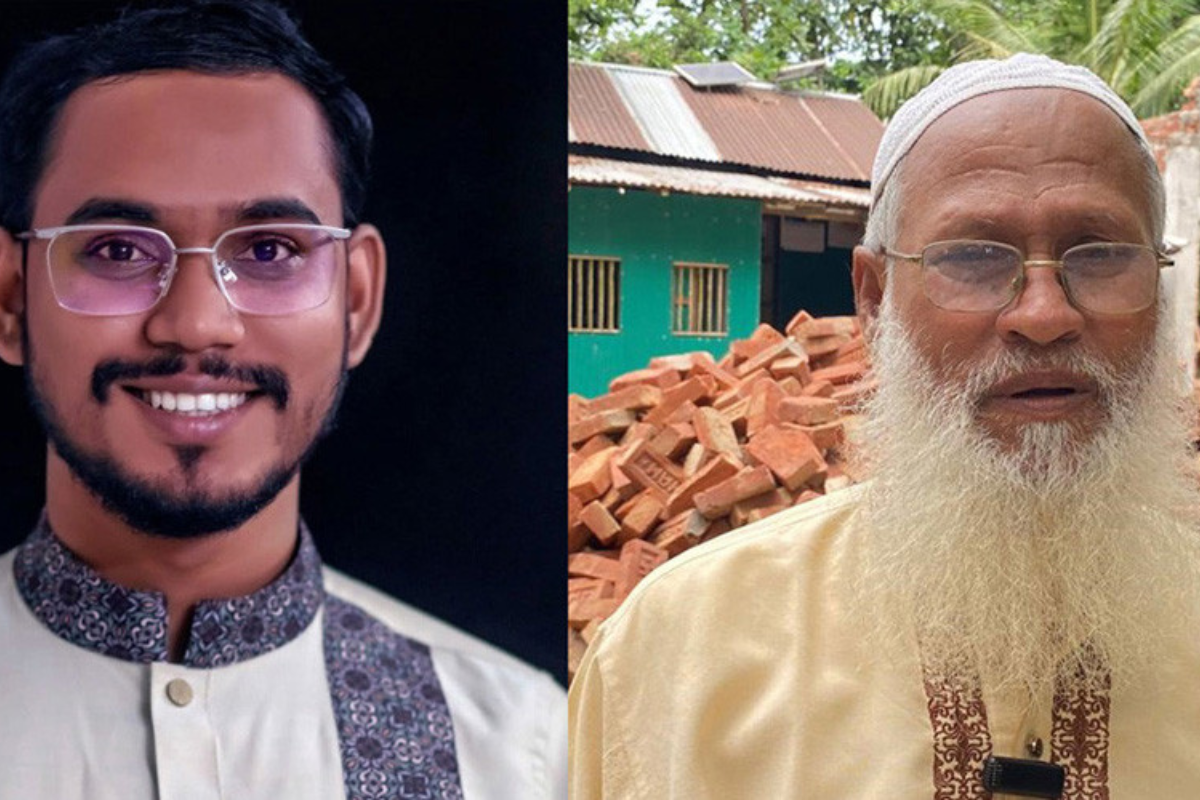
The political landscape of Noakhali-6 (Hatiya) has taken an unusual and intriguing turn as father and son prepare to contest the same parliamentary seat under different party banners. Abdul Hannan Masud, Senior Joint Chief Coordinator of the National Citizen Party (NCP), and his father, Amirul Islam Mohammad Abdul Malek, have both submitted nomination papers to stand as candidates in the upcoming election from the same constituency.
The nomination papers were formally submitted on Monday evening, 29 December, to the district’s Returning Officer and District Commissioner, Muhammad Shafiqul Islam. The simultaneous appearance of the two candidates—bound by family yet divided by political affiliation—has instantly captured public attention and sparked widespread discussion across the Hatiya region.
Abdul Hannan Masud is contesting the election with the Shapla Koli (Water Lily Bud) symbol under the banner of the National Citizen Party. His father, Amirul Islam Mohammad Abdul Malek, has entered the race as a candidate of the Bangladesh Supreme Party (BSP), carrying the Ektara symbol. While both symbols are officially recognised, their deeper significance lies in what many see as a symbolic clash between generational visions, political ideologies, and leadership styles.
| Name | Political Party | Electoral Symbol | Constituency |
|---|---|---|---|
| Abdul Hannan Masud | National Citizen Party (NCP) | Shapla Koli | Noakhali-6 (Hatiya) |
| Amirul Islam Mohammad Abdul Malek | Bangladesh Supreme Party (BSP) | Ektara | Noakhali-6 (Hatiya) |
The decision of a father and son to contest the same seat has stirred both curiosity and debate among local residents. Some interpret the situation as a symbolic confrontation between youth and experience, while others regard it as a strategic demonstration of political strength within a single family. Political observers suggest that such an arrangement could influence voting patterns, potentially dividing or consolidating support in unexpected ways.
Speaking on the matter, Abdul Hannan Masud emphasised his background in anti-authoritarian movements in Bangladesh, noting that activism, rather than electoral politics, has shaped much of his political journey. He acknowledged that participating in an election is a new experience for him, adding that he has never previously had the opportunity to cast a vote in either national or local elections since becoming eligible.
Among the 13 other candidates contesting the Noakhali-6 seat, Masud described his father as a seasoned and respected figure. He stated that he personally encouraged his father to submit nomination papers, viewing the contest not as a rivalry but as an opportunity for mutual learning. “The electoral field offers valuable lessons,” he remarked, adding that he welcomes his father’s candidacy with sincerity and respect.
As campaigning unfolds, the father–son contest in Noakhali-6 promises to remain one of the most talked-about stories of this election cycle—an uncommon blend of personal ties and political divergence that continues to captivate both voters and analysts alike.
Comments