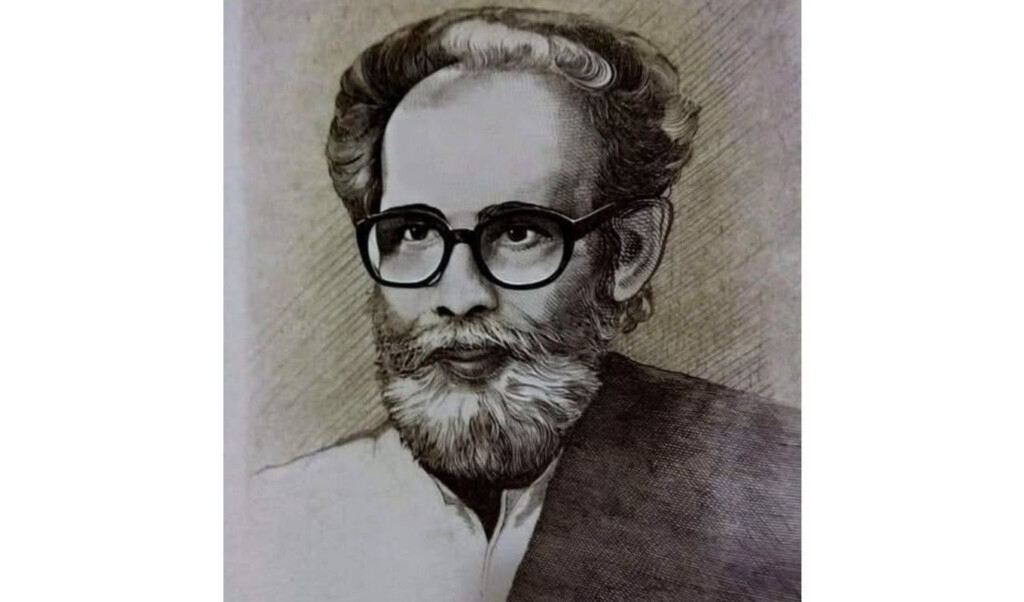
In the history of Bengali prose literature, Shawkat Osman stands out as a singular and luminous figure. He was a writer whose pen seamlessly merged the beauty of literature with the language of social protest. His writings against injustice, exploitation, and hypocrisy were fearless and incisive, while he maintained an unwavering commitment to humanity, free thought, and secularism.
Shawkat Osman was born on 2 January 1917 in Sabal Singhpur, a village in Hooghly district of what was then undivided India’s West Bengal. From his childhood, his deep passion for literature was evident in both intellect and temperament. After completing his early education at the historic Alia Madrasa in Kolkata, he graduated in Economics from the University of Calcutta and later obtained a Master’s degree (MA) in Bengali. This multifaceted education greatly enriched the breadth and depth of his thinking and writing.
Although Shawkat Osman is chiefly celebrated as a prose writer, the scope of his work was extensive. He produced novels, short stories, plays, essays, and political articles, leaving a profound mark in every field. Through satire and allegory, he masterfully revealed the ruthless faces of power, tyranny, and religious hypocrisy hidden within society and the state. His timeless novel Kritodasher Hashi remains a singularly memorable political satire in Bengali literature.
He was an uncompromising voice in support of the spirit of the Liberation War and the vision of a secular Bangladesh. His writings against religious fanaticism and military dictatorship remain as relevant and inspiring today as they were in his lifetime. Recurrent throughout his work are the cries of the oppressed and the aspirations of the free.
Professionally, Shawkat Osman was a devoted educator. He began teaching at Chittagong College of Commerce in 1947 and subsequently served as a lecturer at Dhaka College from 1958 to 1972. As a teacher, he was revered, and as a mentor, he is remembered fondly by students as a guiding and nurturing figure.
In recognition of his extraordinary contributions to literature and culture, he received numerous honours, including the Bangla Academy Award, the Adamjee Literary Award, the President’s Award from the Government of Pakistan, the Ekushey Padak, and the Independence Day Award. With over a hundred published works to his name, he left an enduring testament to his creativity and dedication.
On 14 May 1998, this great prose writer passed away. Yet he continues to live on through his courageous words, sharp satire, and writings suffused with the dream of human liberation.