The illicit stone extraction syndicates of Sylhet have once again intensified their operations, defying local authorities and threatening the environmental stability of the region. While several quarries in the district have seen a reduction in theft, the Sarpin Tila (Shah Arefin Tila) in Companiganj has become the epicentre of a “looting festival”. Despite rigorous daily interventions by the police and the upazila administration, the sheer scale of the extraction suggests that the syndicate has grown more resilient than the state’s enforcement mechanisms.
The Return of the ‘Boma’ Machine
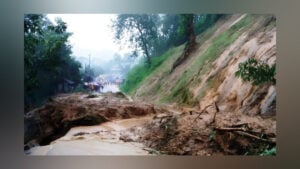
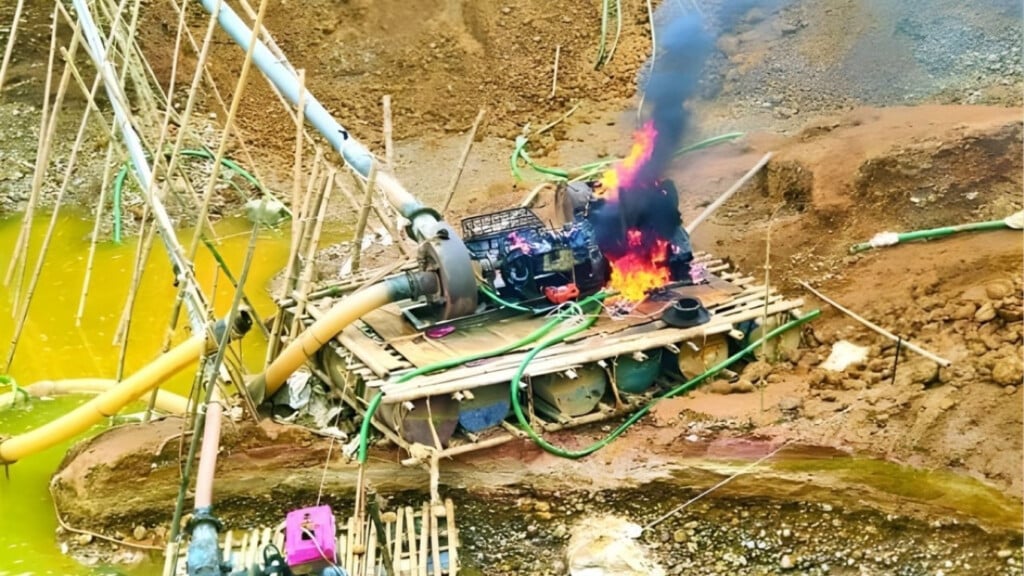
The current crisis centres on the use of over a hundred high-powered illegal suction dredgers, locally known as “Boma machines”. These machines are being deployed to excavate stones from depths of 50 to 60 feet, effectively hollowing out the hills. Sarpin Tila, which once stood at a majestic height of 100 to 150 feet, has been decimated by this “stone-eating” cartel, transformed into a series of jagged, water-filled craters resembling artificial ponds.
The syndicate operates with military-like precision: extraction occurs in broad daylight under the cover of local influence, while the transport of the looted minerals takes place under the veil of darkness. Using tractors, the stones are moved at night to various stone-crushing plants in the Volaganj and Parua areas, where they are processed and sold into the commercial market.
Political Patronage and Administrative Challenges
Investigations suggest that the syndicate is composed of approximately fifty influential individuals from Jaliarpahar, Chikadahar, Volaganj, and Parua. Crucially, this illegal network transcends political lines, involving high-ranking figures from both the Awami League and the Bangladesh Nationalist Party (BNP).
Last year, the appointment of Md. Sarwar Alam—a former RAB magistrate known for his uncompromising stance—as the Deputy Commissioner (DC) of Sylhet briefly halted the carnage. His intervention saw the recovery and restoration of stones at the famous Sada Pathar site. However, within months, the cartels re-emerged. Upon a recent inspection in November, the DC was reportedly horrified by the “scars of looting” left on the landscape.
A Cycle of Arrests and Evasion
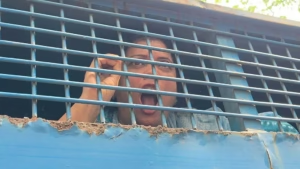
Although the Companiganj police and local administration conduct near-daily raids, the impact remains superficial. The individuals detained are almost exclusively low-wage labourers, while the masterminds—the true “stone-eating” kingpins—remain untouched. Furthermore, the “Boma” machines destroyed during raids are often repaired and redeployed within days.
Summary of Enforcement Actions (Last 15 Days)
| Metric | Recorded Data |
|---|---|
| Number of Detentions | 50+ labourers and operators |
| Named Kingpins in Lawsuits | 47 individuals |
| Primary Extraction Sites | Sarpin Tila (Shah Arefin Tila) |
| Extraction Depth | 50–60 feet below surface level |
| Transport Method | Night-time tractor convoys to Parua & Volaganj |
Officer-in-Charge of Companiganj Police Station, Md. Shafiqul Islam Khan, noted that while 47 kingpins have been formally charged, their ability to evade capture remains a significant hurdle. He lamented that because a vast portion of the local population is economically dependent on this illicit trade, stopping the cycle of looting has become a monumental challenge.