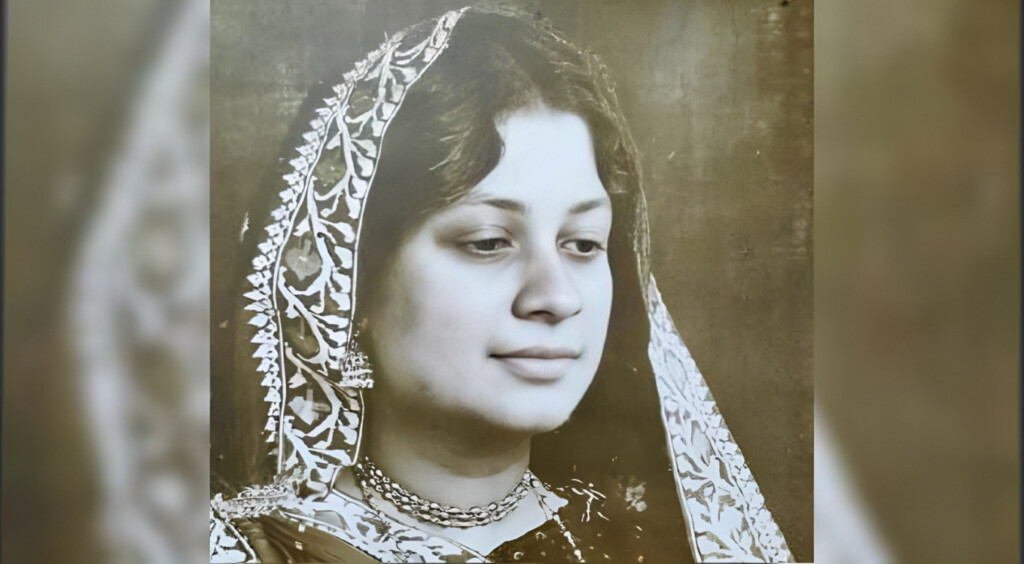
Pratima Thakur was a remarkable polymath—a writer, poet, visual artist, and dance scholar. While she is often remembered as the daughter-in-law of Rabindranath Tagore and the wife of Rathindranath Tagore, her identity extends far beyond familial ties. She occupies an indispensable place in the artistic, cultural, and dance history of Santiniketan.
Born on 5 November 1893 to Sheshendranath Chattopadhyay and Binayani Devi, Pratima experienced early adversity. At the tender age of 11, she was married to Neelananth, who tragically drowned while swimming in the Ganges, leaving her widowed at a very young age.
Rabindranath Tagore’s wife, Mrinalini Devi, had once expressed a desire to see the young Pratima become her daughter-in-law. However, her untimely demise prevented this wish from being fulfilled. Later, when Rathindranath returned from England, Rabindranath boldly disregarded societal conventions and arranged the marriage of Pratima and Rathindranath—marking the first widow remarriage in the Tagore household, a courageous social precedent at the time.
Following her marriage, Pratima devoted herself wholeheartedly to Visva-Bharati University and the development of Santiniketan’s arts and culture. She was Rabindranath’s trusted collaborator across multiple domains: advancing crafts, shaping dance-dramas, designing stage sets, costumes, and choreography with remarkable aesthetic precision.
Pratima was also a gifted painter, having studied under the Italian artist Gilhardi. She performed in Santiniketan’s first women’s drama, Lakshmi’r Porikkha, and played a pioneering role in initiating dance education for girls. She participated personally in the staging of dance-dramas such as Balmiki Pratibha and Maya’r Khela, and inspired Rabindranath to compose Chitrangada and other dance-dramas. Her meticulous attention ensured that Santiniketan’s productions retained their distinctive heritage in costume, stage design, and choreography.
Her literary contributions were significant as well. Writing under the pseudonym Kalpitadevi, she published numerous poems abroad—many curated by Rabindranath himself. Her prose, including works such as Nirvana, Smritichitra, Nritya, and Chitralekha, reflects her singular style and a profound engagement with art, culture, and women’s education. She also founded the Alapini Samiti, guiding young women in music, performance, and community welfare, including nutrition, hygiene, and handicrafts for rural women.
Pratima Thakur passed away on 9 January 1969, leaving a legacy of silent yet enduring contributions to art, literature, dance, and social reform at Santiniketan. Her life remains an inspiring testament to creativity, courage, and cultural stewardship.
Key Life Events of Pratima Thakur
| Year / Date | Event |
|---|---|
| 5 Nov 1893 | Born to Sheshendranath Chattopadhyay and Binayani Devi |
| c. 1904 | Married Neelananth; later widowed |
| Post-England return | Married Rathindranath Tagore; first widow remarriage in Tagore family |
| Early 20th century | Actively contributed to Santiniketan’s arts, crafts, and dance |
| Early 20th century | Studied painting under Italian artist Gilhardi |
| 1930s | Directed, choreographed, and designed stage sets for dance-dramas |
| Various dates | Published poetry under Kalpitadevi; wrote Nirvana, Smritichitra, Nritya, Chitralekha |
| 1969, 9 Jan | Passed away |
Pratima Thakur’s life illustrates a rare confluence of artistry, scholarship, and social vision, and her enduring influence continues to resonate in the cultural tapestry of Santiniketan.