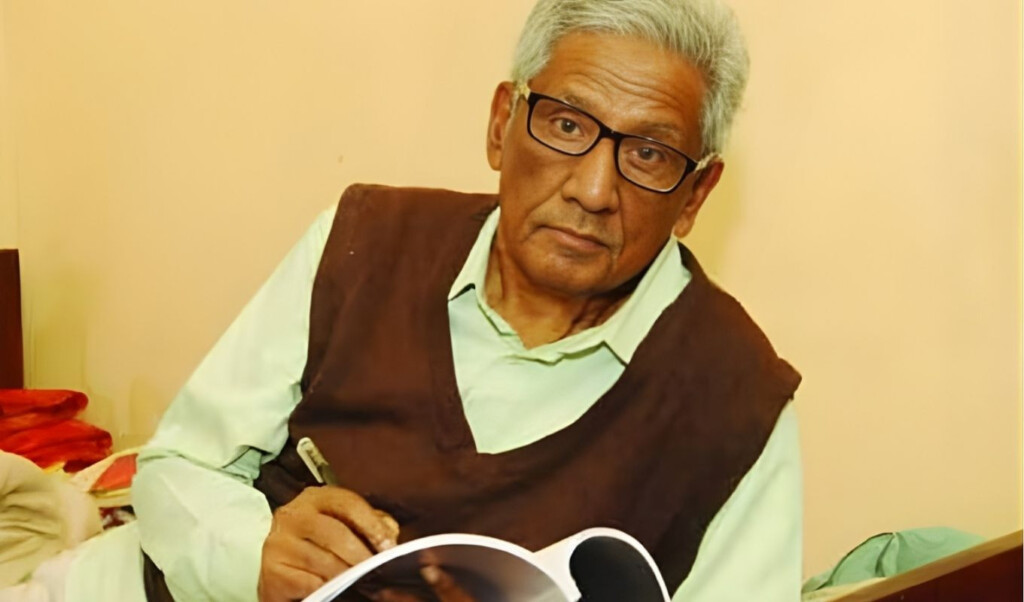
Shaukat Ali stands among the luminaries of Bengali fiction who masterfully wove history, politics, and the struggles of marginalised communities into literature imbued with profound humanity. Through his pen, the subtle currents of society, the harsh realities of exploitation, and the quiet defiance of the oppressed found an exceptional artistic expression.
Born on 12 February 1936 in Raiganj, Uttar Dinajpur, West Bengal, Shaukat Ali’s early life was marked by political engagement. While still in college, he became actively involved in the Communist movement and soon played a role in the Language Movement, advocating passionately for linguistic and cultural rights. These formative experiences nurtured a strong social consciousness and an acute historical awareness, which later permeated his literary works.
During the Bangladesh Liberation War of 1971, Shaukat Ali faced imprisonment at the hands of the Pakistani military regime, marking a critical chapter in his life. Professionally, he began his career in journalism before turning to teaching. He contributed regularly to the left-leaning literary magazine Natun Sahitya and published short stories, poems, and works for children in newspapers and periodicals such as Dainik Millat, Masik Samakal, and Ittefaq.
Shaukat Ali’s fiction often spotlighted the struggles of the lower classes against oppression. His acclaimed work Prodoshe Prakritajan vividly portrays the deprivation of the underprivileged and the revolutionary resistance of the untouchable communities against exploitative forces. In his novel Warish, he depicted the traumatic realities of British rule, Partition, and Hindu–Muslim communal riots with extraordinary artistic sensitivity.
Among his other notable novels are:
Pingal Akash
Apokha
Gontobye Atopar
Uttorer Khep
Obosheshe Prapat
Jononi O Jatika
Jor-Bijor
Unmul Basna
Lelihan Sadh
Shun He Lakhindar
Baba Apne Jan
His trilogy—Dakkhinayon-er Din, Kulay Kalsrote, and Purbaratri Purbdin—earned him the prestigious Philips Literary Award. In recognition of his monumental contribution to Bengali literature, he was awarded the Ekushey Padak in 1990, along with honours such as the Bangla Academy Award, Humayun Kabir Memorial Award, and Ajit Guha Memorial Literary Award.
Shaukat Ali passed away on 25 January 2018. Yet, his literary legacy endures: a voice for the marginalised, a chronicler of history, and a testament to human responsibility that continues to resonate with readers across generations.
Key Facts About Shaukat Ali
| Aspect | Details |
|---|---|
| Full Name | Shaukat Ali |
| Birth | 12 February 1936, Raiganj, Uttar Dinajpur, West Bengal |
| Political Involvement | Communist Movement; Language Movement |
| Career | Journalist, Teacher, Writer |
| Notable Works | Prodoshe Prakritajan, Warish, Pingal Akash, Apokha, Gontobye Atopar |
| Award-Winning Trilogy | Dakkhinayon-er Din, Kulay Kalsrote, Purbaratri Purbdin |
| Major Awards | Ekushey Padak (1990), Bangla Academy Award, Humayun Kabir Memorial Award, Ajit Guha Memorial Literary Award, Philips Literary Award |
| Death | 25 January 2018 |
Shaukat Ali’s writings remain a timeless mirror of society and history, ensuring that his voice continues to guide, challenge, and inspire.