In a move that mirrors contentious policies in neighbouring Uttar Pradesh, the Bihar government has officially sanctioned a comprehensive ban on the open sale and display of meat and fish across the state. The policy, approved by the cabinet led by Chief Minister Nitish Kumar, marks a significant shift in the state’s urban commerce and public health regulations.
The directive, primarily targeting urban and municipal areas, mandates that all vendors dealing in mutton, chicken, and fish must transition from roadside stalls to enclosed, licensed premises. Making the announcement during the ongoing budget session on Tuesday, 17 February 2026, Deputy Chief Minister Vijay Kumar Sinha stated that the measures are essential to uphold “public health, hygiene, and social sentiments.”
The “UP Model” Comes to Bihar
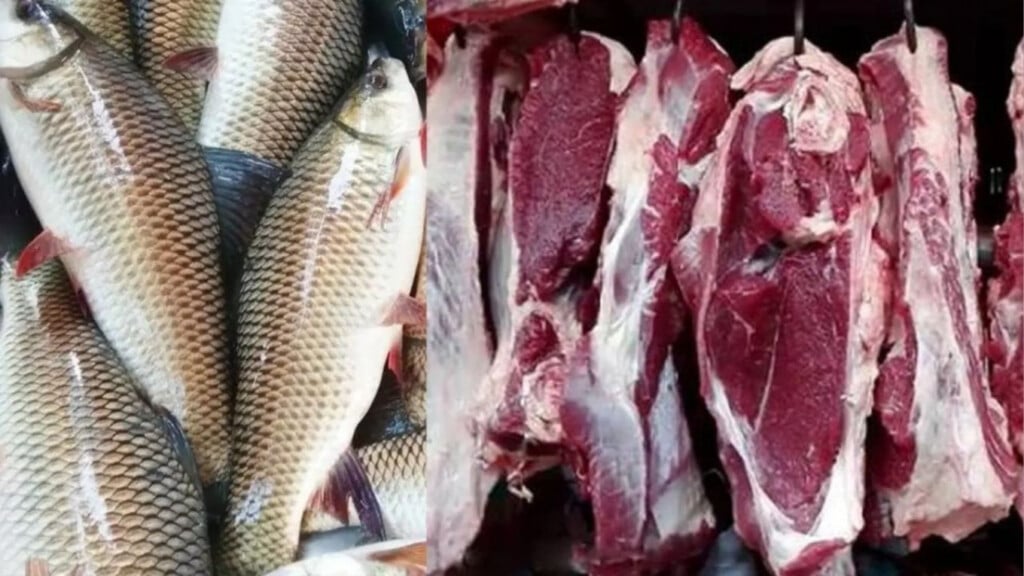
Under the new regulations, meat must no longer be visible to passers-by. Licensed shops are now required to install opaque glass or heavy curtains to shield the butchering and display process from public view. This policy bears a striking resemblance to the 2025 directive in Uttar Pradesh, where the sale of meat was prohibited within a 500-metre radius of religious sites.
While the government frames this as a “cleanliness drive,” the timing—just ahead of the holy month of Ramadan—has sparked a political firestorm. Opposition leaders, including West Bengal Chief Minister Mamata Banerjee and CPI(ML) General Secretary Dipankar Bhattacharya, have condemned the move as an “economic attack” on small-scale traders and the minority community.
New Regulatory Framework for Meat Vendors
| Regulation | Requirement | Penalty for Non-Compliance |
|---|---|---|
| Licensing | Mandatory under Section 345 | Immediate sealing of premises |
| Display | Must use curtains or tinted glass | Fine up to ₹5,000 |
| Location | Prohibited near schools/temples | Cancellation of trade licence |
| Waste Disposal | Dedicated municipal bins required | Repeated fines/Closure |
Economic and Social Repercussions
The ban is expected to affect thousands of daily-wage earners and small-scale vendors who lack the capital to rent permanent, enclosed shops. In districts like Nawada, fishmonger unions have already staged protests, describing the order as “oppressive” given the lack of alternative infrastructure provided by the state.
Union Minister Giriraj Singh has lauded the decision, urging district administrations to enforce the “invisible” meat market rules with immediate effect. Critics, however, argue that without state-funded market complexes, the ban will merely drive the trade underground or into the hands of larger, wealthier conglomerates.
As Bihar already enforces a strict prohibition on alcohol, this new restriction on “open consumption” signals a broader push towards a more regulated, conservative public sphere. The state’s Urban Development Department has begun conducting inspections to ensure that no “hanging carcasses” or open-air fish markets remain in city centres.