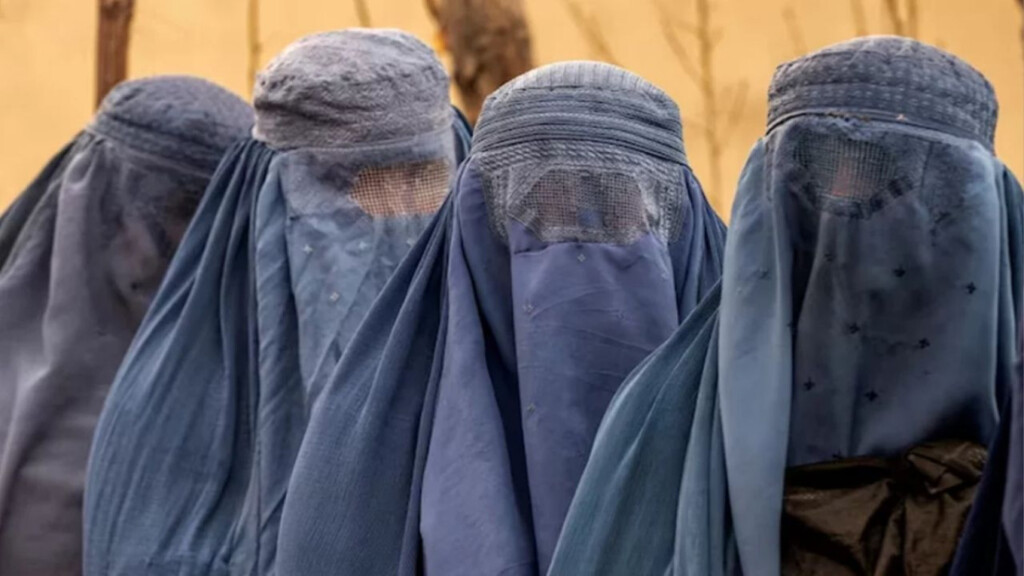
The Taliban administration in Afghanistan has sparked international outrage by codifying a draconian new penal code that effectively “legalises” domestic violence. According to a report by The Independent, the 90-page document, signed by the supreme leader Hibatullah Akhundzada, provides a chilling framework that allows husbands to physically discipline their wives and children, provided the assault does not result in “broken bones” or “visible wounding.”
The document, titled The Mahakumu Jazai Usulnama (Criminal Procedure Regulations of the Courts), has been distributed across Afghan judiciaries. It marks a devastating regression for human rights, creating a legal environment where physical abuse is permitted up to a specific threshold of injury.
Institutionalised Inequality and Social Stratification
The new code does not merely target women; it reintroduces a medieval class system that dictates the severity of punishment based on an individual’s social standing. The legislation categorises the Afghan populace into four distinct tiers, ensuring that justice is a privilege of rank rather than a universal right.
Under this system, the punishment for a crime is determined more by the perpetrator’s status than the nature of the offence itself. This “caste-like” structure includes:
The Ulema: Religious scholars at the apex of society.
The Ashraf: The traditional elite.
The Middle Class: Professionals and traders.
The Lower Class: The general populace and those in servitude.
Furthermore, the law distinguishes between “free persons” and “slaves,” applying different punitive scales to each.
Obstacles to Justice for Women
While the law stipulates a 15-day prison sentence for a husband who uses “excessive force” resulting in broken bones, the burden of proof remains an almost insurmountable hurdle for victims. For a woman to secure a conviction, she must successfully prove the abuse in a court of law—a feat made nearly impossible by the accompanying procedural requirements.
Key Provisions of the New Afghan Penal Code
| Issue | Legal Stipulation | Potential Penalty |
|---|---|---|
| Domestic Battery | Permissible if no bones are broken or wounds visible. | None. |
| “Excessive” Violence | Inflicting broken bones or severe visible injury. | Up to 15 days’ imprisonment. |
| Unauthorised Visits | Visiting relatives without a husband’s permission. | Up to 3 months’ imprisonment. |
| Court Appearances | Women must be in full hijab and accompanied by a male. | Case dismissal if non-compliant. |
A Culture of Surveillance and Control
The code further restricts women’s freedom of movement by criminalising social interactions. A married woman who visits her own relatives without the explicit consent of her husband now faces up to three months in prison.
In the rare event that a woman attempts to seek justice for “excessive” battery, she is permitted to show her injuries to a judge only while wearing a full hijab and in the presence of her husband or another adult male guardian (Mahram). This creates a predatory cycle where the victim must face her abuser while pleading for protection from a legal system that has already validated her secondary status.
This legislative shift represents a total dismantling of the hard-won protections for Afghan women, replacing constitutional rights with a regime of state-sanctioned violence and rigid social hierarchy.