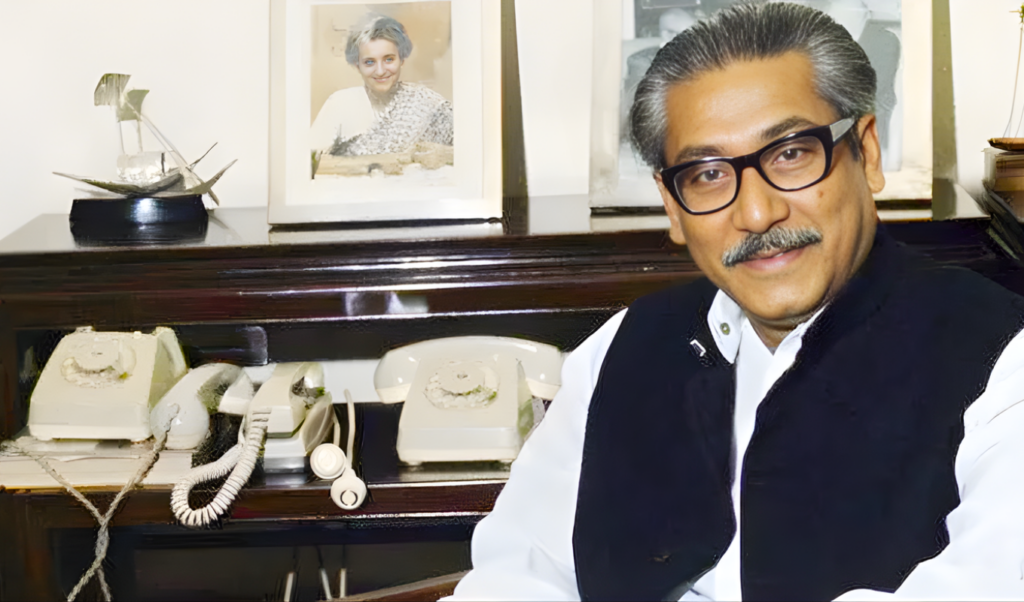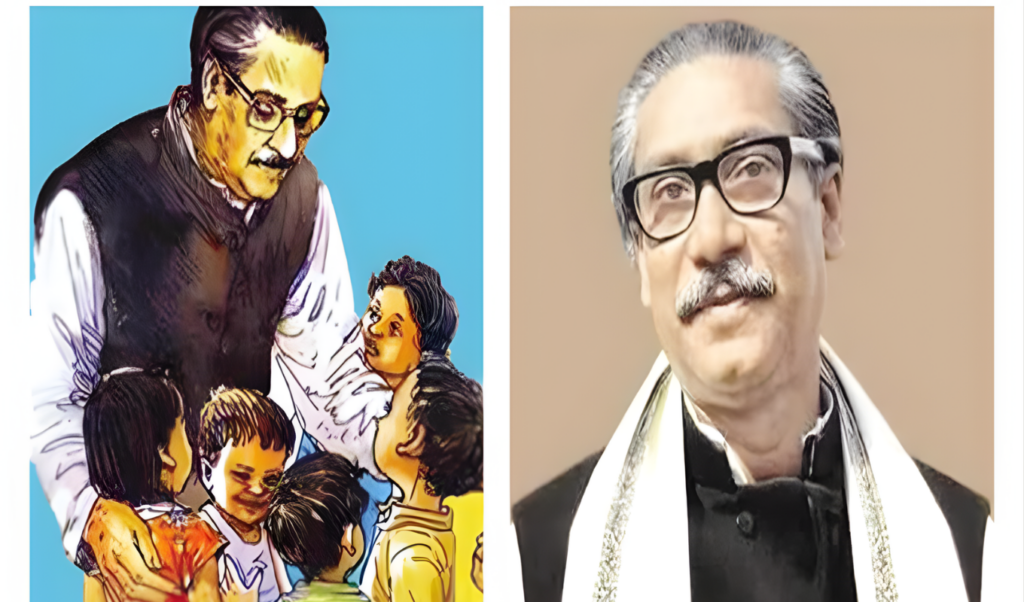
Few figures in South Asian history command the enduring respect and emotional connection that Sheikh Mujibur Rahman does among the people of Bangladesh. Widely revered as Bangabandhu—meaning “Friend of Bengal”—he is regarded as the architect of Bangladesh and the undisputed leader of the Bengali nation. His leadership, political foresight, and unwavering dedication to the rights of his people transformed a regional autonomy movement into a successful struggle for independence.
Born on 17 March 1920 in the village of Tungipara, then part of the Faridpur District, Sheikh Mujibur Rahman grew up in a family that instilled in him strong moral values and a sense of social responsibility. His father, Sheikh Lutfur Rahman, served as a court official, while his mother, Sayera Begum, nurtured him with deep affection. Within the family he was fondly called “Khoka,” a nickname that reflected the warmth and closeness he maintained with his parents throughout his life.
Early Influences and Political Awakening
During his youth, Mujib faced serious health challenges, including beriberi and later glaucoma, which interrupted his studies for nearly two years. Yet these difficulties did not diminish his curiosity about society and politics. As nationalist sentiments surged across the subcontinent, he began to take a keen interest in the independence movement against British colonial rule.
He later wrote in his memoir The Unfinished Memoirs that his early exposure to anti-colonial activism shaped his political consciousness. Influenced by the ideals of leaders such as Subhas Chandra Bose, he gradually developed a strong belief that the people of Bengal deserved freedom and dignity.
By 1937, after recovering from illness, Mujib enrolled at Gopalganj Mission School, where his organisational abilities began to emerge. When a local welfare organisation, the Muslim Seba Samity, lost its founder, the young Mujib took responsibility for continuing its activities and was appointed its general secretary—his first experience of leadership.
Entry into Student Politics
The late 1930s proved to be a turning point in his life. In 1938, when the then Prime Minister of Bengal A. K. Fazlul Huq visited Gopalganj accompanied by labour leader Huseyn Shaheed Suhrawardy, the young Mujib was tasked with organising volunteers for the reception. This encounter inspired him deeply and strengthened his determination to pursue political activism.
A year later he became general secretary of the All India Muslim Students Federation branch in Gopalganj, formally entering student politics. In 1941 he passed his matriculation examination and enrolled at Islamia College (now Maulana Azad College) in Kolkata, where he lived in the historic Baker Hostel. The institution was a hub of political debate, and Mujib quickly gained popularity among students.
Rise of a National Leader
After the creation of Pakistan in 1947, Mujib emerged as a vocal advocate for the rights of the Bengali population in East Pakistan. When Khawaja Nazimuddin announced in 1948 that Urdu would be the sole state language of Pakistan, Mujib protested vigorously. He was arrested on 11 March 1948 during demonstrations demanding recognition of Bengali as a state language.
His political prominence continued to grow. On 23 June 1949, when the Awami League (then Awami Muslim League) was founded, Mujib was elected joint secretary of the party. Over the next decade he led numerous movements demanding democratic rights and regional autonomy for East Pakistan.
Key Milestones in Mujib’s Political Journey
| Year | Event | Historical Importance |
|---|---|---|
| 1948 | Language protests | Arrested for demanding Bengali as a state language |
| 1949 | Formation of Awami League | Elected joint secretary of the new party |
| 1952 | Language Movement activism | Continued struggle for linguistic rights |
| 1966 | Six-Point Movement | Proposed autonomy framework for East Pakistan |
| 1969 | Mass uprising | Earned the title “Bangabandhu” |
| 1971 | Liberation struggle | Led Bangladesh toward independence |
Architect of Independence
By the late 1960s Mujib had become the undisputed leader of the Bengali people. His historic Six-Point Programme in 1966 demanded autonomy for East Pakistan and mobilised millions. During the mass uprising of 1969, students and activists formally honoured him with the title “Bangabandhu”.
His leadership reached its defining moment on 7 March 1971 at Suhrawardy Udyan, where he delivered one of the most powerful speeches in modern history. Declaring, “The struggle this time is the struggle for our liberation; the struggle this time is the struggle for independence,” he inspired a nation to rise against oppression.
Following a nine-month war marked by immense sacrifice, Bangladesh achieved independence in December 1971. The red-and-green flag that began to fly across the country symbolised not only victory but also the enduring legacy of Sheikh Mujibur Rahman.
Enduring Legacy
Bangabandhu’s life was defined by courage, sacrifice, and deep compassion for his people. His vision of a free, democratic, and just Bangladesh continues to shape the nation’s political identity. To millions of Bangladeshis, Sheikh Mujibur Rahman remains more than a political leader—he is the embodiment of the aspirations and resilience of an entire nation.