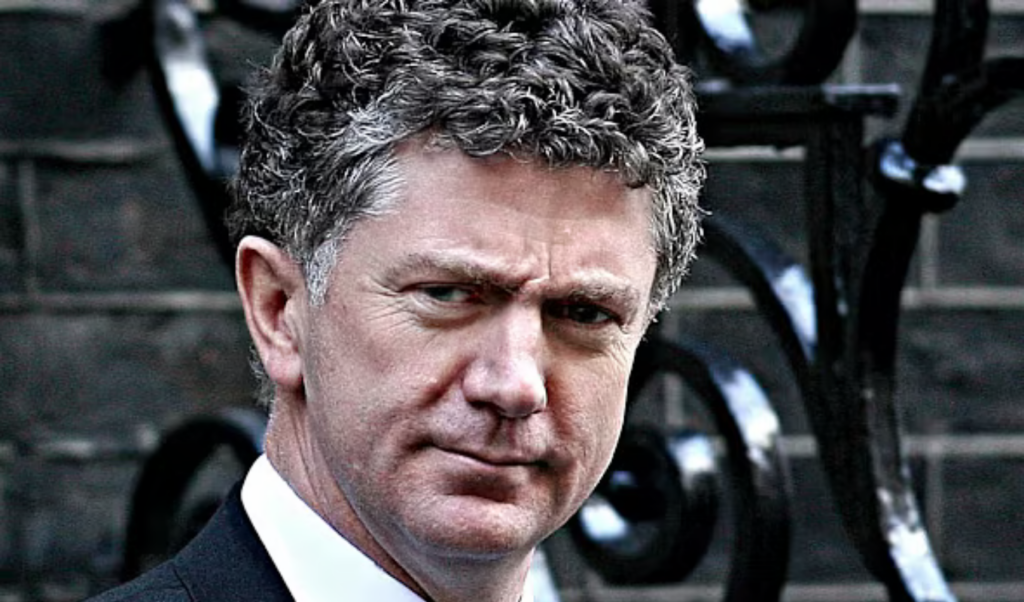
Jonathan Powell, the United Kingdom’s National Security Adviser, was a key participant in the final-stage discussions between the United States and Iran regarding Tehran’s nuclear programme. According to Powell, the proposals put forward by Iran could have realistically led to a formal agreement, potentially averting the risk of armed conflict.
Powell described the negotiations held in Geneva at the end of February as showing significant progress. Sources familiar with the discussions have characterised Iran’s proposals as “astonishing,” particularly their offer to allow the United States to participate in a future civilian nuclear programme under international supervision.
Just two days after the Geneva talks and shortly before the next technical-level meeting scheduled in Vienna, the United States and Israel launched military strikes in Iran, effectively pre-empting further diplomatic engagement.
Geneva Talks and Key Participants
| Date | Venue | Key Participants | Objective |
|---|---|---|---|
| Late February 2025 | Geneva, Switzerland | Jonathan Powell (UK), Jared Kushner & Steve Witkoff (US), Rafael Grossi (IAEA) | Advance nuclear negotiations |
| 2 March 2025 (planned) | Vienna, Austria | Not held (pre-empted by military strikes) | Concluding final agreement |
Powell attended the Geneva talks at the residence of the Omani ambassador, emphasising the UK’s role as a stabilising presence amid concerns about the US delegation’s technical expertise. While Kushner and Witkoff claimed to have “deep knowledge” of the subject, nuclear experts later highlighted numerous fundamental errors in their assessments. Consequently, Powell brought his own team of specialists, alongside an adviser from the UK Cabinet Office.
Although the discussions did not result in a full agreement, they reflected meaningful progress. Iranian proposals included:
Reducing Iran’s stockpile of 440 kg of highly enriched uranium under IAEA supervision.
Halting future production of high-enriched uranium.
Suspending internal enrichment activities for three to five years.
Allowing US participation in civilian nuclear projects.
Lifting approximately 80% of economic sanctions, including funds frozen in Qatar.
Powell’s experience and longstanding diplomatic ties with the United States, dating back to his tenure as Tony Blair’s Chief of Staff, were pivotal in navigating the negotiations. European and Gulf diplomats noted that Iran appeared genuinely prepared to make the agreement enduring, unlike the time-limited 2015 nuclear deal.
Despite the potential for a breakthrough, US and Israeli strikes pre-empted the planned Vienna meeting. The UK government subsequently refused to support the military action, citing the availability of a viable diplomatic pathway and the absence of imminent threat evidence. Foreign Secretary Yvette Cooper told Parliament that there was “no credible proof of an immediate missile threat or nuclear weapon capability” at the time.
Powell and the UK delegation had advocated for continuing diplomatic efforts, emphasising that the negotiations offered a concrete route to resolve long-standing concerns over Iran’s nuclear programme. The decision by Washington and Tel Aviv to act militarily, in the eyes of the UK, represented a premature and legally questionable intervention.