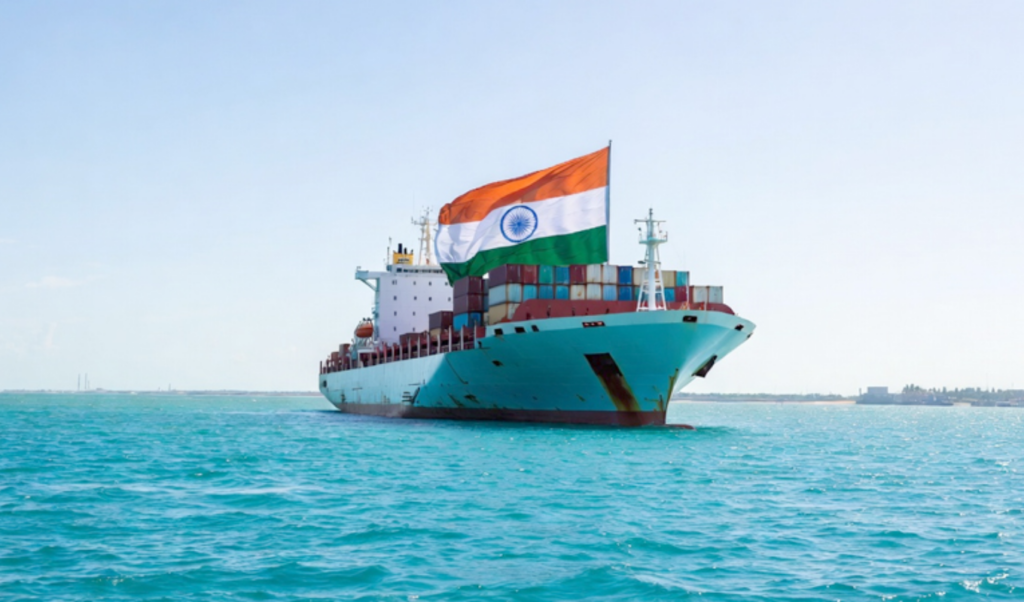
In a landmark move designed to fortify its maritime independence, the Indian government has formally approved the creation of a domestic maritime insurance framework. Backed by a substantial $1.4 billion (approximately £1.1 billion or ₹129.8 billion) sovereign guarantee, the Bharat Maritime Insurance Pool (BMIP) represents a strategic pivot away from the nation’s historical reliance on Western-dominated insurance markets.
Securing the High Seas: The Strategic Necessity
For decades, the Indian shipping industry has navigated a precarious landscape, with over 90% of its insurance requirements traditionally met by overseas underwriters, primarily through the International Group of P&I Clubs and London-based syndicates. While these entities have provided stability in peaceful times, recent geopolitical tremors—specifically within the Red Sea, the Strait of Hormuz, and the Gulf of Oman—have exposed the fragility of this dependency.
When global insurers withdraw cover or inflate premiums due to regional conflicts, Indian trade faces immediate bottlenecks. The Shipping Minister, Sarbananda Sonowal, articulated that this domestic pool is not merely a financial instrument but a “shield” for the nation’s economy. By providing a home-grown safety net, India ensures that its trade remains insulated from the whims of international market volatility and the shifting tides of global diplomacy.
Scope and Structure of the Bharat Maritime Insurance Pool
The BMIP is engineered to be a comprehensive solution, covering a broad spectrum of risks that were previously outsourced. The sovereign guarantee acts as the bedrock of the pool, providing the necessary capital to absorb large-scale shocks that private domestic insurers might otherwise find unpalatable.
The pool’s coverage is meticulously segmented to address the multifaceted nature of maritime operations:
-
Hull and Machinery: Protecting the physical integrity of Indian-flagged and controlled vessels against accidents or structural failure.
-
Protection and Indemnity (P&I): Offering third-party liability cover, including crucial protections for crew welfare, injury compensation, and environmental damage—an area where global premiums have surged.
-
Cargo Liability: Ensuring the safety of goods in transit, which is vital given that the maritime sector handles 95% of India’s trade by value.
-
War Risks: Providing a critical lifeline for ships traversing “high-risk” corridors where commercial insurers often retreat during active hostilities.
Comparison of Maritime Risk Landscapes
| Feature | Traditional Overseas Reliance | Bharat Maritime Insurance Pool (BMIP) |
| Primary Underwriter | Foreign P&I Clubs / London Markets | Domestic Consortium with Sovereign Backing |
| Risk Sensitivity | Highly reactive to global geopolitics | Prioritises Indian trade stability |
| Premium Costs | Subject to international volatility | Stabilised via domestic sovereign guarantee |
| Claim Settlement | Subject to foreign laws/jurisdictions | Governed by Indian maritime regulations |
| Strategic Goal | Commercial profit & risk mitigation | National economic security & “Atmanirbharta” |
Alignment with “Maritime India Vision 2030”
The launch of this insurance pool is a cornerstone of the Maritime India Vision 2030, a roadmap aimed at transforming India into a global maritime powerhouse. As the world’s fifth-largest economy, India’s trade volume is staggering; however, the “invisible drain” of insurance premiums flowing out of the country has long been a point of concern for policymakers.
By internalising these costs, India not only retains capital within its own financial ecosystem but also fosters a sophisticated domestic expertise in maritime underwriting. This move is expected to incentivise more shipowners to register their vessels under the Indian flag, thereby boosting the national fleet’s capacity and influence.
A Buffer Against Global Uncertainty
The timing of this initiative is particularly poignant. With the “poly-crisis” of climate change, regional wars, and shifting trade alliances, the cost of maritime logistics has become unpredictable. The BMIP offers a predictable environment for Indian operators. It ensures that even if international markets turn hostile or prohibitive, Indian vessels carrying essential commodities—from energy to food supplies—can continue to sail with the full backing of the state.
In summary, the establishment of the $1.4 billion insurance pool is a bold assertion of maritime sovereignty. It marks the transition from India being a passive consumer of global insurance products to an active, self-reliant architect of its own trade security.