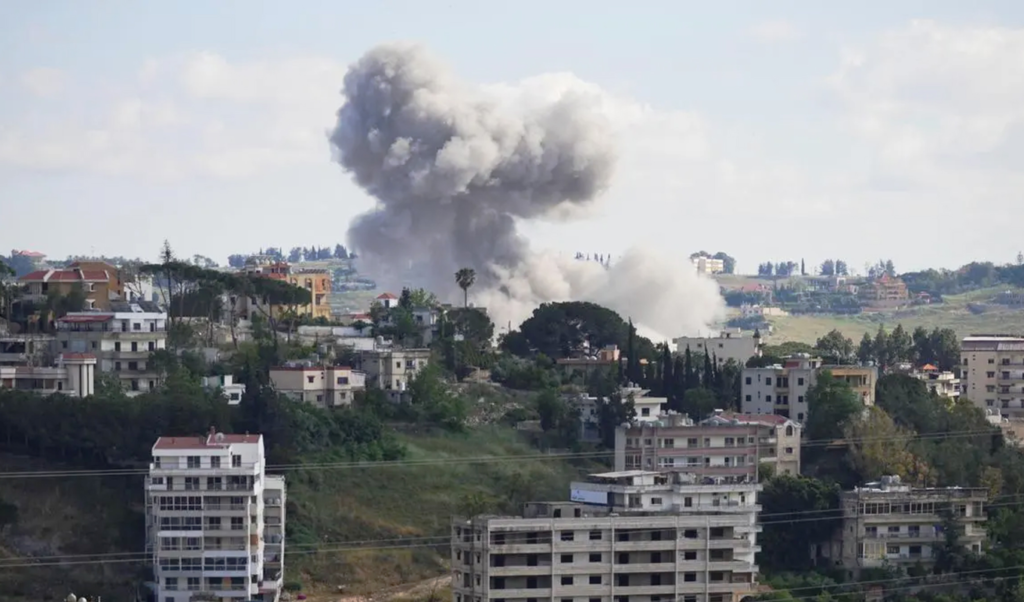
The United States military has initiated a fresh wave of air and maritime assaults across Iran, targetting critical defense infrastructure and vital shipping corridors. American news outlet Axios reported on Sunday, 12 July 2026, that US forces had carried out “targeted” strikes explicitly aimed at neutralizing Iranian missile batteries and sophisticated air defense networks. Concurrently, the operation extended into the highly sensitive Strait of Hormuz, where US naval assets engaged and struck small watercraft belonging to Iran’s Islamic Revolutionary Guard Corps (IRGC).
This latest military intervention follows an intense, near-continuous bombardment launched by the US throughout most of Saturday night, 11 July. That initial wave triggered a rapid and aggressive retaliation from Tehran, which directed counter-strikes against American military infrastructure stationed across five Arabian Gulf nations. The escalating tit-for-tat violence underscores the fragile security dynamics of the region, where western military footprints routinely clash with local asymmetric forces.
Prior to the official confirmation carried by Axios, local Iranian media channels began reporting significant battlefield developments. Two independent domestic news agencies stated that massive explosions had reverberated across the southern port city of Bandar Abbas, a crucial economic hub and naval base, as well as the strategically positioned Qeshm Island in the Strait of Hormuz. Shortly after these initial reports, the Governor of Qeshm Island, Hossein Amir, verified the attacks, stating that between 10 and 11 foreign projectiles—presumed to be precision cruise missiles—had successfully impacted the island.
Speaking directly to the state-run IRNA news agency, Governor Amir clarified that the hostile strikes were exclusively confined to military installations, sparing surrounding civilian residential zones. Initial assessments indicated that despite the heavy material damage inflicted upon the targetted defense facilities, no casualties had been recorded.
The renewed focus on the Strait of Hormuz highlights the immense geopolitical stakes involved, as approximately a fifth of the world’s petroleum passes through this narrow maritime chokepoint. The targeting of IRGC naval assets indicates an attempt by Washington to degrade Tehran’s capability to disrupt international shipping lanes or launch rapid swarm attacks against commercial vessels. Observers note that these rapid exchanges threaten to permanently unravel previous diplomatic stabilization efforts, pulling regional powers and global energy markets into a prolonged cycle of volatility. With both American forces in the Gulf and Iranian domestic command structures on high alert, international defense analysts fear the conflict could quickly broaden if localized operations expand further into critical industrial infrastructure.