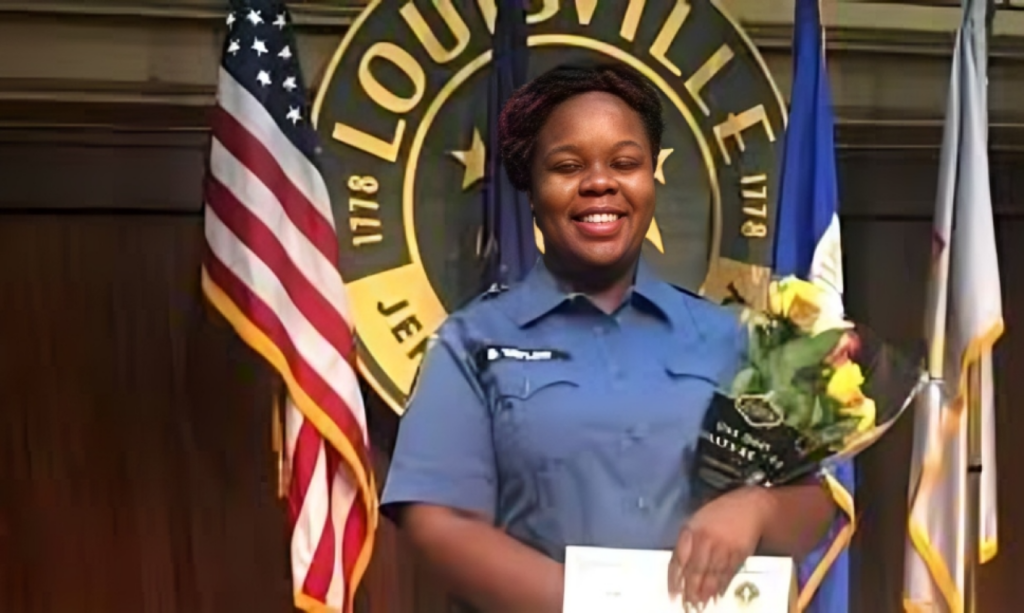
A US federal judge has sentenced former police officer Brett Hankison to 33 months in prison for violating the civil rights of Breonna Taylor, a Black woman whose tragic killing in 2020 sparked widespread protests across the United States. Hankison was convicted in November of a single charge of violating Taylor’s civil rights during a botched police raid on her home in Louisville, Kentucky.
The Case and Sentence
Judge Rebecca Jennings, appointed to the bench by US President Donald Trump, rejected an appeal by the Justice Department for leniency and handed down the 33-month sentence. The prosecution had argued that Hankison’s actions during the raid were negligent but did not directly cause Taylor’s death. However, Jennings expressed concern over the government’s plea for a light sentence, dismissing it as insufficient for the severity of the actions involved. Alongside the prison term, Hankison was sentenced to three years of supervised release.
| Defendant | Sentence | Charge | Max Penalty |
|---|---|---|---|
| Brett Hankison | 33 months in prison | Civil Rights Violation | Life in prison |
The Tragic Event
On March 13, 2020, 26-year-old Breonna Taylor and her boyfriend, Kenneth Walker, were in bed in their Louisville apartment when they heard a noise at the door. Believing it to be a break-in, Walker fired a shot, wounding one of the officers involved in the raid. The police, acting on a controversial no-knock warrant, responded by firing over 30 shots. Taylor was fatally struck, and her death became a central point in the nationwide protests against police brutality.
Hankison, who was a detective with the Louisville Police Department, fired 10 shots during the raid. Although none of his shots hit Taylor, some were fired into a neighbouring apartment. Hankison is the only officer convicted in relation to the raid.
Justice Department’s Role and Reaction
In a somewhat unusual move, Harmeet Dhillon, head of the Justice Department’s Civil Rights Division, had requested that Hankison be sentenced to time served – referring to the one day he spent in jail following his arrest. However, Judge Jennings dismissed this request, stating that she found the arguments for leniency troubling.
Dhillon argued that Hankison should not face a long sentence as he was not responsible for Taylor’s death. “Hankison did not shoot Ms. Taylor and is not otherwise responsible for her death,” Dhillon said in her memorandum. “He did discharge his duty weapon ten times blindly into Ms. Taylor’s home,” but she claimed Hankison did not directly wound anyone during the raid.
Reaction from Breonna Taylor’s Family
While the sentence did not meet the Taylor family’s expectations, their legal team expressed a measure of respect for the court’s decision. They also took the opportunity to criticise the Justice Department for not fully standing behind Breonna Taylor’s rights.
“We respect the court’s decision, but we will continue to call out the DOJ’s failure to stand firmly behind Breonna’s rights and the rights of every Black woman whose life is treated as expendable,” the family’s lawyers said in a statement following the ruling.
| Victim | Age | Cause of Death | Date of Incident |
|---|---|---|---|
| Breonna Taylor | 26 | Fatal gunshot wounds | 13 March 2020 |
Broader Context: Protests and Nationwide Repercussions
The killings of both Breonna Taylor and George Floyd, a Black man murdered by a white police officer in Minneapolis earlier in 2020, served as catalysts for the Black Lives Matter movement. The protests that followed highlighted deep-rooted issues of racial injustice and police brutality, not only in the US but also globally.
While Hankison’s sentence brings some legal closure to the case, the broader issues surrounding police conduct and systemic racism remain points of contention. The Justice Department’s decision to drop lawsuits against the Louisville and Minneapolis police forces in May, accusing them of using excessive force and racial discrimination, further highlights the ongoing tension between federal and local approaches to police reform.
The Future of the Case
Despite the legal proceedings, the pursuit of justice for Breonna Taylor is far from over. Many activists and advocates argue that this case, along with others like it, shows the need for significant reforms in policing practices, especially regarding the use of no-knock warrants, racial profiling, and the overall accountability of law enforcement officers. The fight for equality and justice continues, with the Taylor family and many others continuing to call for deeper structural changes in how policing is approached in the United States.
The sentencing of Brett Hankison serves as one step in a long journey, but it leaves many questions unanswered about the larger systemic issues that still need to be addressed.