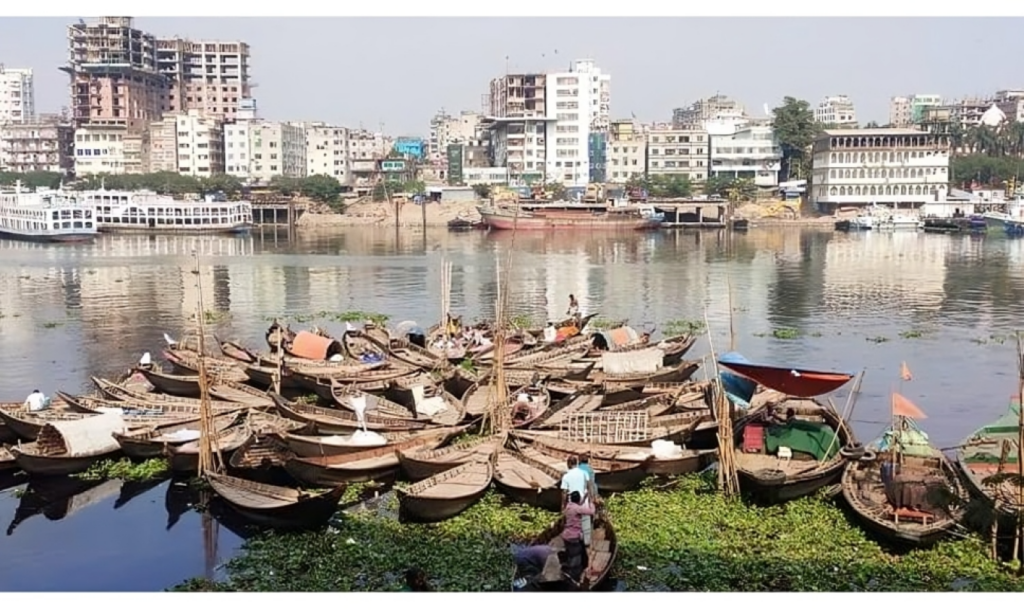
Dhaka, 22nd July 2025 — A recent study has uncovered alarming levels of heavy metal contamination in the Buriganga River, which is posing significant threats to both the environment and public health in the Dhaka region. The findings highlight the urgent need for immediate intervention to prevent further deterioration of this vital waterway.
Study Overview
The study, titled ‘Heavy Metal Contamination in the Buriganga River, Bangladesh: A Review of Ecological Risk and Pollution,’ was conducted by Beauty Akter and Professor Dr Syed Hafizur Rahman from the Environmental Sciences Department at Jahangirnagar University (JU). Published in the June 2025 edition of the Jahangirnagar University Environmental Bulletin, it provides an in-depth analysis of the concentrations of toxic metals in the river’s water and sediment, along with the associated ecological risks.
Findings of the Study
According to the study, dangerously high levels of toxic metals have been detected in the Buriganga River. These include:
Lead (Pb)
Cadmium (Cd)
Chromium (Cr)
Mercury (Hg)
Arsenic (As)
Zinc (Zn)
Nickel (Ni)
Copper (Cu)
Iron (Fe)
These pollutants are particularly concentrated near unregulated industrial discharge points, with many of the detected concentrations exceeding both national and international safety thresholds.
Sources of Pollution
The primary contributors to the river’s heavy metal pollution are:
Tannery waste
Textile and dyeing factories
Chemical industries
These activities, notably concentrated in the Hazaribagh and Kamrangirchar areas, are the main culprits. Additionally, untreated domestic sewage, roadside runoff, agricultural discharge, and open solid waste dumping further exacerbate the pollution levels.
Ecological and Public Health Risks
The study employs internationally accepted tools such as the Contamination Factor (CF), Pollution Load Index (PLI), and Ecological Risk Index (ERI) to assess the ecological risks associated with these heavy metals. The results categorised metals like chromium and lead as posing “high to very high” ecological risks. Other metals such as cadmium, mercury, and arsenic were also identified as significant threats to aquatic life in certain river zones.
Beauty Akter, the study’s lead author, warned that the Buriganga River has essentially become a dumping ground for hazardous waste. She noted that the bioaccumulation of these metals in aquatic organisms presents long-term dangers for both aquatic life and human health.
“The metals not only persist in the environment but also build up in organisms, entering the food chain and endangering human populations who rely on the river for washing, irrigation, and even household water needs,” said Akter.
Regulatory Shortcomings and Weak Enforcement
Despite the existence of environmental laws such as the Environment Conservation Act (1995) and the Environment Conservation Rules (1997), the study highlights the weak enforcement of these regulations, particularly in Dhaka’s river zones. The study criticises the unchecked industrial growth that has occurred without adequate planning and waste treatment facilities.
“Unchecked industrial growth without proper waste treatment facilities is the key driver of this crisis,” said Beauty Akter. “Without immediate and coordinated intervention, the ecological functions of the Buriganga and its societal value will continue to deteriorate.”
Recommendations for Immediate Action
The study calls for urgent action from both the government and policymakers. Key recommendations include:
| Measure | Action Plan |
| Effluent Treatment Plants (ETPs) | Set up in all polluting industries to treat waste before discharge. |
| Factory Relocation | Relocate high-risk factories away from riverbanks. |
| Water Quality Monitoring Systems | Establish continuous monitoring systems with modern technology. |
| Buffer Zones | Create buffer zones between industrial areas and water bodies. |
| Waste Management | Develop an integrated waste disposal and management system. |
Professor Dr Syed Hafizur Rahman, the corresponding author of the study, also suggested river dredging to deepen the Buriganga and improve both water flow and quality within the next two to five years.
Multi-Pronged Approach to Address the Crisis
To combat the pollution and restore the Buriganga River’s ecological health, the study recommends a multi-pronged approach:
Relocation of high-risk factories and industries away from the river.
Establishing buffer zones to protect water bodies from industrial discharge.
Implementation of real-time water quality monitoring systems.
Awareness campaigns for industry owners, municipal authorities, and the general public.
Strengthening legal enforcement by agencies such as the Department of Environment (DoE), Dhaka City Corporation, and the Ministry of Industries.
A Call for Integrated Water Resource Management
The Buriganga River has long served as a key waterway and economic lifeline for Dhaka City. However, the study warns that if current pollution trends continue, the river’s ecological functions and social value will continue to decline.
The study concludes by urging the implementation of integrated water resource management policies, which should include both pollution control and ecological restoration to protect the river for future generations.
Findings at a Glance
| Pollutants Detected | Primary Sources of Pollution |
| Lead (Pb), Cadmium (Cd), Chromium (Cr), Mercury (Hg), Arsenic (As), Zinc (Zn), Nickel (Ni), Copper (Cu), Iron (Fe) | Tannery waste, Textile and dyeing factories, Chemical industries, Untreated sewage, Roadside runoff, Agricultural discharge, Solid waste dumping |
| Highest Ecological Risks | Chromium and Lead (High to Very High Risk) |
| Other Significant Threats | Cadmium, Mercury, Arsenic |
| Recommendations | Effluent treatment plants, Factory relocation, Buffer zones, Monitoring systems, Awareness campaigns, Stronger enforcement |
The situation demands immediate attention, not just from local authorities but also from the wider community, to restore the Buriganga to its former ecological and economic significance