Sunday, 5th April 2026

Khabor Wala Desk
Published: 24th July 2025, 2:51 PM
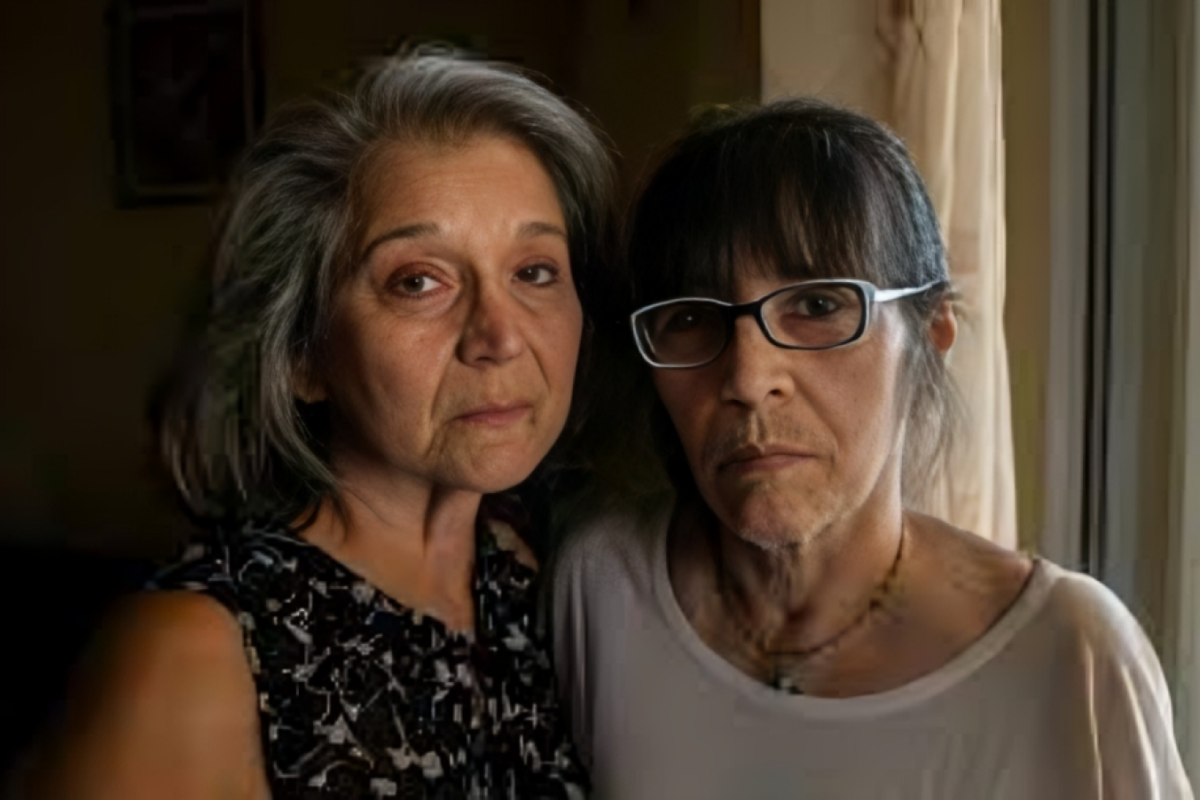
Robyn Bedell Zalewa, who has spent her entire life in the United States, is part of a little-known but profoundly emotional chapter of Greek history: the mass adoption of approximately 4,000 Greek infants and children during the Cold War era.
Although she always knew of her Greek origins, her journey came full circle when she was reunited with her long-lost sister Sophia, who lives near Athens, and regained her Greek nationality two years ago. When in Greece, she goes by her Greek name, Joanna.
However, the reunion is not without challenges:
“What hurts me the most is not being able to have a conversation with Sophia,” the 68-year-old told AFP, explaining that the two sisters communicate through an online translator, as Sophia speaks only Greek.
Following the devastation of World War II and the Greek Civil War (1946–1949), which tore the country apart in a brutal conflict between royalists and communists, thousands of families were left in poverty and ruin.
In response, a large wave of international adoptions took place during the 1950s and 1960s, primarily to the United States. Babies and young children were sent abroad in hopes of giving them a better life.
| Period | Context | Outcome |
| 1949 | End of Greek Civil War | Widespread poverty, orphaned children |
| 1950s–1960s | Rise of international adoptions from Greece | ~4,000 children adopted, mainly to the US |
| May 2025 | Law amendment in Greece | Easier nationality restoration for adoptees |
According to Professor Gonda Van Steen, director of the Centre for Hellenic Studies at King’s College London:
“Greece was the main country of origin of children adopted in the US in the early 1950s. American childless couples were willing to pay any price for a healthy white newborn.”
Often, the biological mothers were impoverished, widowed, or socially ostracised for having children outside wedlock. Many were forced to give up their children in hopes they would have “a better life.”
In May, the Greek government streamlined the process for adoptees to reclaim their nationality, focusing on those adopted before 1976. For many, this has been a long-awaited step in piecing together fragmented identities.
While sipping coffee on a terrace in Athens, Zalewa proudly pulled out her Greek passport and identity card. Despite possessing her original adoption certificate—something many adoptees lack—she began the process well before the new laws and waited a long time for the result.
“I always knew I had been adopted in Greece,” said Zalewa, who was born in Messini, Peloponnese, and adopted into a family in Texas.
Her lifelong dream?
“What I’ve wanted my entire life is to find my family.”
Through a painstaking journey, she managed to find her biological siblings and even met her birth mother before her passing. She was the youngest of five siblings, reportedly given up because her widowed mother was unable to raise her alone.
Now, she returns to Greece whenever she can and has built enduring ties to her homeland.
Mary Cardaras, a Greek-American journalist adopted in the Chicago area, has been a vocal advocate for adoptees reclaiming their birthright.
“What followed (the Greek adoptions) was a tsunami of international adoptions,” she noted, referencing later waves from China, Vietnam, Russia, and especially South Korea, where more than 140,000 children were adopted internationally between 1955 and 1999.
She recalls her first return to Greece in 1972, saying:
“I looked at every woman’s face on the street and wondered… if she was my mother.”
Everything felt oddly familiar:
“The smells, the atmosphere, I was completely at home.”
It wasn’t until the death of her adoptive parents that she began questioning her early life more deeply. Now living in Athens, she is actively learning Greek and slowly reconnecting with her roots.
The changes in nationality laws have triggered a wave of emotional posts from adoptees who, for the first time, feel a sense of restoration and belonging.
One such case is Stephanie Pazoles, who shared her joy on social media:
“At 12:47 PM Greek time, I received a message announcing that I am now reinstated as a Greek citizen! I am overwhelmed with emotion, thrilled, and on cloud nine!”
For many of these individuals, reclaiming their nationality is not just a bureaucratic victory—it is the culmination of a lifelong search for identity, family, and home.




Comments