Sunday, 5th April 2026

Khabor Wala Desk
Published: 7th March 2026, 7:06 AM
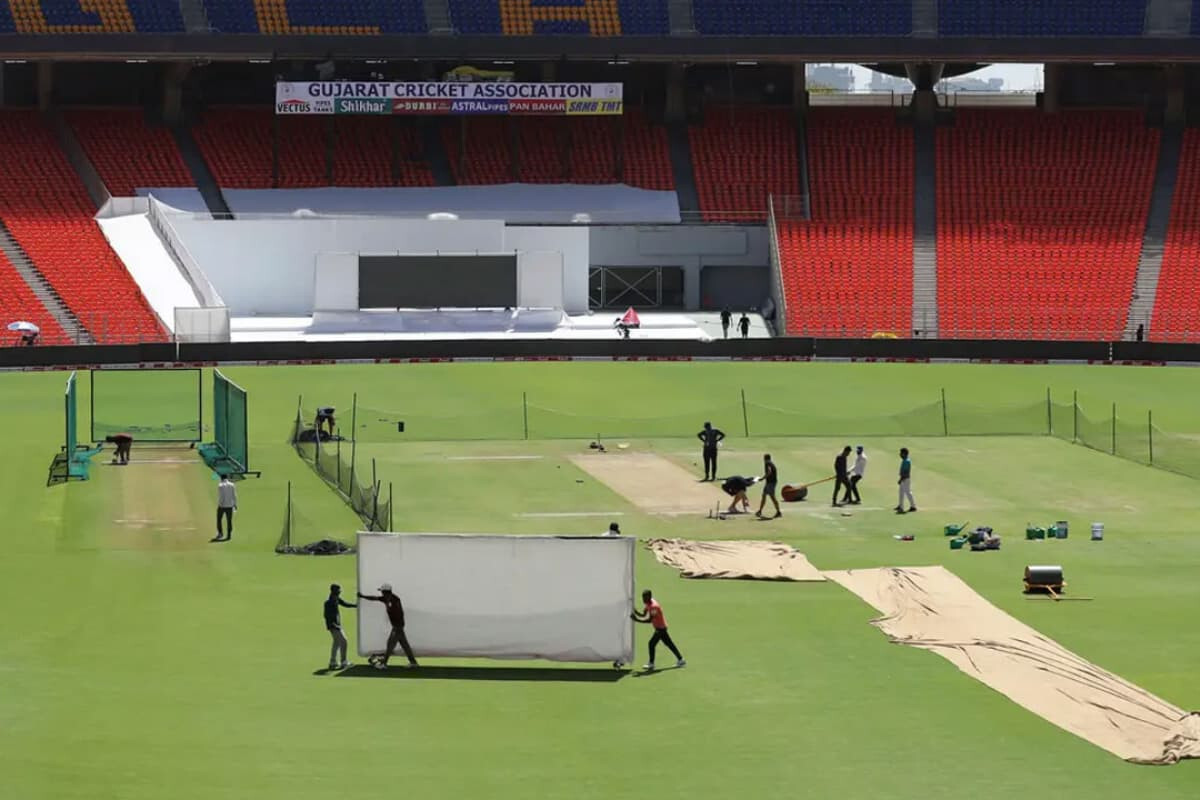
The Narendra Modi Stadium in Ahmedabad has already hosted six matches in the ongoing T20 World Cup, including the much-anticipated final between India and New Zealand. Despite being India’s home ground, the stadium has often been tagged as a venue where the hosts have struggled. In the 2023 ODI World Cup final and in the Super Eight stage of the current T20 World Cup, India failed to make a significant mark, intensifying the pressure to avoid another high-profile disappointment in front of tens of thousands of spectators. Reports suggest that every possible effort is being made to prepare the pitch in India’s favour.
India naturally enters the match as the favourite, and the pitch appears to be undergoing preparations that could tilt conditions slightly towards the home side. According to multiple sources, the curators are crafting a mixed-soil wicket, with a higher proportion of red soil compared to the black soil traditionally used. This dual-soil composition is unique, even in one of the world’s largest cricket stadiums, and is not commonly found in other international venues.
The objective is clear: India aims to exploit this advantage and secure a second consecutive T20 World Cup title, while simultaneously shedding the ‘unfavourable ground’ tag that has haunted Ahmedabad. In the 2023 ODI World Cup final, India’s home campaign ended in disappointment as Australia dominated on a black-soil pitch. Similarly, during the first Super Eight match of the current T20 World Cup, India suffered a heavy defeat against South Africa on the same type of surface.
Learning from these setbacks, the curators are now preparing a “sporting pitch” with a predominance of red soil. The expectation is that this composition will favour batsmen while still offering bowlers enough bounce for competitive play. India has historically enjoyed success on red-soil wickets, notably at the Wankhede Stadium, where their batting dominance was evident.
| Pitch Component | Expected Proportion | Implication for Game | Historical Performance |
|---|---|---|---|
| Red Soil | 60–70% | Favors stroke play, consistent bounce | India successful at Wankhede Stadium, Mumbai |
| Black Soil | 30–40% | Adds extra pace and bounce for bowlers | India struggled vs Australia and South Africa in previous WC matches |
| Mixed Soil | N/A | Balanced conditions for both batsmen and bowlers | New preparation aims to mitigate past failures |
Curators are hoping that this blend will enable India to turn the tide in Ahmedabad and perhaps finally lift the city’s “cursed ground” tag. With the pitch set to favour stroke-making while retaining some assistance for bowlers, fans and experts alike are eagerly anticipating whether India can capitalise on the home advantage and rewrite history.




Comments