Sunday, 5th April 2026

Khabor Wala Desk
Published: 4th March 2025, 9:53 AM
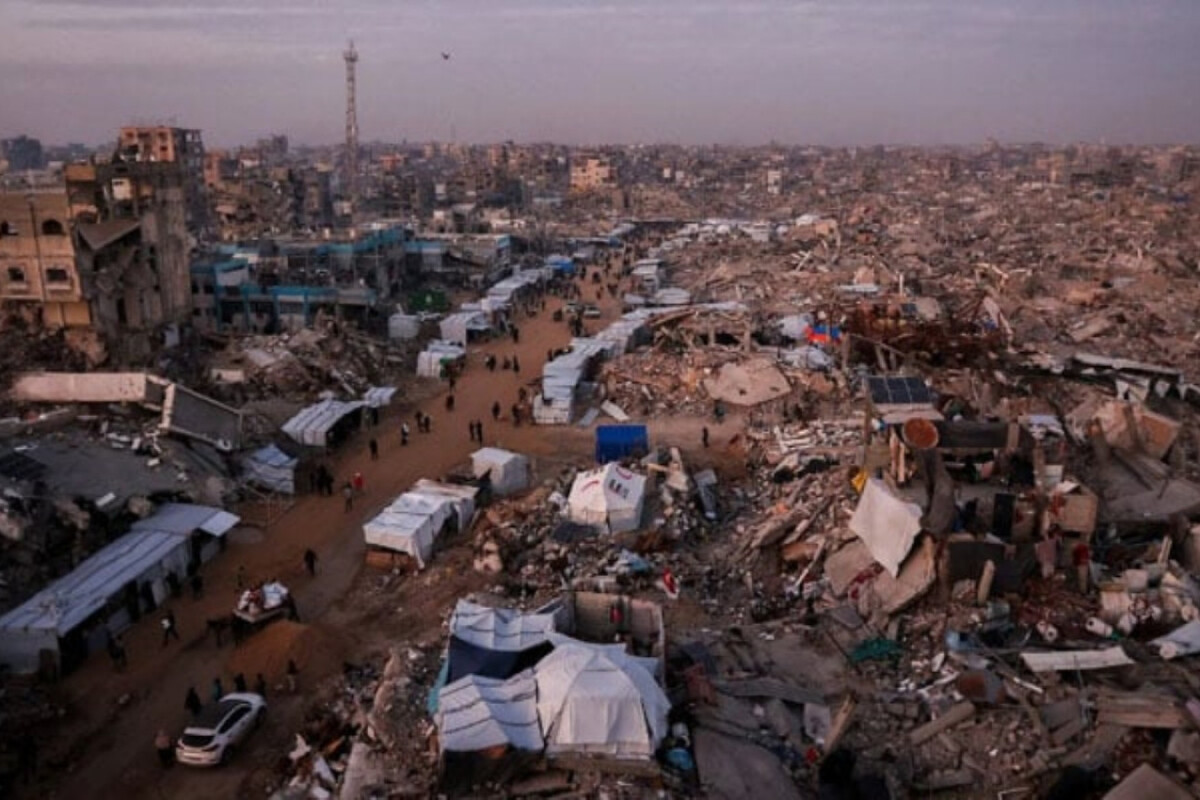
CAIRO, 4 March 2025 (BSS/AFP) – Arab leaders are gathering in Cairo on Tuesday to devise an alternative to a widely condemned proposal by US President Donald Trump, which seeks to assume control of war-torn Gaza and displace its Palestinian population.
The Arab League summit on the reconstruction of the territory follows Israeli Prime Minister Benjamin Netanyahu’s renewed endorsement of Trump’s plan, describing it as “visionary and innovative.”
Palestinians, alongside Arab nations and numerous allies of both Israel and the United States, have vehemently rejected the proposal, denouncing any attempts to force Gazans from their homeland.
According to United Nations estimates, the cost of reconstructing Gaza exceeds $53 billion following the devastation wrought by the war, which was triggered by Hamas’s unprecedented attack on Israel on 7 October 2023.
Arab foreign ministers met in Cairo on Monday for a closed-door preparatory session, focusing on a plan to rebuild Gaza while ensuring that its people remain in place, an Arab League source disclosed on condition of anonymity. The proposed plan will be presented to Arab leaders during Tuesday’s summit for approval.
Several Arab heads of state are expected to attend the summit, while some nations have sent their foreign ministers or senior representatives. Egyptian President Abdel Fattah al-Sisi and Bahrain’s King Hamad bin Isa Al Khalifa are anticipated to deliver opening remarks, according to the Arab League’s schedule.
Controversy Surrounding Trump’s Plan
Trump provoked global outcry when he initially suggested that the United States should “take over” Gaza and transform it into the “Riviera of the Middle East,” while relocating its Palestinian residents to Egypt and Jordan. Although Trump has since softened his stance, stating he was “not imposing” the plan, experts have warned that such a move could violate international law.
Stalemate Over Ceasefire
The Gaza Strip has been under an Israeli-led blockade since Hamas seized power in 2007, with critics frequently likening the territory to an open-air prison.
During a parliamentary speech on Monday, Netanyahu reiterated his support for Trump’s proposal, stating: “It is time to give the residents of Gaza a real choice. It is time to grant them the freedom to leave.”
Netanyahu’s far-right coalition partners, including Finance Minister Bezalel Smotrich, have openly supported the idea of establishing Israeli sovereignty over Gaza.
The Cairo summit is occurring amid deadlock between Israel and Hamas regarding the fragile ceasefire that has been in place since 19 January.
The first phase of the truce ended over the weekend, following six weeks of relative calm that saw the exchange of Israeli hostages for Palestinian prisoners and an influx of humanitarian aid into Gaza.
Israel has signalled willingness to extend the ceasefire’s first phase until mid-April, while Hamas insists on progressing to the second phase, which entails a permanent cessation of hostilities.
On Monday, Netanyahu warned Hamas of “consequences beyond your imagination” if the remaining hostages were not released.
Osama Hamdan, a senior Hamas official, accused Israel of deliberately undermining the ceasefire, describing its efforts to prolong the first phase as “a blatant attempt to avoid negotiating the second phase.”
Humanitarian Aid Blockade
As the initial phase of the ceasefire concluded, Netanyahu’s office announced a complete halt to “all entry of goods and supplies” into Gaza, warning of further repercussions if Hamas refused to accept an extension.
The move has drawn condemnation from key mediators such as Egypt and Qatar, as well as regional governments, the United Nations, and several of Israel’s allies.
Germany’s foreign ministry criticised the decision, stating that obstructing humanitarian aid “is not a legitimate negotiation tactic,” while the British government stressed that humanitarian relief “must not be blocked.”
The war has resulted in widespread devastation, displacing nearly the entire population of Gaza and triggering severe food shortages, according to UN reports.
Hamas’s 2023 attack led to the deaths of over 1,200 people, primarily civilians. In retaliation, Israel’s military campaign in Gaza has resulted in nearly 48,400 fatalities, also predominantly civilians, according to figures provided by both sides.
Of the 251 hostages captured during the Hamas attack, 58 remain in Gaza, including 34 confirmed dead by the Israeli military.
Context and Historical Background
The Israeli-Palestinian conflict has been a long-standing issue, with multiple wars, uprisings, and failed peace processes. The most recent escalation followed Hamas’s surprise assault on Israeli territory in 2023, which led to Israel’s extensive military response. The proposed displacement of Gazans has drawn comparisons to the 1948 Nakba, during which hundreds of thousands of Palestinians were forcibly displaced amid the creation of Israel.
With diplomatic tensions running high, the outcome of the Cairo summit is expected to shape the future of Gaza’s reconstruction and its people’s right to remain in their homeland.




Comments