Sunday, 5th April 2026

Khabor Wala Desk
Published: 5th February 2026, 1:15 PM
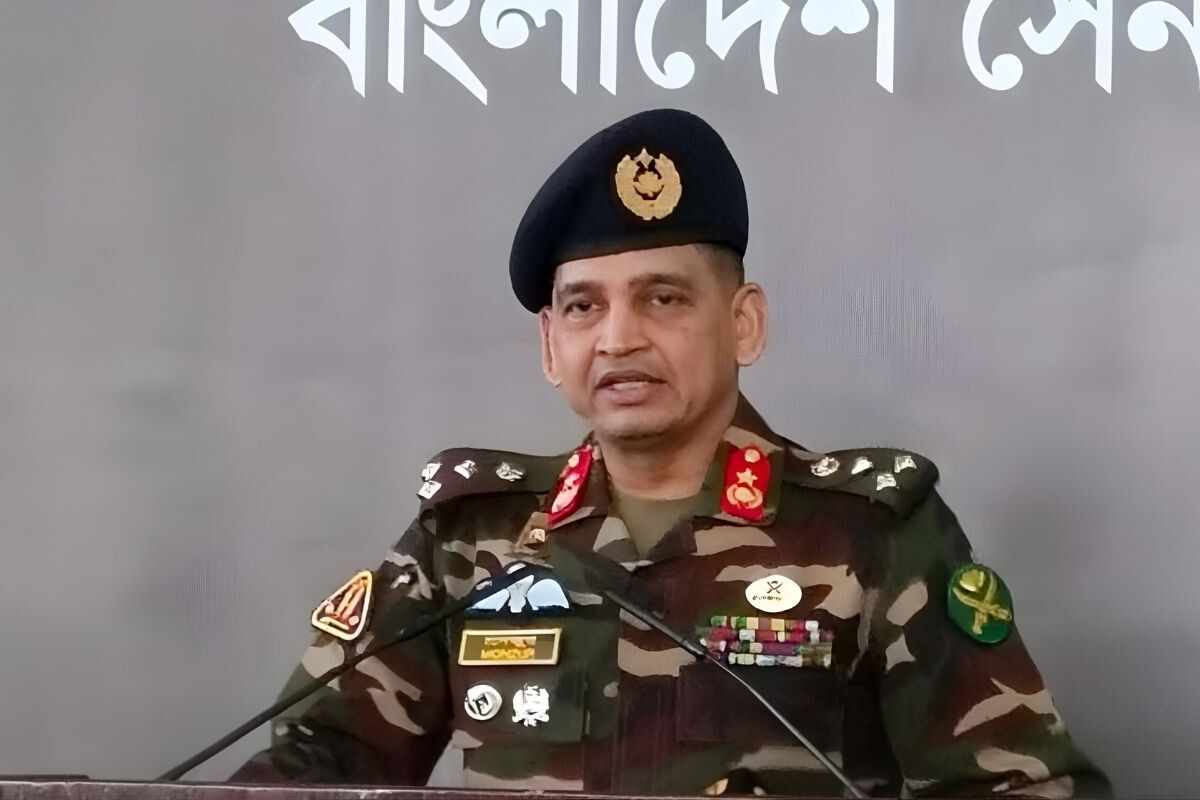
Bangladesh’s Army Headquarters has reaffirmed that troops deployed to support civil authorities during the forthcoming elections may apply force if circumstances demand, but only within the strict confines of the law and the military’s prescribed Rules of Engagement (RoE). The assurance was given by Brigadier General Dewan Mohammad Monjur Hossain, Director of Military Operations at Army Headquarters, during a press briefing held on Thursday afternoon at the Roller Skating Complex in Gulistan, Dhaka.
Responding to questions on whether the army might use force to control volatile situations at polling centres, Brigadier General Hossain stressed that the military operates under clearly defined engagement protocols. “Any use of force will be lawful, proportionate and graduated,” he said, explaining that the RoE provides a step-by-step escalation framework. Should additional force become unavoidable, troops would follow that framework meticulously, ensuring accountability and adherence to legal standards.
The remarks came amid queries comparing the army’s stance with that of the Border Guard Bangladesh (BGB), which has indicated it would not employ additional force. The brigadier general clarified that each force operates under its own mandate, but all remain aligned in their commitment to a free, fair and peaceful election.
Addressing concerns over potential mob violence before or after polling day, he noted that Bangladesh has previously witnessed attacks and crowd-related incidents during election periods. In response, the government, Election Commission, civil administration, law enforcement agencies and the armed forces are coordinating closely to prevent violence and maintain public order. The army, he said, stands fully prepared to act in support of these efforts.
The brigadier general avoided political commentary, reiterating that the military’s sole focus is preventing violence and sabotage. He highlighted that the Army Chief has personally visited all divisions to meet civil administrators and security officials involved in election duties, both to reassure them of military support and to bolster public confidence in a coordinated, credible electoral process.
Special attention is being paid to sensitive regions, including the Chittagong Hill Tracts and Rohingya refugee camps, where troops are deployed year-round. Risk assessments have already factored in election-related threats in these areas.
To enhance voter confidence, the army has established upazila-level and, in some cases, polling-centre-based camps, enabling extensive patrols. Non-lethal weapons and riot-control equipment have been issued, with additional resources procured specifically for election duties. Brigadier General Hossain emphasised that impartiality remains paramount, adding that transparent conduct on the ground—witnessed by journalists and citizens alike—would be the clearest proof of neutrality.
He also acknowledged the growing risk of cyber threats, noting that while the army has secured its own systems, broader vigilance is required from all stakeholders.
Key Elements of the Army’s Election Deployment
| Aspect | Details |
|---|---|
| Legal Framework | Strict adherence to Rules of Engagement and national law |
| Use of Force | Graduated, proportionate, and lawful only if necessary |
| Deployment Areas | Nationwide, with heightened focus on sensitive regions |
| Equipment | Non-lethal weapons and riot-control gear |
| Objective | Ensure voter safety, public order, and electoral credibility |
Overall, the army’s message was clear: it is prepared, restrained and committed to supporting a peaceful democratic exercise without overstepping its legal mandate.


Comments