Sunday, 5th April 2026

Khabor Wala Desk
Published: 20th December 2025, 10:52 AM
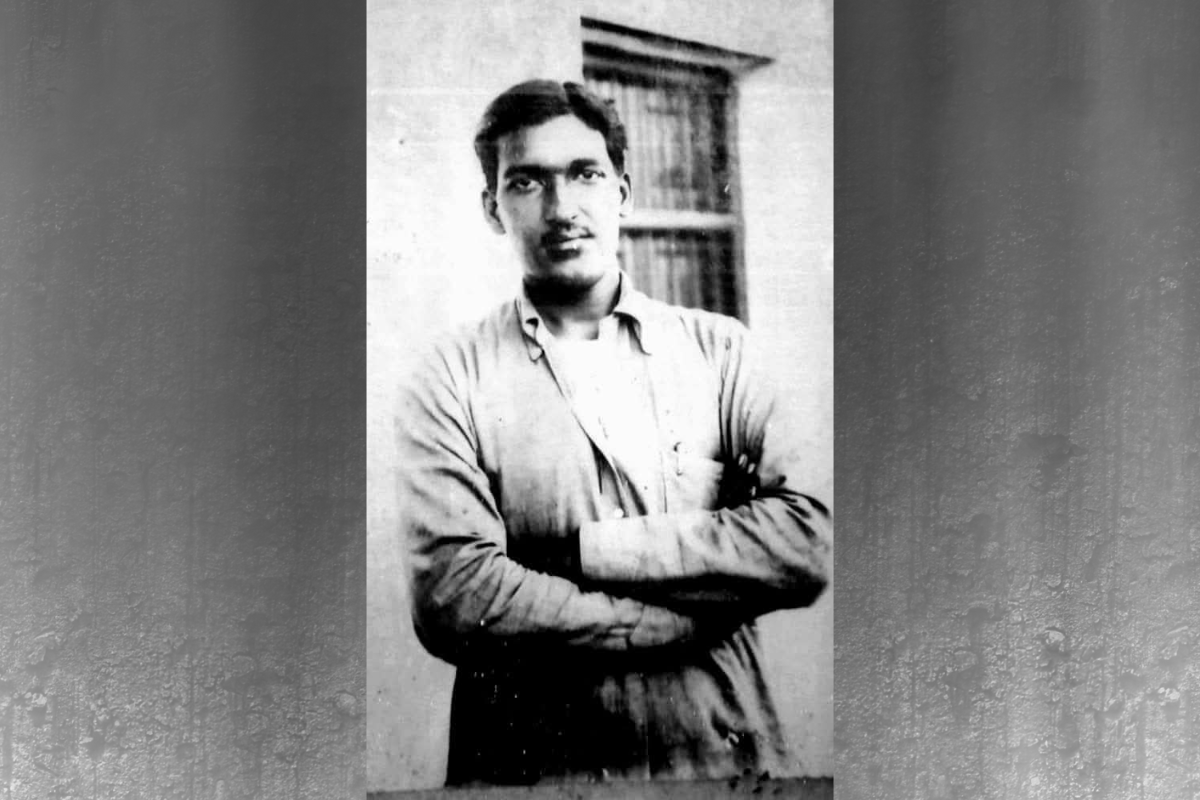
“If death comes calling in response to the motherland, it is no longer death—it is my pride.”
Among the immortal figures of India’s struggle for independence, Shaheed Ashfaqulla Khan occupies a singular place. In the turbulent 1920s, he actively participated in revolutionary activities against the British colonial regime, dedicating his brief but remarkable life entirely to the service of his country. His heart bore no distinction of religion, only an unwavering love for his motherland and a steadfast commitment to justice and truth.
Ashfaqulla Khan was born on 22 October 1900 in Shahjahanpur, Uttar Pradesh. His father, Shafiqullah Khan, belonged to a Pathan lineage renowned for its military tradition, while his mother, Majhur-un-Nisa, was a devout and principled woman. Among four brothers, Ashfaqulla was the youngest. His elder brother, Riyasatullah Khan, had been a classmate of the revolutionary Pandit Ramprasad Bismil, an association that eventually drew Ashfaqulla into the revolutionary movement.
Although Bismil initially paid little attention to him, in 1922, during the fervent Non-Cooperation Movement, they were reunited at a public gathering in Shahjahanpur. That meeting sparked a unique Hindu-Muslim revolutionary bond, one that would deeply unsettle the British authorities. The revolutionaries understood that independence could not be achieved by non-violence alone; they therefore chose the path of armed resistance.
On 8 August 1925, a secret meeting in Shahjahanpur resolved to loot the government treasury aboard the 8 Down passenger train from Sarnapur to Lucknow. On 9 August 1925, at Kakori, nine revolutionaries including Ashfaqulla Khan successfully executed the plan. The British government, taken aback, summoned Scotland Yard to investigate.
By 26 September 1925, Bismil and numerous revolutionaries were arrested. Ashfaqulla initially managed to escape abroad to raise funds for the cause, but betrayal by a friend led to his capture in Delhi. He was subsequently tried in Faizabad Jail in what became known as the ‘Kakori Conspiracy Case’. Though prominent figures like Pandit Motilal Nehru formed committees to seek clemency, the ruthless colonial rulers ignored all appeals.
The sentence: death by hanging. On Monday, 19 December 1927, Ashfaqulla Khan was brought to the gallows. Removing his shackles, he advanced towards the rope, kissing it tenderly, and proclaimed:
“My hands have never harmed an innocent soul. The charges against me are false. Allah alone shall judge me.”
He then recited the kalima with serene composure. In an instant, a young life was extinguished, yet an immortal legacy was born.
The poignant grandeur of his sacrifice has been immortalised in the poetry of Agnivesh Shukla, particularly in ‘Ashfaqulla Ki Akhiri Raat’. Modern audiences have also come to appreciate his devotion through the film ‘Rang De Basanti’, in which Kunal Kapoor portrayed his character.
Shaheed Ashfaqulla Khan proved that patriotism knows no religion, and that death on the path to freedom is itself a magnificent celebration. With profound respect, we bow to his memory.


Comments