Sunday, 5th April 2026

Khabor Wala Desk
Published: 7th January 2026, 9:08 PM
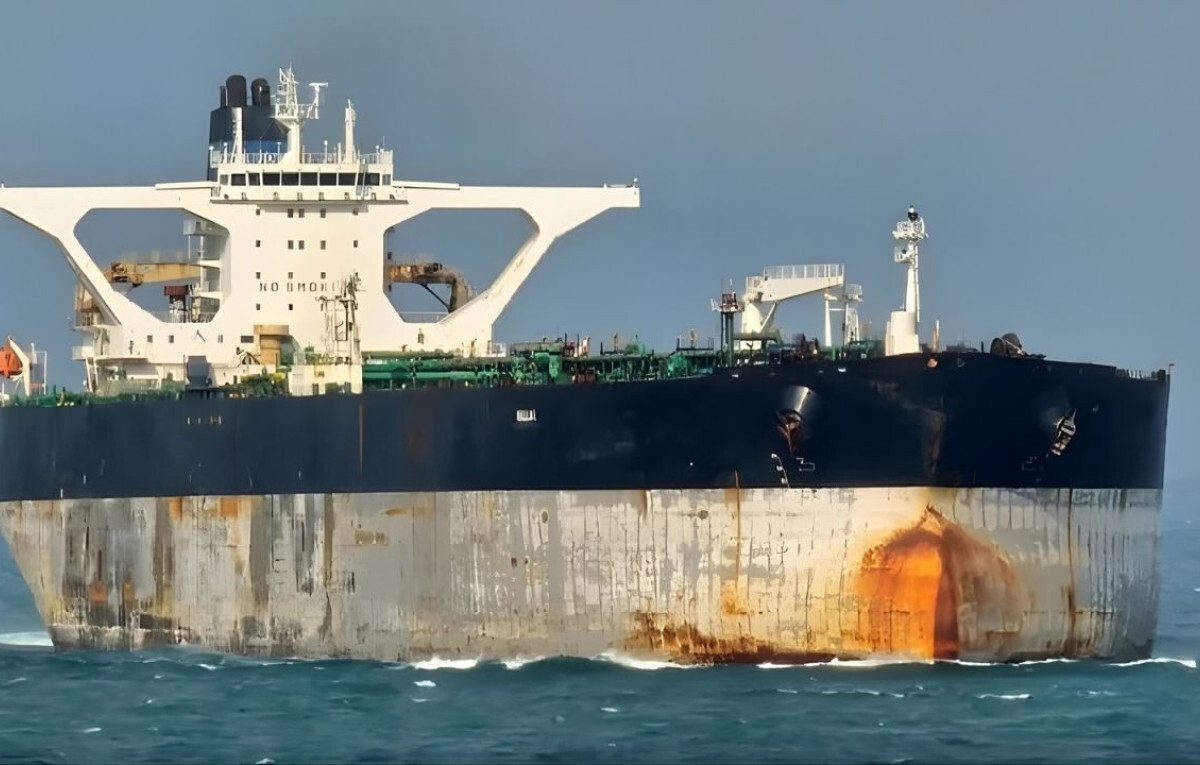
A high-stakes maritime confrontation is unfolding in the North Atlantic as United States forces pursue a controversial oil tanker linked to Venezuelan trade. The vessel, formerly known as the Bella 1 but recently rechristened the Marinera, is at the centre of an escalating geopolitical dispute involving Washington, Moscow, and Caracas.
The Marinera has reportedly undergone a series of rapid identity shifts to evade international scrutiny. Previously flagged to Guyana, the ship has recently been re-registered under the Russian flag. This “reflagging” coincided with a dramatic change in course; after the US Coast Guard attempted to board the vessel in the Caribbean last month, it fled across the Atlantic toward Europe.
As of Tuesday morning, AIS data from Marine Traffic placed the tanker approximately 300km south of Iceland. Its journey has been shadowed by a significant military presence. According to US officials, Russia has deployed a submarine and additional naval assets to escort the ship, while the US has mobilised nearly ten military transport aircraft and helicopters to the region.
Table: Profile and Status of the Vessel ‘Marinera’
| Feature | Details | Status/Allegation |
|---|---|---|
| Former Name | Bella 1 | Altered to evade tracking |
| Current Flag | Russian Federation | Formerly Guyanese; reflagged mid-voyage |
| Current Location | North Atlantic | 300km South of Iceland |
| Escort Force | Russian Navy | Includes at least one submarine |
| US Allegation | Sanctions Evasion | Linked to Iranian and Venezuelan oil |
| Cargo Status | Reported Empty | Historically a crude oil carrier |

The White House has adopted a “blockade” policy against sanctioned tankers, a move the Venezuelan government has denounced as “theft.” This escalation follows the recent, high-profile arrest of Venezuelan President Nicolás Maduro by US forces in Caracas.
Washington’s primary objective appears to be a physical seizure of the Marinera. However, the reflagging to Russia presents a significant legal hurdle. Under the UN Convention on the Law of the Sea (UNCLOS), a “stateless” vessel can be boarded with relative ease, but a ship flying the flag of a sovereign nation like Russia is technically under that nation’s protection. Maritime analysts suggest that while a name change does not mask the ship’s permanent IMO number, the Russian registry “complicates enforcement efforts” significantly.
The Kremlin has expressed “concern” over what it describes as a “clearly disproportionate” military response from the US and NATO. The Russian Foreign Ministry maintains that the vessel is sailing in full compliance with international maritime law.
Conversely, the US military’s Southern Command remains defiant, stating that its sea services are “vigilant, agile, and postured to track vessels of interest.” While the US prefers a seizure over a kinetic strike, the presence of a Russian submarine creates a volatile environment where a single miscalculation could lead to a direct military confrontation between two nuclear-armed powers.
As the Marinera nears the British Isles, the diplomatic pressure shifts toward the UK Ministry of Defence. While London has yet to comment on the specific activities of its allies, the proximity of the standoff to British waters ensures that the Royal Navy is likely monitoring the situation with equal intensity.




Comments