Monday, 6th April 2026

Khabor Wala Desk
Published: 3rd March 2026, 11:54 PM
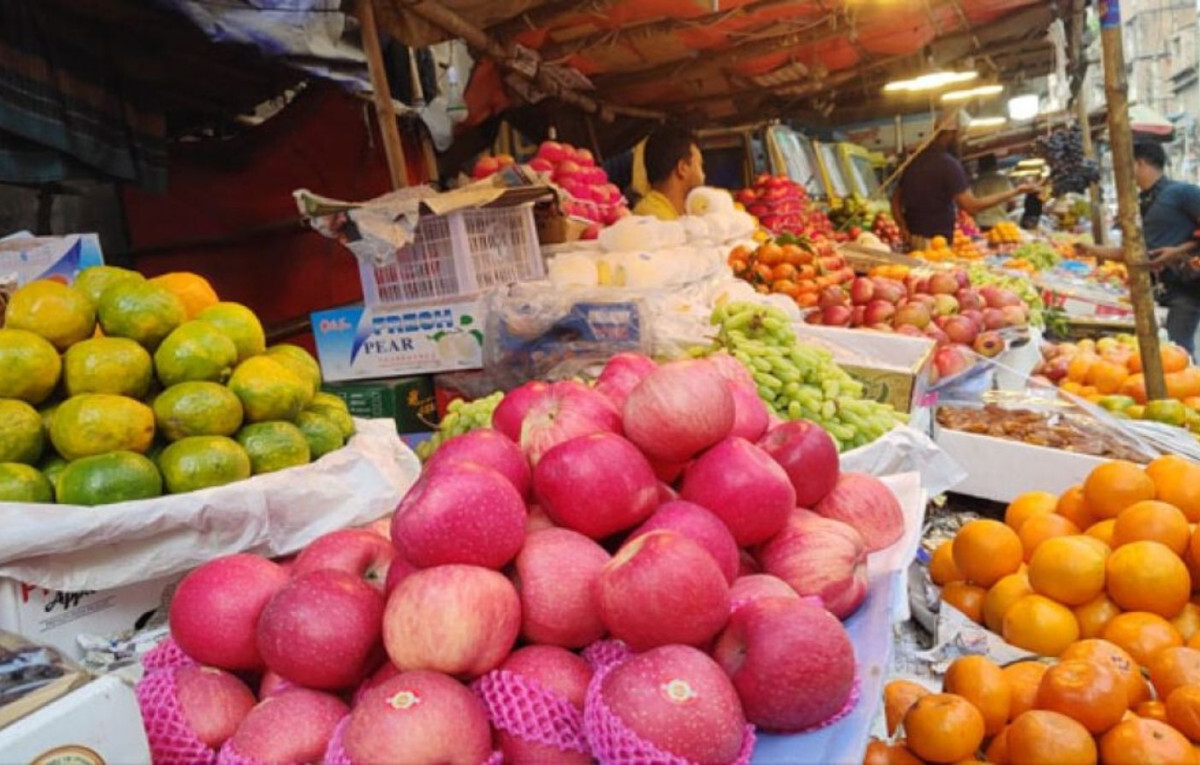
In the heart of Old Dhaka, flanking the banks of the Buriganga River, lies the century-old Badamtali Fruit Market. As the holy month of Ramadan commences, this historic trading hub has transformed into a beehive of commercial activity, with stakeholders reporting a staggering daily turnover exceeding 100 crore BDT (one billion Taka).
From the early hours of the morning, the stretch from Sadarghat launch terminal to the majestic Ahsan Manzil resonates with the rhythmic calls of auctioneers and the frantic movement of porters. This market serves as the primary artery for fruit distribution in Bangladesh, sourcing produce from 46 countries to meet approximately 70% of the national demand.
While the market stocks a year-round variety of local and exotic fruits, the onset of Ramadan shifts the focus almost exclusively to dates (Khejur). For many wholesalers, the volume of dates sold during this single month surpasses the combined sales of the preceding eleven months.
Despite a noticeable hike in the prices of import-dependent goods, consumer demand remains robust. Seasonal traders have joined permanent wholesalers, many having booked slots months in advance to capitalise on the “Iftar rush.” According to Md. Saiful Islam Shanto, Director of Sathi Fresh Fruits, while some varieties have seen price fluctuations, the market sentiment remains positive, with steady footfall expected to continue until the mid-point of Ramadan.
The following table outlines the wholesale prices for various date varieties and seasonal fruits currently being traded:
| Fruit Variety | Unit/Weight | Wholesale Price (BDT) |
|---|---|---|
| Medjool Dates | 5 kg Carton | 5,500 – 7,000 |
| Mariyam Dates | 5 kg Carton | 4,000 – 5,000 |
| Ajwa Dates | 5 kg Carton | 3,000 – 5,000 |
| Jihadi Dates | 10 kg Carton | 2,700 (Up from 1,700) |
| Sukkari Dates | 3 kg Carton | 1,800 – 2,400 |
| Watermelon | per kg | 100 – 120 |
| Pomegranate (Bedana) | per kg | 520 – 560 |
| Strawberries | per kg | 600 – 700 |
| Papaya | per kg | 170 – 180 |
Established in 1935 during the British Raj, Badamtali is more than just a marketplace; it is a vital revenue generator for the state. Haji Mohammad Farhad Rana, a local political figure and businessman, emphasised that the market handles hundreds of trucks and containers daily. Approximately 70% of the stock arrives via Chattogram Port, while the remaining 30%—largely from India—enters through land ports such as Hili, Benapole, and Bhomra.
However, the sheer volume of trade often leads to debilitating traffic congestion. Stakeholders are calling on the newly elected government to modernise the infrastructure and implement “business-friendly” policies to prevent prices from spiralling out of reach for the middle and lower-income demographics.
To protect consumers during the high-demand season, the Fruit Traders’ Association has enforced stringent hygiene and transparency protocols. Sirajul Islam, former president of the association, confirmed that selling expired or rotten produce is strictly prohibited. Traders are mandated to store dates on wooden pallets rather than bare floors, use accurate digital scales, and maintain visible price lists and sales memos.
As the sun sets and the city prepares for Iftar, the legacy of Badamtali continues to flourish, bridging the gap between global orchards and the dinner tables of millions across Bangladesh.




Comments