Sunday, 5th April 2026

Khabor Wala Desk
Published: 8th March 2026, 2:45 PM
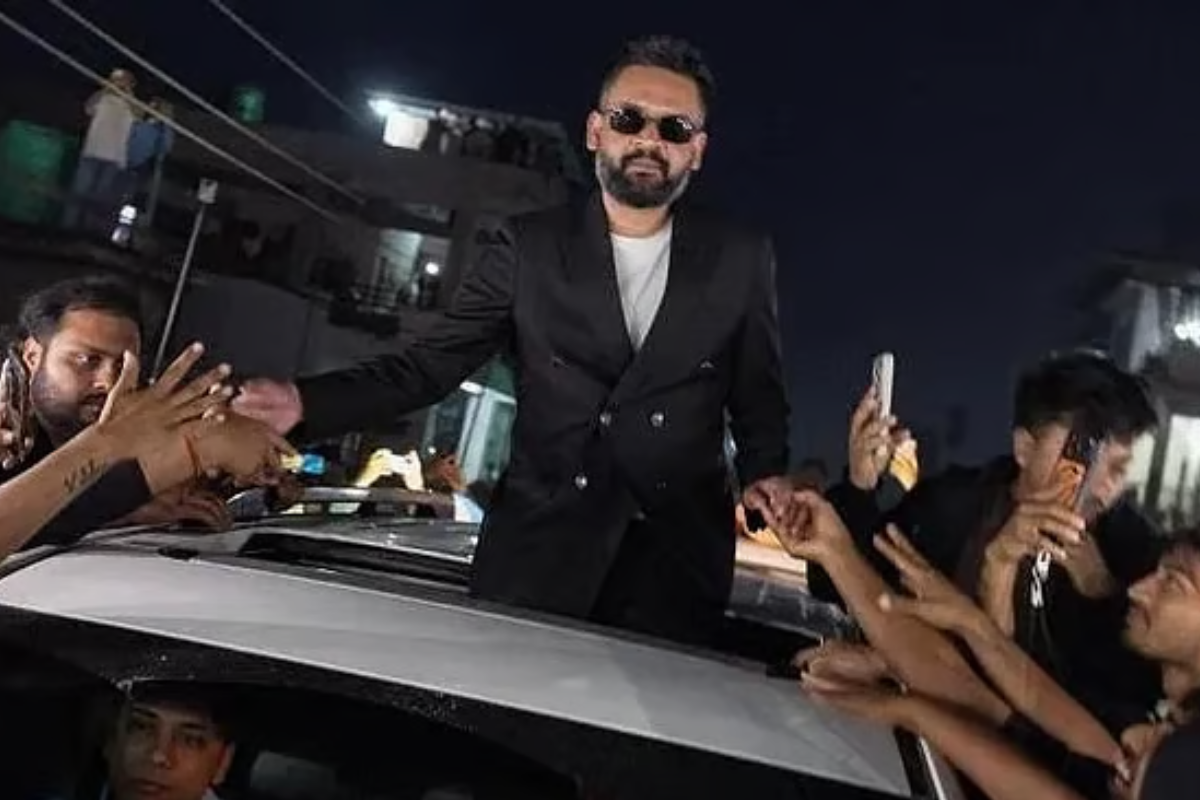
Predicted long before the ballots were cast, the results of Nepal’s general election have confirmed a significant political shift. The traditional parties have been sidelined, paving the way for the State Reform Party (SRP) to ascend to power, with 35-year-old Balendra Shah poised to become the country’s next Prime Minister.
The outcome highlights a generational divide in South Asian politics. Nepal’s victory for Generation Z leaders mirrors the contrast with Bangladesh, where the same generation failed to secure lasting influence in last year’s elections. In August 2024, a youth-led movement led to the displacement of the ruling Awami League in Bangladesh. A year and one month later, Nepal’s former Prime Minister K.P. Sharma Oli lost power in a similar upheaval. Unlike Bangladesh, however, Nepal’s youth-backed candidate Shah has successfully captured the electorate’s support.
Preliminary results from Thursday’s vote indicate that Nepalese voters are turning away from established political figures. Former rapper turned politician Shah’s SRP is set to occupy a decisive majority in Parliament. According to the Election Commission, the party has secured 165 seats through the first-past-the-post system and 110 seats through proportional representation, with final confirmation expected next week.
| Electoral System | Total Seats | SRP Seats Won |
|---|---|---|
| First-Past-the-Post | 165 | 165 |
| Proportional Representation | 110 | 110 |
| Total | 275 | 275 |
Shah’s rise to power began with a meticulously coordinated campaign from a six-storey headquarters in western Kathmandu. Key campaign operations were conducted from the top three floors, with substantial financial support from the Nepalese diaspora abroad.
The SRP’s Research, Strategy and Documentation division, under an 11-member board, mobilised around 300 party workers into three teams. These teams were responsible for nationwide strategy planning, organizing rallies, producing digital content, and gathering public opinion.
The party also followed a precise media schedule. Shah delivered a major speech every eight days, amplified by a 660-member social media team. Daily roadshows covered five to seven districts, with Shah appearing in one of the country’s seven provinces each day.
An SRP leader explained, “By responding to opposition claims in a single, calculated instance, our message remains clear and focused.”
Before joining SRP in December, Shah served as the mayor of Kathmandu, elected in 2022. His prior fame as a celebrated rapper, with millions of social media followers, helped him connect with a younger electorate. A January rally in Madhesh province, alongside SRP founder Ravi Lamichhane, went viral online and reinforced the narrative of a youth candidate rising from the plains to challenge the traditional elite from Kathmandu and surrounding hill regions.
Shah contested the Jhapha-5 seat in the Terai region, a stronghold of former Prime Minister K.P. Sharma Oli. Employing unconventional strategies, Shah prioritised on-the-ground engagement over studio interviews, creating networks of young volunteers to canvass voters and gather feedback on development and governance.
The SRP has indicated that Shah’s potential government will involve external experts to enhance administrative capacity and prioritise the concerns of the younger generation. As Vice-Chairman D.P. Aryal noted, “Nepalese across all regions will feel that the government belongs to them, and young people’s involvement and technology will remain a core focus.”


Comments