Sunday, 5th April 2026

Khabor Wala Desk
Published: 28th March 2026, 5:58 PM
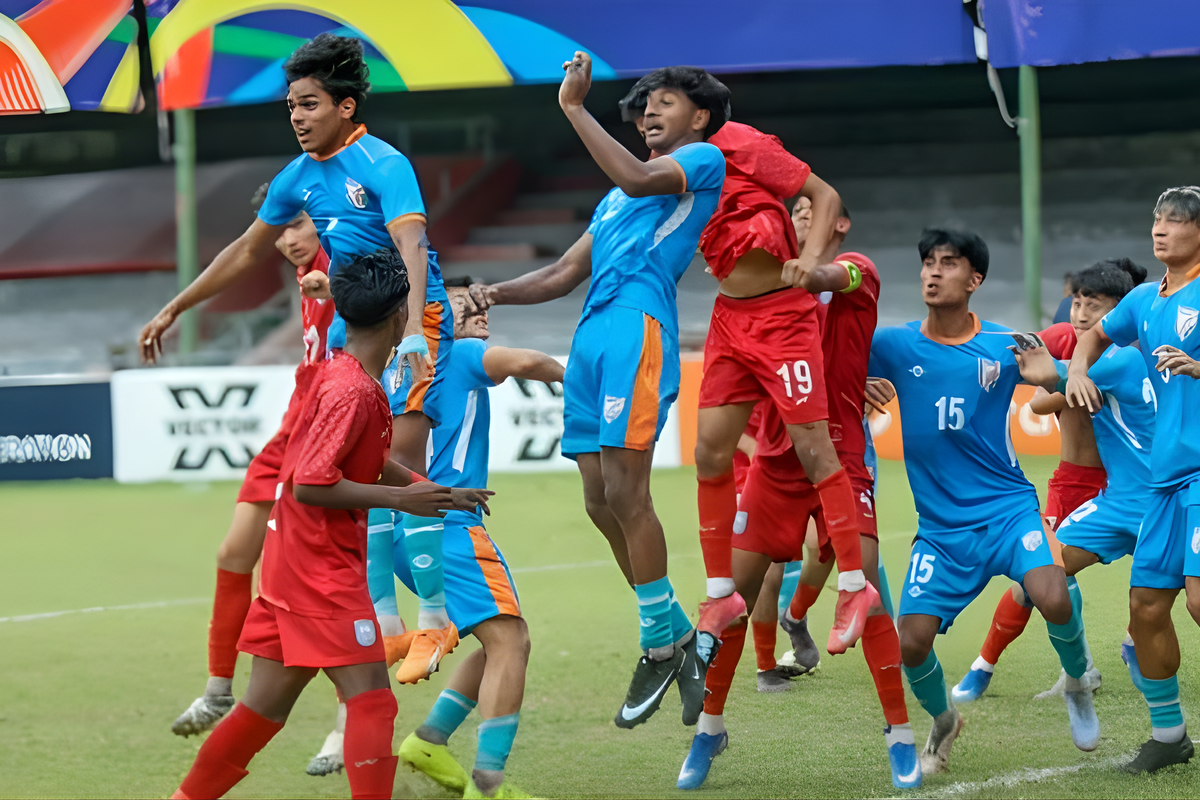
A tense and emotionally charged encounter between Bangladesh and India in the SAFF Under-20 Championship once again reignited debate over refereeing standards in regional football, after both sides finished with a 1–1 draw and saw members of their respective coaching staff shown red cards during the match.
The fixture, staged in the Maldives, lived up to the traditional intensity associated with Bangladesh–India clashes. While both teams managed to score once each, the match was also marked by disciplinary flashpoints on the touchline, ultimately preventing Bangladesh’s British head coach Mark Cox from attending the post-match press conference after receiving a red card.
In his absence, assistant coach Atiqur Rahman Mishu addressed the media and expressed frustration regarding officiating standards, suggesting that the South Asian Football Federation (SAFF) should take greater responsibility in ensuring neutrality and consistency in high-pressure fixtures.
He stated that refereeing in Bangladesh–India matches is frequently perceived as biased, adding that such concerns require formal review rather than informal debate. However, he stopped short of making direct accusations, emphasising that the issue should be handled at the governing level.
Beyond officiating controversies, the assistant coach also reflected on the performance of American-born midfielder Ronan Sullivan, who continued to play a decisive role in Bangladesh’s attacking phases. Sullivan, who scored twice in the opening match against Pakistan, provided the assist from a corner that led to Bangladesh’s equaliser against India. Mishu praised his contribution, describing him as a valuable team asset whose set-piece delivery and creativity significantly enhance Bangladesh’s attacking threat.
From a tactical standpoint, Bangladesh began slowly in the match and conceded first after struggling to cope with India’s early intensity. However, the coaching staff believed the team improved after the first 20–25 minutes, gradually gaining control and composure as the match progressed.
According to Mishu, Bangladesh performed better in the second half, demonstrating improved organisation and greater control in midfield, which allowed them to neutralise India’s attacking momentum.
The result ensured that both Bangladesh and India progressed from the group stage, with Bangladesh finishing as runners-up and booking a semi-final meeting with Nepal. India, meanwhile, advanced as group winners and are set to face Bhutan in the other semi-final.
| Team | Result vs India | Points | Position | Semi-final Opponent |
|---|---|---|---|---|
| India | 1–1 | 4 | Group winners | Bhutan |
| Bangladesh | 1–1 | 4 | Runners-up | Nepal |
The assistant coach emphasised a step-by-step approach heading into the semi-final, stating that Bangladesh would thoroughly analyse both Nepal’s performances and their own display against India. Nepal, having already played three matches, are expected to be closely studied as Bangladesh prepare for a demanding knockout fixture.
Despite the positive outcome of reaching the semi-finals, questions remain regarding squad selection and tactical consistency. In particular, the continued absence of certain players, including defender Declan Sullivan, has raised internal curiosity, though no official explanation has been provided by the coaching staff.
Overall, while Bangladesh’s progress in the tournament reflects clear development at youth level, the match also highlighted ongoing concerns around officiating standards and sideline discipline. The focus now shifts firmly to their semi-final challenge, where tactical execution and emotional control will be equally critical.


Comments