Sunday, 5th April 2026

Khabor Wala Desk
Published: 16th March 2026, 4:44 PM
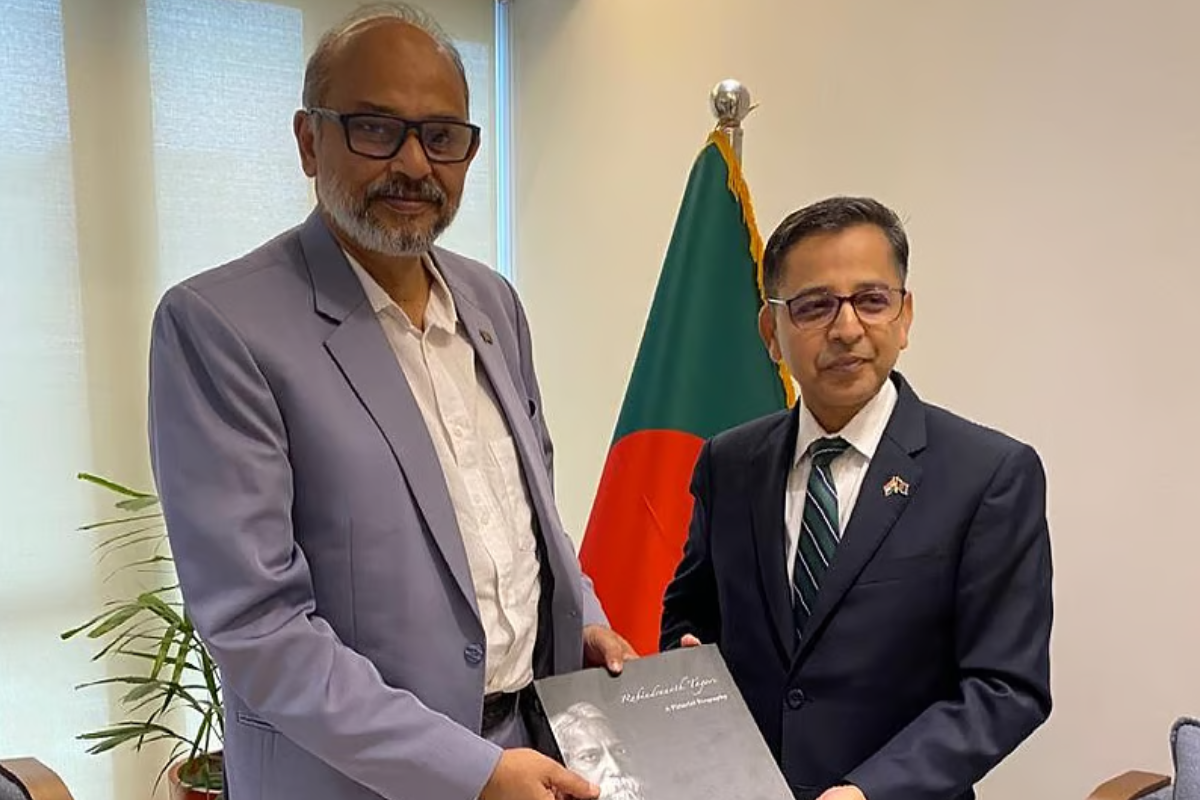
Bangladesh is actively seeking to increase industrial investment from India and China as part of its broader strategy to revitalise the national economy, according to Rashed Al Mahmud Titumir, Principal Adviser to the Prime Minister on Finance and Planning. He made the comments following bilateral discussions with India’s High Commissioner to Dhaka, Pranay Verma, and China’s Ambassador, Yao Wen, at the Ministry of Finance in Dhaka on Monday.
Titumir emphasised that past governments had left the economy in a weakened state, and the current administration aims to inject new energy into industrial development.
“Bangladesh needs renewed vitality in its economy. According to the BNP manifesto, increasing investment is essential,” he said.
He added that higher investment would drive industrial production, which in turn would create employment opportunities, boost government revenue, and allow greater funding for critical sectors such as healthcare, education, and public services.
“If investment rises, production rises. With increased production comes more employment, higher revenue, and more resources for health, education, and other essential sectors,” Titumir explained.
The meeting with Indian and Chinese officials largely revolved around existing projects in Bangladesh. Titumir noted that officials reviewed the status of India-backed lines of credit, assessing how many had been implemented, their current progress, and strategies for alignment with Bangladesh’s ongoing development initiatives.
Regarding China, he recalled the high-profile visit of President Xi Jinping in 2016, during which $20 billion in projects were discussed. To date, only approximately $8.2 billion worth of projects have advanced. Titumir emphasised that the government is now evaluating the current status of these projects, future potential, and strategic steps to ensure effective execution and expansion.
Titumir also highlighted efforts to strengthen ties with neighbouring South Asian countries, including Bhutan and Nepal, particularly in energy and power sectors. He cited Bangladesh’s ongoing “One Citizen, One Card” initiative and noted that lessons from India’s Aadhaar system could inform the development of integrated identity and financial solutions.
“We are navigating an energy crisis, and past agreements were often inadequate. Strengthening regional cooperation can help us overcome such challenges,” he said.
A central theme of the discussions was shifting from a loan-based culture to an investment-driven approach, focusing on industrialisation and private sector participation. Titumir proposed the creation of a working group comprising the Bangladesh government, Chinese state-owned and private enterprises, and other stakeholders to coordinate industrial investment projects.
“Our trade with China is substantial, but Bangladesh requires more industrialisation. We need to transition from debt culture to investment culture,” he explained.
| Aspect | Details |
|---|---|
| Objective | Increase industrial investment from India and China |
| Officials Met | India’s High Commissioner Pranay Verma; China’s Ambassador Yao Wen |
| Focus Areas | Existing projects, industrialisation, investment culture |
| Strategic Goals | Boost production, employment, and revenue; strengthen regional cooperation |
| Ongoing Initiatives | “One Citizen, One Card” programme; review of lines of credit and Chinese projects |
| Future Plans | Establish working group with government and foreign investors; enhance industrial partnerships |
Titumir stressed that Bangladesh aims to strengthen economic partnerships, maximise industrialisation, and implement a strategic framework for sustainable development. Through coordinated efforts with India, China, and regional neighbours, the government hopes to attract increased investment, expand the industrial base, and ensure long-term economic growth.
“Today’s discussions with China centred on boosting investment in the capital market and exploring actionable initiatives to enhance industrial growth,” Titumir concluded.
This renewed focus on bilateral cooperation and industrial investment marks a significant step in Bangladesh’s economic strategy, signalling a commitment to modernising the industrial sector and fostering regional integration.


Comments