Sunday, 5th April 2026

Khabor Wala Desk
Published: 16th August 2025, 12:36 PM
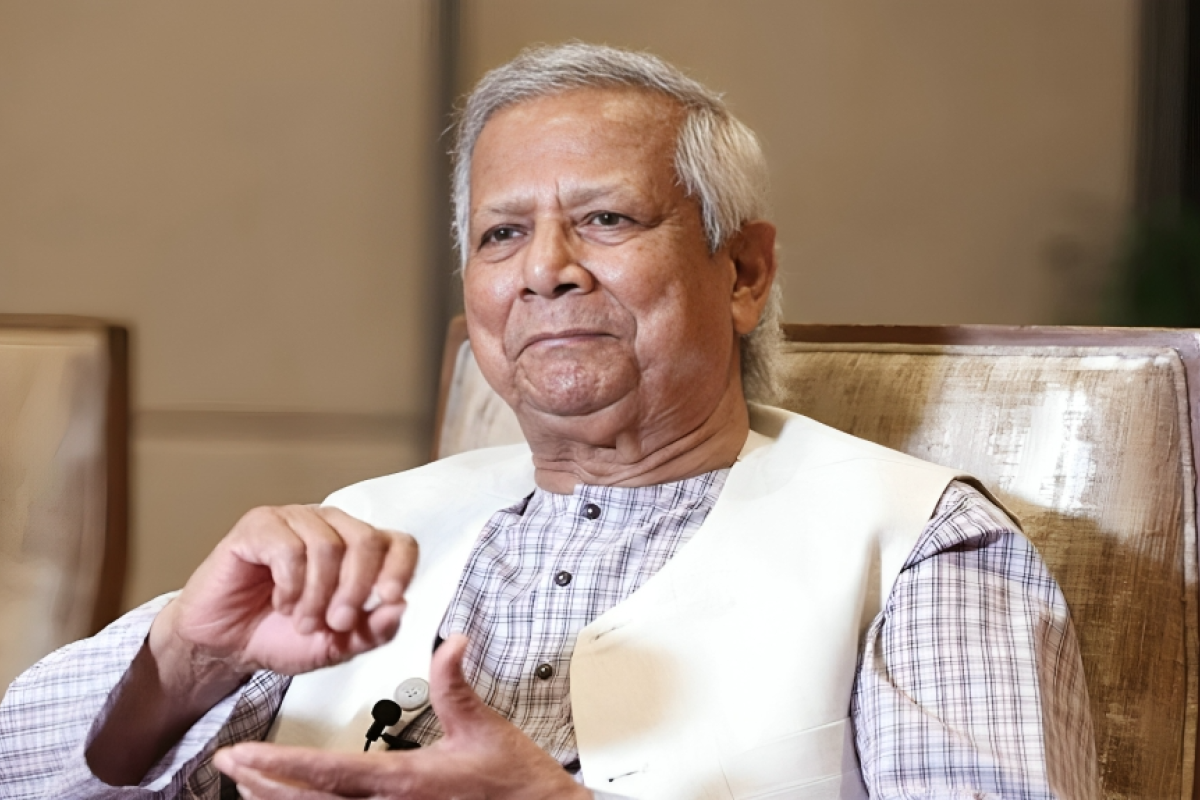
Nobel Laureate economist and Chief Adviser, Dr Muhammad Yunus, has stated that he is leading Bangladesh’s political transition and reform process solely because of the will of the people, not by personal choice. According to him, circumstances have compelled him to take on this role.
He made the remarks in an exclusive interview with Malaysia’s state news agency Bernama during his official three-day visit to Malaysia from 11 to 13 August, at the invitation of Prime Minister Anwar Ibrahim. During the trip, Dr Yunus held meetings with Malaysia’s top leadership and business leaders, and several bilateral agreements were signed.
The interview was jointly conducted by Arul Raju Durar Raj (Editor-in-Chief, Bernama), Kishu Kumari Susidaram (Assistant Editor, Economic Service), and Voon Miaw Ping (Editor, International News Service).
Addressing the Rohingya crisis, Dr Yunus stressed that Malaysia, as the current chair of ASEAN, holds a unique position to play a decisive role. Drawing on its regional influence and experience in hosting Rohingya refugees, Malaysia could, he argued, significantly contribute to the solution process.
He stated: “We hope Malaysia will exercise its influence throughout the entire dialogue process so that we can overcome this problem.”
Dr Yunus also warned that the conflict between the Arakan Army and the Myanmar government forces in Rakhine State has further complicated the Rohingya situation.
he highlighted include:
| Issue | Data / Detail |
| Newly arrived Rohingya in last 18 months | 150,000 |
| Previous number of Rohingya in Bangladesh | 1.2 million |
| Current total | 1.35 million |
| External funding issue | US funding cut worsened crisis |
| Upcoming international conferences | 3 (first at Cox’s Bazar, end of this month) |
On the question of reforming Bangladesh’s Constitution and state institutions, Dr Yunus emphasised that the changes are not his imposition but a popular demand: “It is not me; it is the people who want this change. I only help them move in the direction they wish to go. I impose nothing; I merely see what the people desire, and then I help them implement it.”
He clarified that he had no initial plan to take any responsibility in running the state. The 2006 Nobel Peace Prize laureate, honoured for pioneering microcredit, said that circumstances left him with no alternative.
He described himself not as a leader, but rather as a “guardian” of the long-absent democratic process.
Turning to the youth, Dr Yunus underlined the significance of the upcoming election:
“Imagine reaching 18, eagerly waiting to cast your vote, but no election ever takes place. Now, after 15 years, they will finally vote for the first time.”
Dr Yunus’s remarks reflect the nation’s growing anticipation of change. Bangladesh is preparing for its next parliamentary election in February next year, which is expected to be a defining moment in the country’s democratic journey.

Comments