Sunday, 5th April 2026

Khabor Wala Desk
Published: 22nd November 2025, 7:33 PM
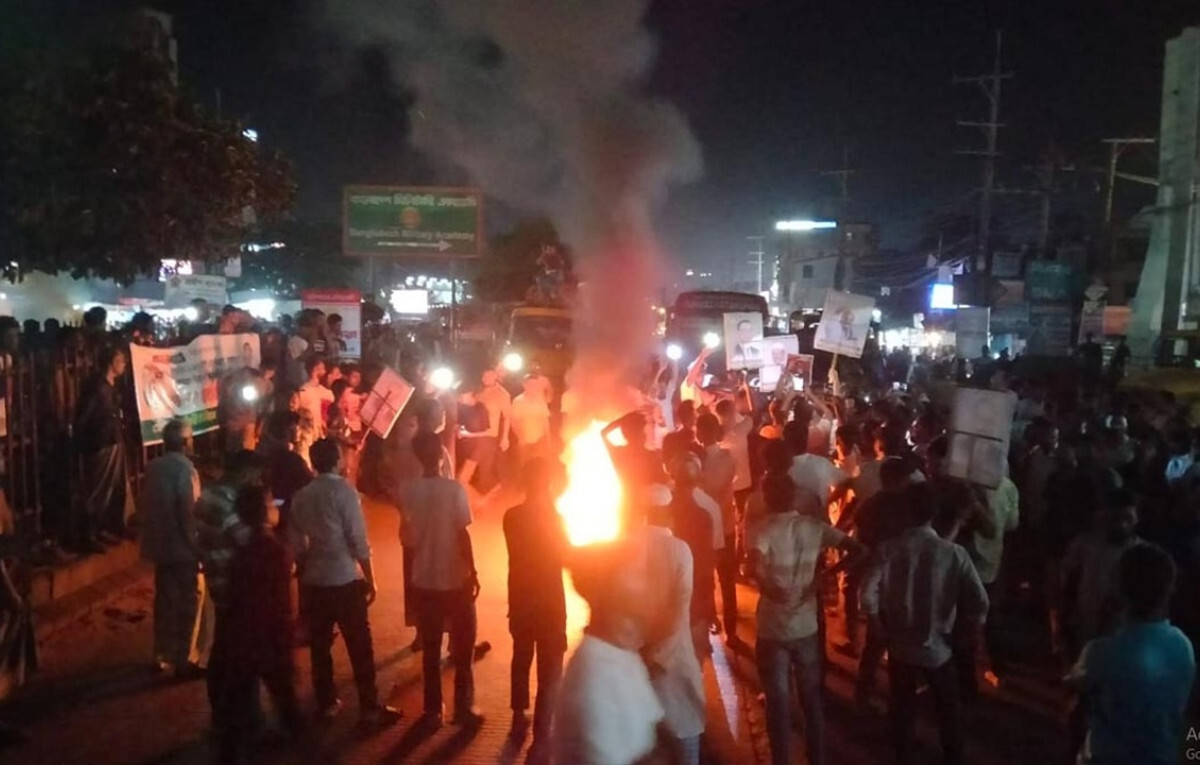
Widespread dissent has unfolded within the Bangladesh Nationalist Party (BNP) over its recently announced list of parliamentary candidates. On Saturday, protests broke out in at least eight constituencies, where local BNP activists organised human chains, torch processions, demonstrations and temporary road blockades. In seven constituencies, activists demanded a reconsideration of the nominated candidate, while in one constituency they pressed the leadership to announce a candidate without further delay.
The BNP had initially declared candidates for 237 constituencies on 3 November. Since then, factions in several districts have taken to the streets demanding that the party revise certain nominations. In one constituency, nomination was suspended merely a day after the announcement, signalling internal tensions.
Saturday’s protests took place in Dhaka-14, Chattogram-4, Munshiganj-1, Rajshahi-3, Gaibandha-1, Meherpur-2, Brahmanbaria-4 and Kishoreganj-5. Kishoreganj-5 remains one of the seats where the BNP has yet to name a candidate, prompting local leaders to stage human chains to prevent the seat from being allocated to another party.
One of the most notable demonstrations occurred in Chattogram-4, where supporters of Aslam Chowdhury, an adviser to the BNP Chairperson, formed a human chain stretching nearly 40 kilometres from Sitakunda’s Bara Darogahat to Alangkar Junction in Chattogram city. Participants stood along one side of the Dhaka–Chattogram Highway for an hour to demand the replacement of the nominated candidate, Kazi Mohammad Salauddin, a former joint convenor of the district BNP. Local BNP organiser Saleh Ahmed stated that the public demonstration was intended to draw the party high command’s attention towards nominating Aslam Chowdhury instead.
In Dhaka-14, a torch procession was organised by activists demanding that the nomination of Sanjida Islam Tuli be cancelled and replaced with SA Siddique Saju. The procession also voiced objections to comments allegedly made by Tuli on issues related to Islamic personal law. Tuli is the coordinator of an association representing families of disappeared persons, while Siddique is the convenor of Darus Salam Thana BNP.
In Munshiganj-1, factions loyal to three rival nomination seekers blocked sections of the Dhaka–Mawa Expressway after Sheikh Md Abdullah was granted the BNP ticket. The blockade slowed traffic until senior BNP leader Mir Sarafat Ali intervened and instructed protesters to clear the road.
Further unrest unfolded in Rajshahi-3, where activists staged a dramatic protest by lying on the highway to demand a local candidate. Demonstrators rejected the nomination of Shafiqul Haque, a central BNP leader and voter of Rajshahi-2, arguing that local representation was essential. The blockade caused heavy congestion along the Rajshahi–Natore route.
In Gaibandha-1, supporters demanded that local businessman Arefin Aziz Sardar be nominated instead of Dr Khondoker Ziaul Islam, whom they criticised for living in Dhaka due to professional commitments. Similar human chains were observed in Meherpur-2 and Brahmanbaria-4, where activists turned out in significant numbers to oppose the nominated candidates.
Finally, in Kishoreganj-5, supporters of Sheikh Mujibur Rahman Iqbal organised a series of human chains across Bazitpur and Nikli to press for his nomination.
The wave of protests reflects mounting internal strains within the BNP as it prepares for the upcoming election. Political observers note that unless the party leadership promptly resolves these disputes, organisational unity may face further challenges.

Comments