Sunday, 5th April 2026

Khabor Wala Desk
Published: 25th January 2026, 8:04 AM
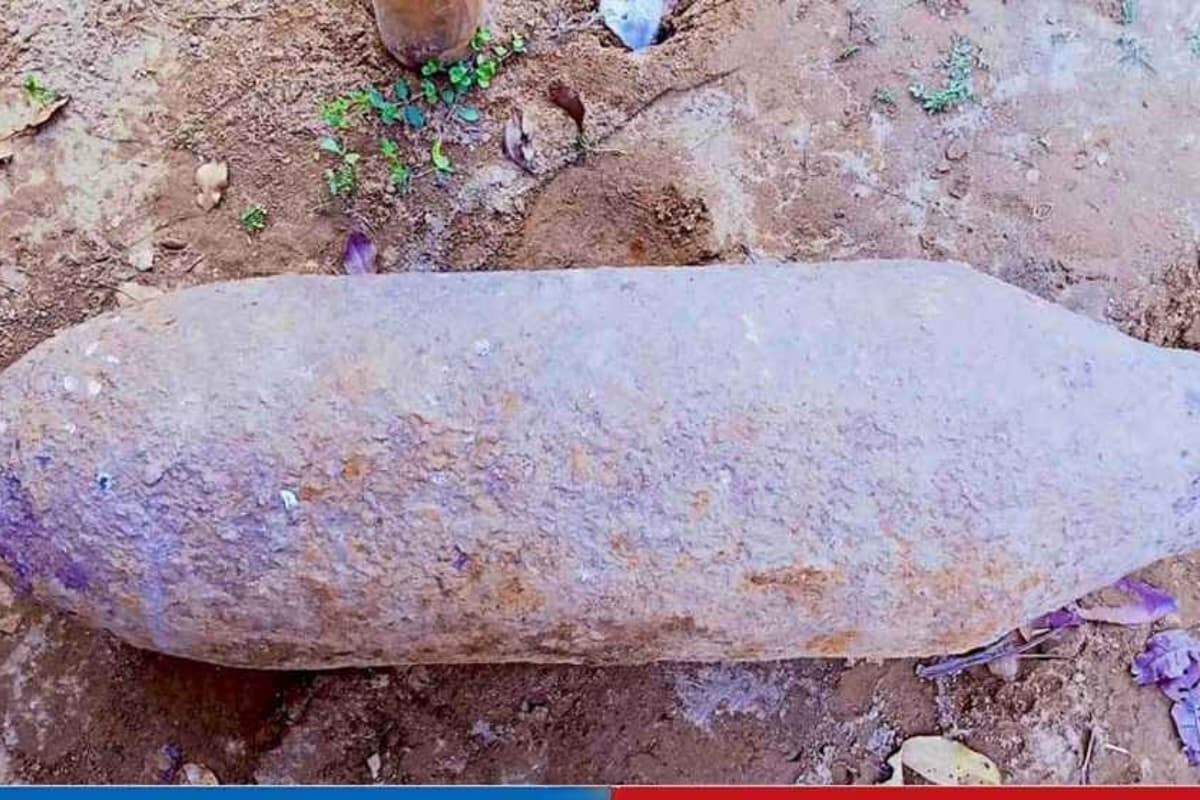
Residents of a quiet village in Cox’s Bazar’s Ramu upazila were recently confronted with a chilling reminder of wartime history after discovering that an object long assumed to be an ordinary stone was, in fact, a bomb-like device. The revelation sparked fear and disbelief across the area, particularly as the heavy metal object had reportedly been used for years in everyday household chores, including as a base for washing clothes.
The incident occurred in the Tanchakhali area of Lot Ukhiyargona village under the Kawarkhop union. The object, large, immobile and lying in the open, blended easily into its surroundings. Villagers naturally assumed it to be a natural stone, and its presence aroused no suspicion for a long time. The absence of any prior incident or visible danger reinforced the belief that it was harmless.
However, on the morning of 24 January, several locals noticed unusual features on the surface of the object, including metallic textures and shapes inconsistent with natural rock. Alarmed by these observations, they promptly informed the police. Officers from Ramu police station arrived at the scene without delay, cordoned off the area, and moved nearby residents to a safe distance as a precaution. To reduce immediate risk, the object was carefully relocated to a comparatively secure spot.
Preliminary assessments by the police and local administration suggest that the device may be an unexploded or abandoned bomb dating back to the Second World War. Historians note that Cox’s Bazar’s coastal belt, including Ramu and its surrounding areas, held strategic importance during the 1940s. Military activities involving Japanese forces and the Allied powers were widespread, making it plausible that munitions were left behind or failed to detonate during that period.
Given the potential danger, an army bomb disposal unit has been called in. Specialists are examining the object’s metal structure, internal condition, and the possible presence of explosive material. If found to be live, it will be neutralised or destroyed using controlled procedures. Should it prove entirely inert, authorities may consider preserving it as a historical artefact, reflecting the region’s wartime past.
Local officials have used the incident to issue a renewed warning to the public. They have urged residents not to touch or move any unfamiliar metallic or bomb-like objects and to immediately notify law enforcement agencies instead.
| Aspect | Details |
|---|---|
| Location | Tanchakhali, Lot Ukhiyargona, Ramu |
| Date of discovery | 24 January |
| Object type | Bomb-like metal device |
| Suspected period | Second World War |
| Authorities involved | Police and Army |
| Likely outcome | Neutralisation or preservation |
Beyond its shock value, the incident serves as a sobering lesson in public awareness. It illustrates how remnants of history can remain hidden in plain sight, posing serious risks even decades later. For the people of Ramu, the experience has underscored a stark reality: what appears to be an ordinary stone can, in rare cases, conceal deadly danger.



Comments