Sunday, 5th April 2026

Khabor Wala Desk
Published: 8th February 2026, 4:37 AM
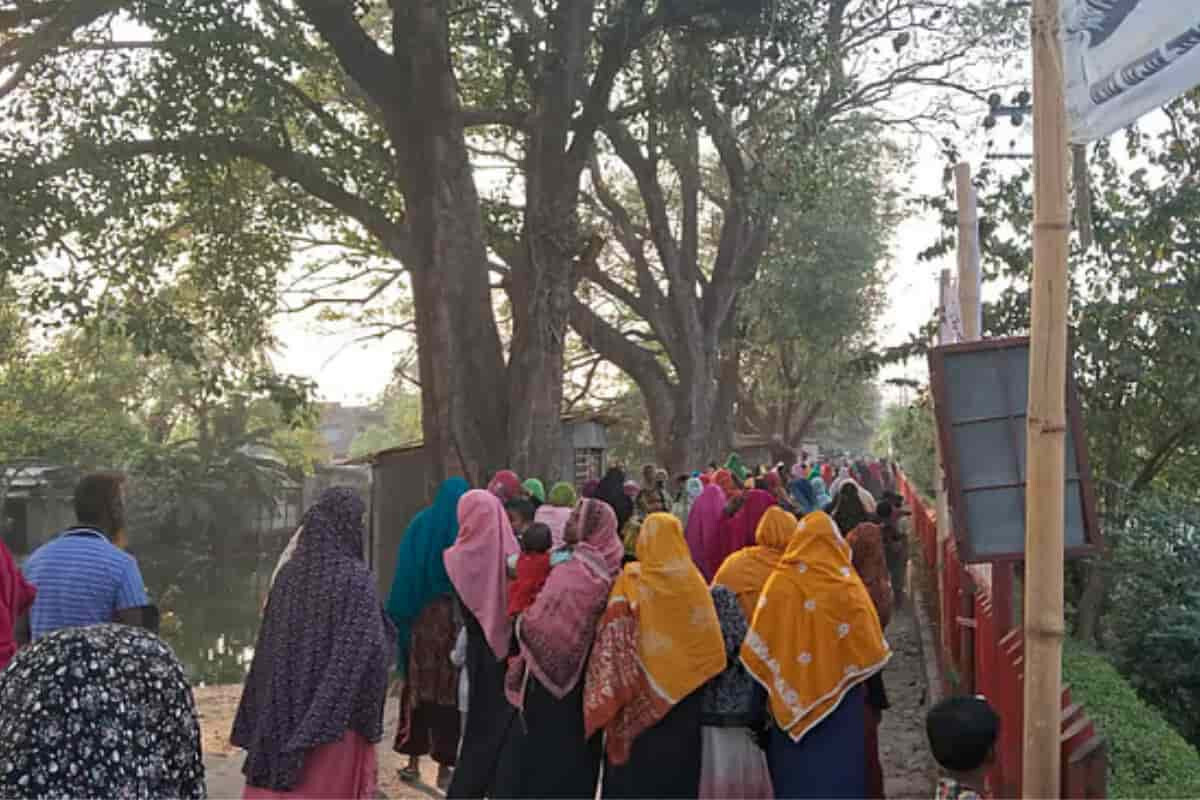
On a humid Saturday afternoon, the riverside settlement of Ramchandrapur in Rajshahi presents a vivid tableau of daily struggle. Wet clothes, freshly washed, flutter under the sun, while in one corner of the open ground, a mother combs her daughter’s hair. “When will they pay us for tomorrow’s march?” asks the girl. Her mother replies, “Not all at once, they distribute it over time.”
In this slum, political marches during election season represent more than civic participation—they are a vital, albeit temporary, source of income. This year, residents earn 50 taka per day simply for attending a march. However, when crowds swell beyond a certain number, the rate is reduced to 40 taka per participant. For the past week, men and women have been attending these marches regularly, drawn by the promise of daily wages.
An 80-year-old widow explains that after her husband’s death three years ago, her children now manage the household independently. Unable to walk long distances, she attends marches whenever summoned. Similarly, a 65-year-old man with a disabled arm participates alongside his two sons and wife to support the family. “One day’s attendance earns 50 taka, two people together make 100, but the money is rarely handed over all at once,” he says.
Locals report that when city corporation elections or councillor candidates are involved, the “march fee” can rise slightly. Despite their minimal political influence, many participate purely to meet daily needs. A local BNP leader confirms, “For many men and women here, attending a march ensures one meal a day. The allocation is small, so 50 taka per day is offered. In the past, payments were even more irregular.”
The table below summarises the daily allowances for march participants in Ramchandrapur:
| Participant Type | Days of Attendance | Daily Allowance | Payment Method | Notes |
|---|---|---|---|---|
| Women (dependent on basic income) | 7 days | 50 Taka | Paid daily | Supports household expenses |
| Men (elderly/disabled) | 2–3 days | 50–100 Taka | Staggered payments | Used for daily family needs |
| Couples (together) | 2 days | 100 Taka | Paid over one day | Family support |
For residents of the settlement, election marches are more than political events—they are lifelines. Participation is driven largely by the need to feed families, cover basic healthcare, and sustain daily survival. In a community where poverty dictates every decision, even a brief march can temporarily alleviate the struggle of daily life.


Comments