Sunday, 5th April 2026

Khabor Wala Desk
Published: 20th February 2026, 7:57 AM
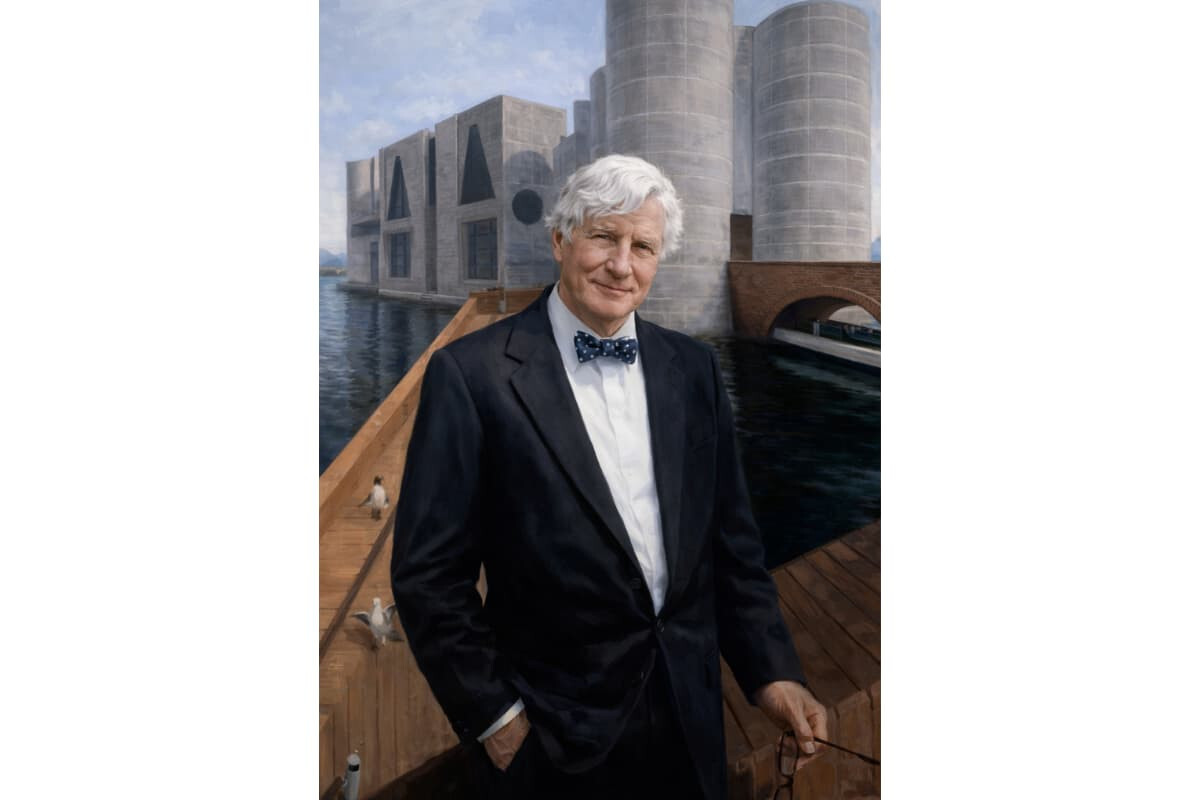
Bangladesh is home to one of the world’s architectural marvels—the National Parliament House in Dhaka. This iconic structure stands as a testament to the genius of the internationally acclaimed architect Louis Isadore Kahn, whose visionary designs continue to inspire generations.
Louis I. Kahn was born on 20 February 1901 in what is now Estonia, then part of the Russian Empire. His family emigrated to the United States during his childhood. Despite growing up in a modest immigrant household, Kahn’s exceptional talent, dedication, and creativity propelled him to become a luminary in modern architecture.
In 1924, he graduated with a degree in architecture from the University of Pennsylvania. Early travels through Europe broadened his perspective, exposing him to classical Roman and Greek architecture and the profound interplay of light and shadow, which would later become central to his designs.
By 1932, Kahn co-founded the Architectural Research Group with his colleague Dominique Berninger. Through his career, he redefined architecture—not merely as the construction of buildings, but as an artistic medium expressing human experience, light, and silence. He famously stated:
“A building is not just a space to occupy; it is a place where light meets silence.”
This philosophy finds its most striking embodiment in Dhaka’s National Parliament House. The building’s geometric forms, expansive courtyards, water features, and masterful manipulation of natural light make it a singular work of art. Here, strength and elegance, simplicity and profundity, converge seamlessly.
Kahn’s career earned him numerous international accolades, including the prestigious Gold Medal from the American Institute of Architects. Among his other landmark creations are the Salk Institute in California and the Kimbell Art Museum in Texas.
He passed away on 17 March 1974 in New York City, but his architectural legacy remains alive, influencing architects worldwide. Kahn was more than a designer of structures; he was a poet of light, a sculptor of silence, and a shaper of human spirit within stone and concrete. His creations, particularly the National Parliament House, remain an enduring symbol of inspiration and artistic mastery in Bangladesh.
| Year | Milestone | Location/Institution |
|---|---|---|
| 1901 | Birth | Estonia, Russian Empire |
| 1924 | Architecture Degree | University of Pennsylvania, USA |
| 1932 | Co-founded Architectural Research Group | Philadelphia, USA |
| 1950s–1960s | Designed Salk Institute | La Jolla, California, USA |
| 1966 | Designed Kimbell Art Museum | Fort Worth, Texas, USA |
| Early 1960s | Designed National Parliament House | Dhaka, Bangladesh |
| 1974 | Death | New York City, USA |
Louis I. Kahn’s work continues to resonate, blending light, silence, and human presence into spaces that transcend mere functionality, leaving an indelible mark on the world of architecture.




Comments