Sunday, 5th April 2026

Khaborwala Online Desk
Published: 26th March 2025, 5:09 PM
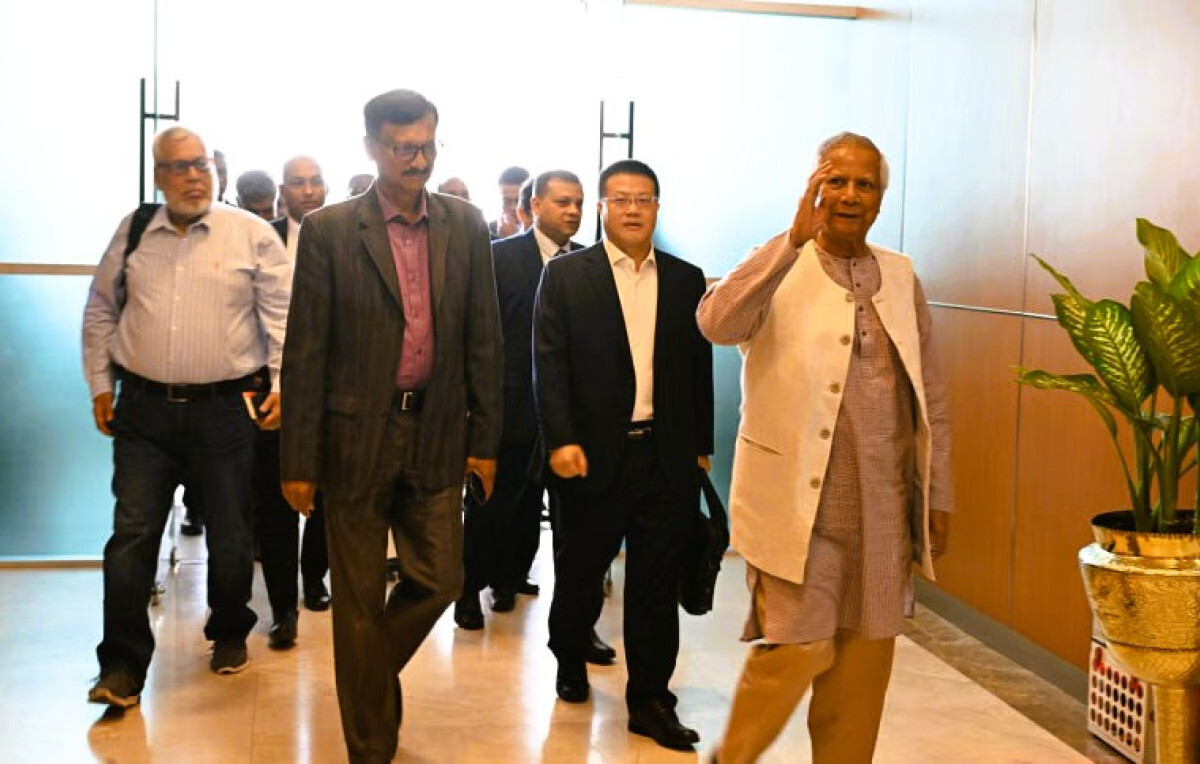
Chief Adviser Professor Muhammad Yunus departed for China this afternoon on a four-day official visit, his first bilateral trip since taking office on August 8 last year.
The high-profile visit coincides with the 50th anniversary of diplomatic relations between Bangladesh and China.
Prof Yunus left Hazrat Shahjalal International Airport in Dhaka at 1:00 pm aboard a special China Southern Airlines flight, arranged by the Chinese government. The Chief Adviser’s Press Wing confirmed the departure.
He is leading a 57-member delegation that includes Foreign Affairs Adviser Touhid Hossain, senior government officials, and security personnel.
The visit comes amid efforts to enhance strategic and economic cooperation between the two nations. Bangladesh and China are expected to sign a series of agreements and memoranda of understanding (MoUs) covering areas such as economic and technical assistance, human resource development, disaster risk reduction, sports, and media collaboration.
Additional agreements will focus on cultural exchange, including the establishment of a Chinese Book Centre in Bangladesh and support for the translation and publication of Chinese classical literature.
Key Highlights of the Visit
March 27: Prof Yunus is scheduled to speak at the opening plenary of the Boao Forum for Asia – dubbed the “Asian Davos” – a key platform for regional economic dialogue. He will also hold bilateral talks with China’s Executive Vice Premier Ding Xuexiang, and meet with prominent Chinese business leaders.
March 28: Prof Yunus will meet Chinese President Xi Jinping at the Great Hall of the People in Beijing. He is also expected to tour a leading high-tech enterprise under Huawei, and sit for an exclusive interview with a major Chinese media outlet.
March 29: Peking University will award Prof Yunus an honorary doctorate, where he is scheduled to deliver a keynote speech.
Officials say the visit is expected to deepen ties in trade, technology, and cultural exchange, while also reaffirming Bangladesh’s growing engagement with China in the evolving geopolitical landscape of Asia.




Comments