Sunday, 5th April 2026

Khabor Wala Desk
Published: 29th July 2025, 2:06 PM
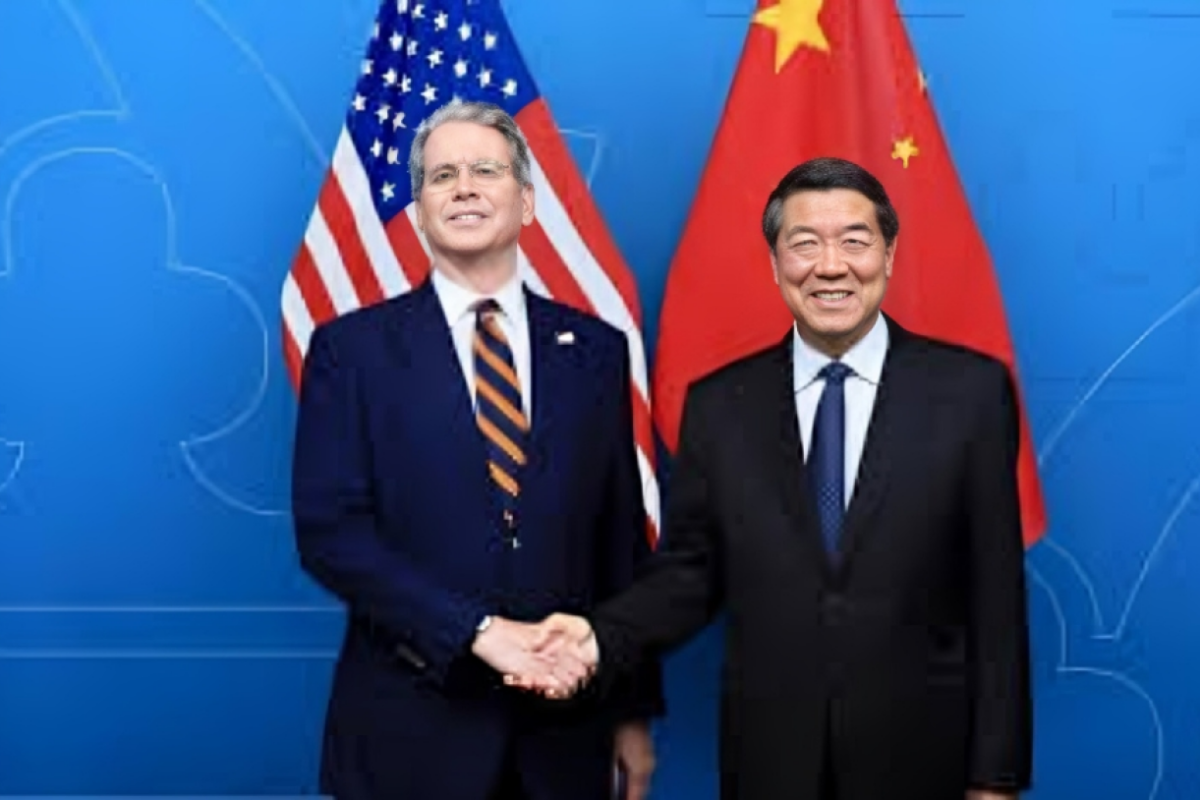
Chinese and American officials concluded the opening day of renewed trade talks in Stockholm on Monday, aiming to extend a fragile truce amidst escalating global tariff tensions driven by US President Donald Trump’s policies.
The negotiations followed a recent US-EU agreement under which European exports to America will now face a 15% tariff. Talks in the Swedish capital wrapped up just before 8:00 pm (1800 GMT), without official comments on progress. A US Treasury spokesperson confirmed that discussions would continue on Tuesday.
Context of the Talks
| Details | Information |
| Meeting Location | Rosenbad, Swedish Government HQ, Stockholm |
| US Lead Negotiator | Treasury Secretary Scott Bessent |
| China Lead Negotiator | Vice Premier He Lifeng |
| Next Session | Scheduled for Tuesday |
| Truce Expiry Date | 12 August |
| Current Tariff Rates | US: 30% on Chinese goods; China: 10% on US goods |
Earlier this year, both the US and China had imposed tariffs in a tit-for-tat manner, only to retreat under a temporary 90-day truce reached in May. Talks in Stockholm are widely viewed as a platform to potentially extend that pause by another 90 days. The South China Morning Post reported both sides were inclined towards such an extension.
Diplomatic Messaging and Atmosphere
Beijing, ahead of the talks, expressed a desire for “reciprocity” and constructive dialogue to foster “stable, healthy and sustainable” China-US relations. Foreign Ministry spokesperson Guo Jiakun stressed consensus over confrontation.
Outside observers have noted a shift in tone from Washington since the previous talks in London. Emily Benson of Minerva Technology Futures remarked:
“The mood now is much more focused on achievable outcomes, warming relations, and reducing tension-triggering factors.”
While no concrete deal has emerged, progress has reportedly been made in restarting rare earth and semiconductor flows. Bessent has also suggested that extending the tariff pause is a likely short-term result.
Global Implications and Other Trade Fronts
The world is closely watching the US-China dynamic, particularly nations also under threat of increased US tariffs. President Trump has imposed a baseline 10% tariff globally and plans to raise it further on countries like Brazil and India if deals are not reached by August 1. Tariffs could rise as high as 50% for some.
| Country | Tariff Status / Response |
| European Union | Signed a 15% tariff deal with the US |
| South Korea | Rushing to finalise a trade agreement |
| Brazil & India | Facing threat of 50% US tariff hikes |
| Others (e.g. Japan, Philippines) | Tentative agreements announced; details sparse |
According to Yale University’s Budget Lab, current US tariffs have raised import duties to levels not seen since the 1930s.
Sean Stein, president of the US-China Business Council, emphasised the importance of tone and optimism:
“The business community is hopeful that Presidents Biden and Xi will meet later this year, potentially in Beijing.”
With multiple global players evaluating Washington’s evolving trade strategy, the Stockholm round could mark a pivotal step in managing US-China economic tensions moving forward.



Comments