Sunday, 5th April 2026

Khabor Wala Desk
Published: 21st October 2025, 9:19 AM
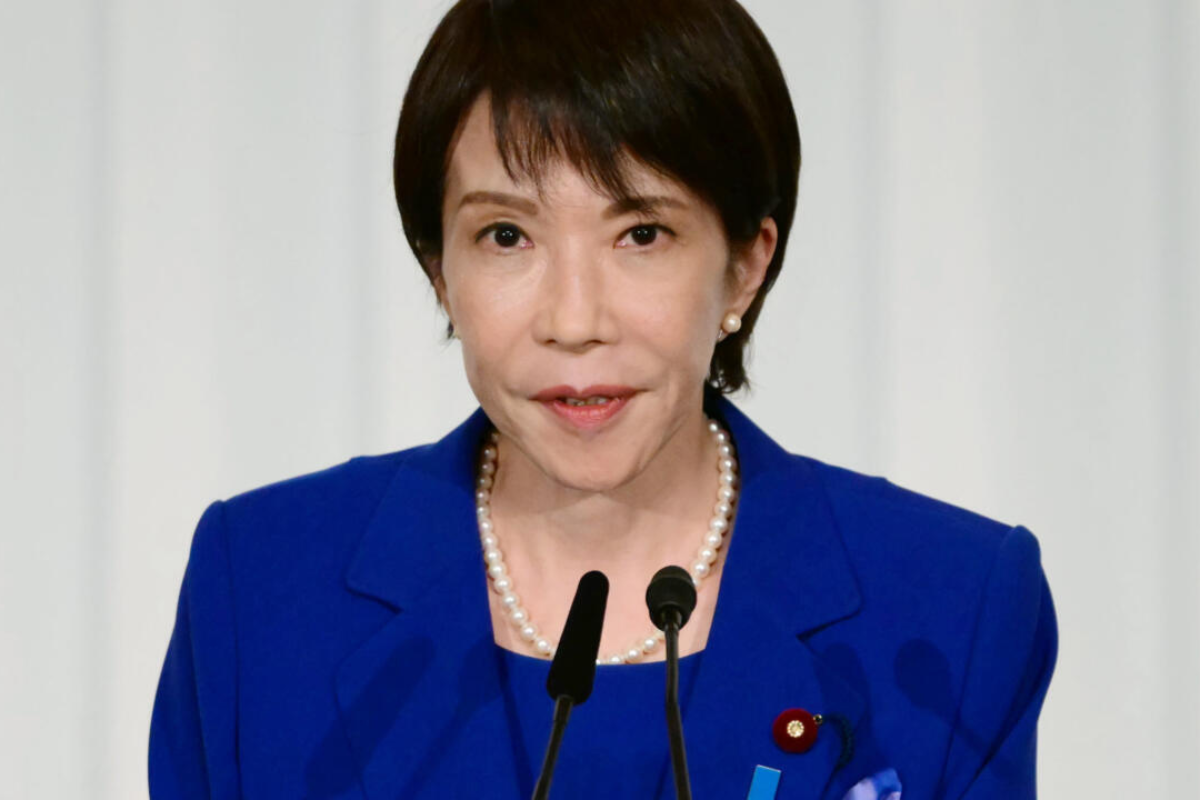
Japan was set to witness a historic political moment on Tuesday as Sanae Takaichi, a staunch China hawk and social conservative, prepared to become the nation’s first woman prime minister after striking an eleventh-hour deal to establish a new coalition government.
However, Japan’s fifth premier in as many years faces an uphill task — leading a minority administration while managing a full agenda, including the imminent visit of U.S. President Donald Trump next week.
Parliament was scheduled to confirm Takaichi’s appointment as prime minister on Tuesday afternoon, following which she would formally assume office after meeting with Emperor Naruhito.
Takaichi secured leadership of the ruling Liberal Democratic Party (LDP) on 4 October. Although the LDP has dominated Japanese politics for decades, it is currently grappling with growing unpopularity.
Just six days after her victory, the Komeito party — citing unease over Takaichi’s conservative stances and a damaging LDP slush fund scandal — withdrew from the coalition. This prompted Takaichi to strike a fresh alliance with the Japan Innovation Party (JIP), officially sealed on Monday evening.
“I will make Japan’s economy stronger, and reshape Japan as a country that can be responsible for future generations,”
— Sanae Takaichi, Prime Minister-designate
A self-declared admirer of former British Prime Minister Margaret Thatcher, Takaichi has pledged to appoint a cabinet with “Nordic” levels of female representation — a significant shift from the outgoing administration of Shigeru Ishiba, which included only two women.
One key appointment, according to local media, will be Satsuki Katayama, a former Regional Revitalisation Minister, who is expected to become the Finance Minister.
| Indicator | Japan’s Standing (2025) | Source |
| Global Gender Gap Ranking | 118 out of 148 countries | World Economic Forum |
| Women in Management (2021) | 13.2% | WEF Report |
| Women in Lower House of Parliament | 15% | National Diet Data |
At 64, Takaichi has been candid about her personal experiences with menopause and has expressed hopes to increase public awareness surrounding women’s health challenges.
Yet, her gender policies remain aligned with the conservative right of the LDP. She opposes revising a 19th-century law that mandates married couples to share the same surname and insists that the Imperial Family should retain male-only succession.
In her hometown of Nara, Keiko Yoshida, a 39-year-old company worker, voiced cautious optimism:
“Maybe she’ll help create towns that are more supportive of women — with better support for mothers and working women.”
Takaichi inherits a host of economic and demographic challenges — notably Japan’s shrinking population and a stagnating economy, the world’s fourth largest.
As head of a minority coalition, her government will rely heavily on cross-party cooperation to enact major legislation.
Takaichi has previously endorsed aggressive monetary easing and increased government spending, policies reminiscent of her political mentor, former Prime Minister Shinzo Abe. Though she moderated these “Abenomics” positions during her LDP leadership campaign, her election victory triggered a surge in Japanese stock markets, reaching record highs.
In a marked shift, Takaichi has toned down her once fiery rhetoric on China. Notably, she abstained from attending a recent ceremony at Tokyo’s controversial Yasukuni Shrine, honouring Japan’s war dead — a move widely interpreted as an attempt to avoid provoking Beijing and to signal a more pragmatic diplomatic stance.
Takaichi will also be under significant pressure to reinvigorate the LDP’s public image, which has suffered after a series of electoral defeats that led to Ishiba’s resignation.
Meanwhile, smaller right-wing parties such as Sanseito, which denounces immigration as a “silent invasion,” are gaining traction among disillusioned voters.
According to Mikitaka Masuyama, Professor at the National Graduate Institute for Policy Studies:
“The LDP under Takaichi may not command the same cross-spectrum popularity once enjoyed by Junichiro Koizumi or Shinzo Abe.
Yet, it could regain backing from conservatives who drifted to other right-leaning opposition parties.”




Comments