Sunday, 5th April 2026

Khabor Wala Desk
Published: 4th March 2026, 11:18 PM
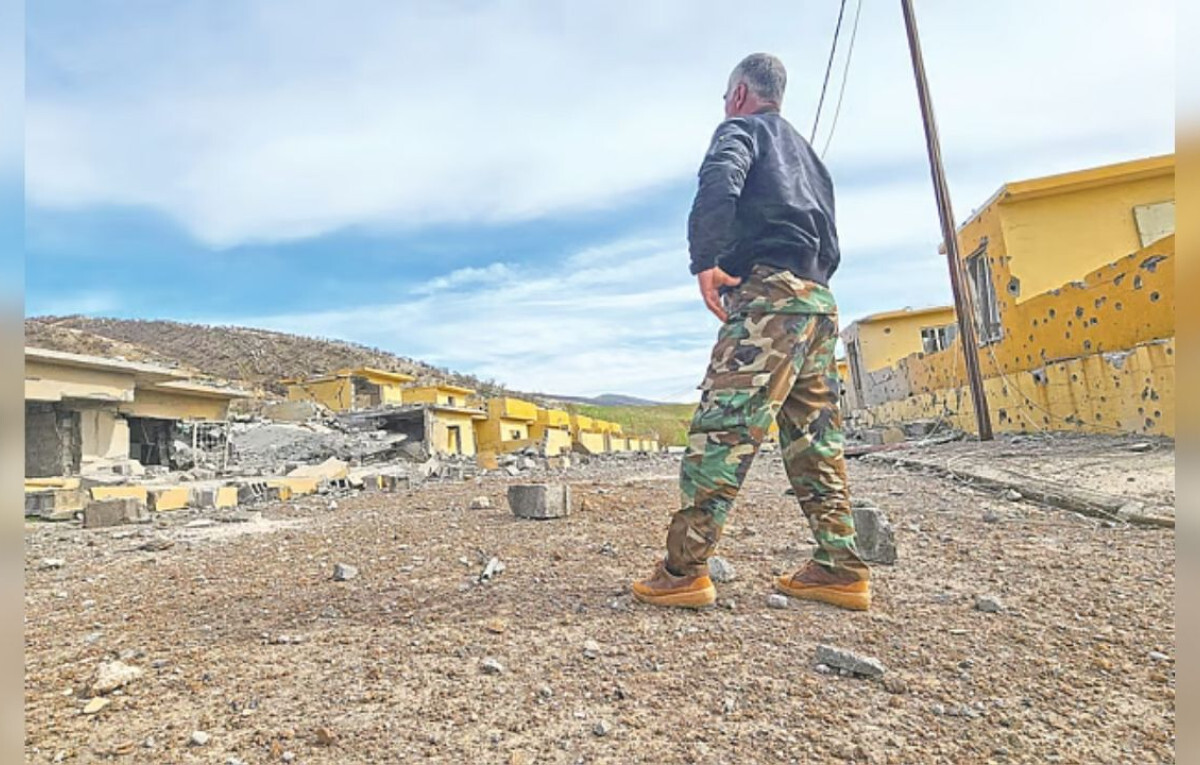
The initial phase of the joint US-Israeli air campaign, while devastating, has failed to deliver the swift strategic collapse of the Iranian state envisioned by military planners in Washington and Tel Aviv. In response, the United States has reportedly initiated a high-stakes “Plan B.” According to three sources familiar with the matter, the Central Intelligence Agency (CIA) is actively coordinating with various Iranian Kurdish insurgent groups to launch a ground-based insurgency within Iran’s northwestern territories.
The proposed operations aim to exploit the current administrative vacuum following reports of the deaths of Supreme Leader Ali Khamenei and other high-ranking officials. Thousands of seasoned Kurdish fighters, currently based in the semi-autonomous Kurdistan Region of Iraq (KRI), are being mobilised to infiltrate the porous Iran-Iraq border.
The CIA’s objective is two-fold:
Military Attrition: Engaging the Islamic Revolutionary Guard Corps (IRGC) in a distracting and exhausting guerrilla war.
Civil Unrest: Creating a secure “liberated zone” to embolden unarmed Iranian dissidents and facilitate a broader popular uprising in major cities.
President Donald Trump has reportedly held direct discussions with Mustafa Hijri, the President of the Democratic Party of Iranian Kurdistan (PDKI), along with high-level leaders in Erbil and Baghdad. While no final timeline has been formalised, a senior Kurdish official informed CNN that a ground offensive in Western Iran is expected within days.
Overview of Potential Insurgent Capabilities
| Faction Group | Primary Operating Base | Expected Role | Training/Support |
|---|---|---|---|
| PDKI | Erbil / Border Regions | Traditional infantry & territorial control | CIA lethal aid & logistics |
| Komala | Sulaymaniyah | Guerilla warfare & urban sabotage | US intelligence & communications |
| PAK | Kirkuk / Border | Direct combat & border infiltration | US-vetted tactical training |
While the White House views the Kurds as a necessary surrogate for ground operations, the plan carries immense geopolitical risks. An armed Kurdish uprising in Iran could serve as a catalyst for other restive minorities, specifically the Baloch people in the southeast. A Baloch separatist movement, supported by factions in Pakistan’s Balochistan province, would likely draw a severe military response from Islamabad, potentially dragging Pakistan into the conflict.
Furthermore, the “Kurdish Card” complicates relations with regional allies. Turkey, currently navigating a delicate peace process with its own Kurdish populations, remains staunchly opposed to the militarisation of any Kurdish factions near its borders. Ankara has already signaled that it will not tolerate the emergence of an autonomous armed Kurdish entity that could destabilise its southern and eastern flanks.
The Pentagon has confirmed that US bases in Erbil, originally established to combat ISIS, are being repurposed to provide intelligence and logistical support for this new mission. However, analysts warn that the diverse ideological backgrounds and shifting loyalties of these Kurdish groups—coupled with the sheer size of the Iranian territory—make a successful ground campaign significantly more difficult than previous operations in Iraq or Syria.


Comments