Sunday, 5th April 2026

Khabor Wala Desk
Published: 1st September 2025, 12:16 PM
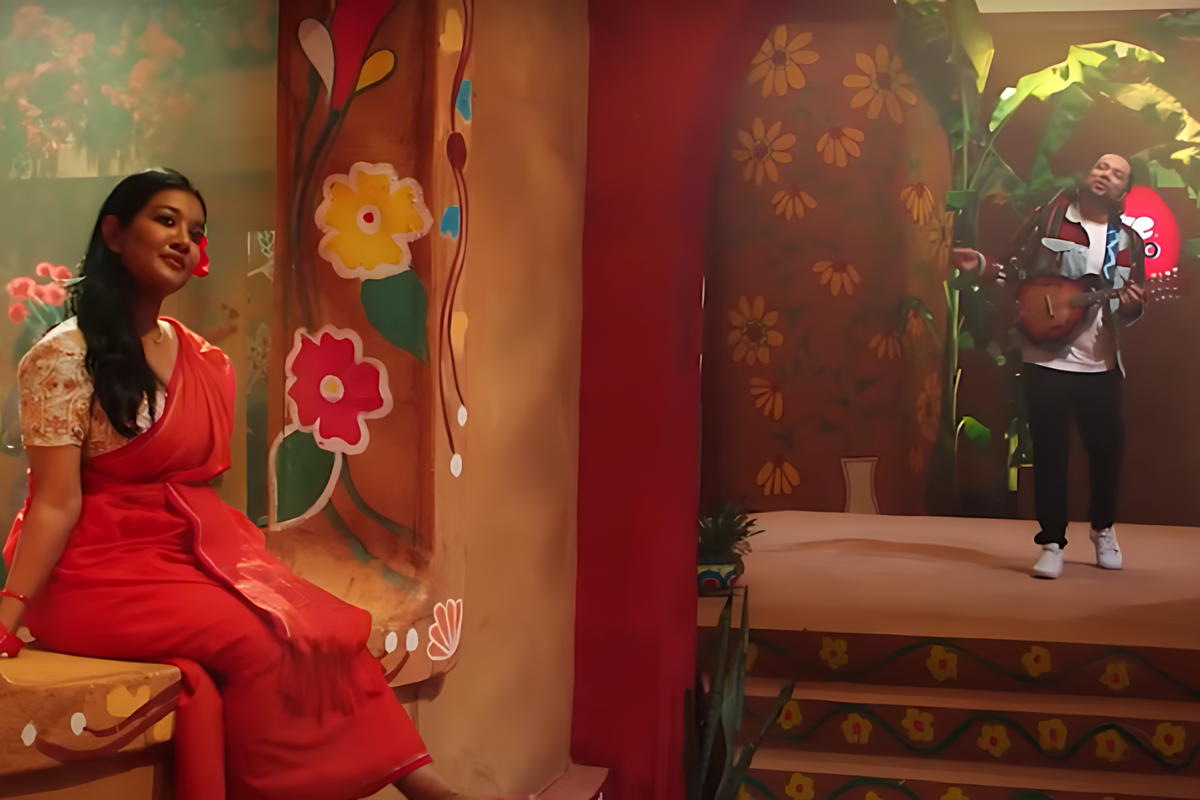
Bangladesh’s cultural heritage has never emerged from a single source. Rather, it is a mosaic, shaped over centuries by countless communities, each preserving their traditions, beliefs, and music. Among them are the country’s indigenous peoples, whose dances, songs, and handwoven fabrics carry stories from their ancestors. Today, their presence is not only a symbol of tradition but also a living testament to the resilience of culture in Bangladesh.
In the Chittagong hills, mornings begin with familiar rhythms. Smoke rises from small huts as elders gather beneath the banyan trees, their quiet conversations blending with birdsong. Life here moves in harmony with nature and tradition.
During Marma New Year, Sangrai, in April, villages transform into a canvas of colours and laughter. Children play in water, women prepare feasts of rice and vegetables, and the hills echo with the beat of drums and traditional instruments. For the Marma people, it is more than a festival—it is a renewal of unity and joy.
Everyday life itself carries traces of artistry. Women weave thami, intricate handwoven patterns symbolising the spring hills, while men carve bamboo instruments that are both functional and poetic. Music permeates daily existence: the soft beat of drums, the melody of flutes, and the ringing of bells. For the Marma, music is not mere performance—it is inseparable from life, flowing through generations via rhythms, melodies, and rituals.
At slightly higher elevations reside the Bom people, whose lives revolve around mutual cooperation—sharing land, exchanging crops, and supporting one another. Cooperation is not just tradition; it is essential for survival. Their roots trace to the Chin-Kuki-Mizo communities near the India–Myanmar border.
Bom women weave puan, colourful skirts embroidered with ancestral tales. These garments are more than clothing—they are living memories. On Sundays, the sound of stotras from wooden churches blends missionary influences with local melodies, while evening folk songs echo tales of nature, pride, and morality. For the Bom, festivals are not mere spectacle; each dance step resonates with earth and community, making culture the heartbeat of life.
While the Marma and Bom preserve rhythms in the hills, the Manipuri community thrives in the lush plains of Sylhet and Moulvibazar. Their lives are steeped in Vaishnavite devotion, centred on Radha–Krishna worship. Festivals like Raslila and Janmashtami transform villages into open stages, where music and dance narrate ancient stories.
At the heart is the Manipuri dance gem “Ras”. Women clad in colourful fanaek and inafi move in perfect circles under the full moon, appearing prayerful. Men, in white dhotis, join as pung drummers, turning dance into a living story. For them, dance is devotion, and the weaving of fabrics is equally sacred—each thread narrates history and faith.
Despite differences in faith, language, and geography, the Marma, Bom, and Manipuri communities share a steadfast commitment to preserving their heritage. Their songs, dances, and crafts are not confined to museums—they are living, evolving, and proudly passed down. From Marma ballads along rivers and forests, Bom stotras steeped in folk memory, to Manipuri devotional dance, these traditions have enriched Bangladesh’s cultural landscape. Diversity here is not mere ornamentation; it is strength, sustaining culture in a changing world.
For generations, indigenous music largely remained regionally contained. That silence was broken with Coke Studio Bangla’s recent release “Baji”, which brought Marma, Bom, and Manipuri voices together on a single stage for the first time.
This collaboration was not mere performance; it was living proof of the rich diversity of Bangladeshi musical heritage.
The song “Baji” transcended entertainment. It became a dialogue between traditions, demonstrating that Bangladesh’s cultural future lies not in uniformity but in the harmonious blending of diverse melodies. When these distinct musical traditions unite, they do more than create music—they resonate with the soul of a nation.
Key Highlights
| Community | Region | Cultural Contribution | Significance |
| Marma | Chittagong Hills | Bamboo flutes, ancestral songs | Tradition intertwined with daily life; music as a heartbeat |
| Bom | Hill villages near India–Myanmar border | Bamboo pole dances, stotras | Cooperation as survival; culture as living memory |
| Manipuri | Sylhet and Moulvibazar plains | Pung cholom dance, devotional music | Dance and weaving as devotion; cultural continuity |
| Baji Collaboration | Nationwide, mainstream | Fusion of Marma, Bom, Manipuri music | Demonstrates unity in diversity; brings indigenous heritage to new generations |
Coke Studio Bangla’s “Baji” stands as a testament that Bangladesh’s musical heritage is not only diverse but also vibrant and evolving, ready to inspire future generations



Comments