Sunday, 5th April 2026

Khaborwala Online Desk
Published: 26th March 2025, 6:04 PM
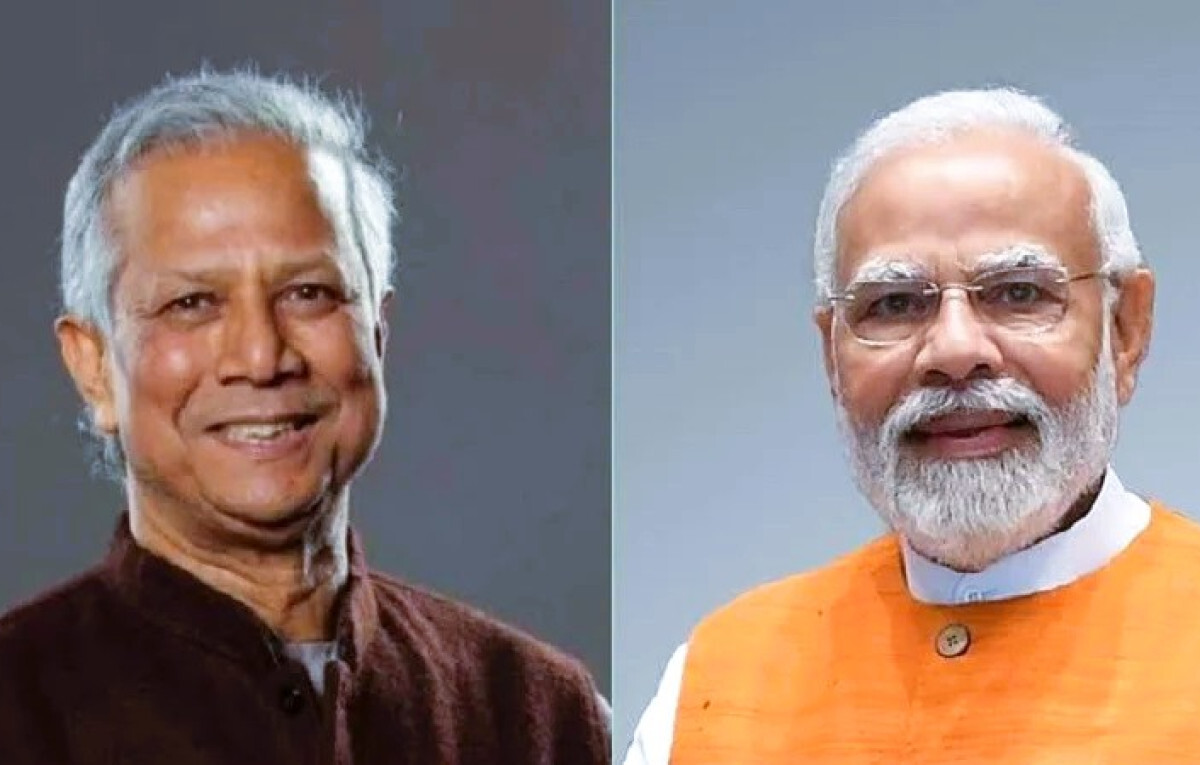
Indian Prime Minister Narendra Modi and President Droupadi Murmu have extended warm greetings to the people of Bangladesh on the occasion of the country’s Independence Day, underlining the strength of the bilateral relationship and a shared vision for peace and prosperity in the region.
In a letter to Bangladesh’s Chief Adviser, Professor Muhammad Yunus, Modi congratulated the nation and its people, calling March 26 a “testament to our shared history and sacrifices.”
“This day stands as a testament to our shared history and sacrifices, that have laid the foundation of our bilateral partnership,” Modi wrote in the message, shared by the Indian High Commission in Dhaka.
Highlighting the enduring legacy of the 1971 Liberation War, Modi said it continues to serve as a guiding light for India-Bangladesh relations.
“The spirit of the Liberation War of Bangladesh continues to remain a guiding light for our relationship, which has flourished across multiple domains, bringing tangible benefits to our peoples,” he wrote.
He reaffirmed India’s commitment to strengthening ties, saying both nations are driven by “common aspirations for peace, stability, and prosperity, and based on mutual sensitivity to each other’s interests and concerns.”
In a separate message, Indian President Droupadi Murmu conveyed her greetings to Bangladesh President Mohammed Shahabuddin, emphasizing the multifaceted nature of the India-Bangladesh partnership.
Murmu noted that cooperation spans a broad spectrum – including trade, multimodal connectivity, power and energy, education, capacity building, culture, and robust people-to-people exchanges.
She further underscored Bangladesh’s central role in India’s regional strategy.
“Bangladesh is at the focus of India’s ‘Neighborhood First’ and ‘Act East’ policies, SAGAR doctrine, and the Indo-Pacific Vision,” she said.
Reaffirming India’s support, President Murmu said, “India reiterates its support for a democratic, stable, inclusive, peaceful, and progressive Bangladesh.”



Comments