Sunday, 5th April 2026

Khabor Wala Desk
Published: 21st March 2026, 6:14 PM
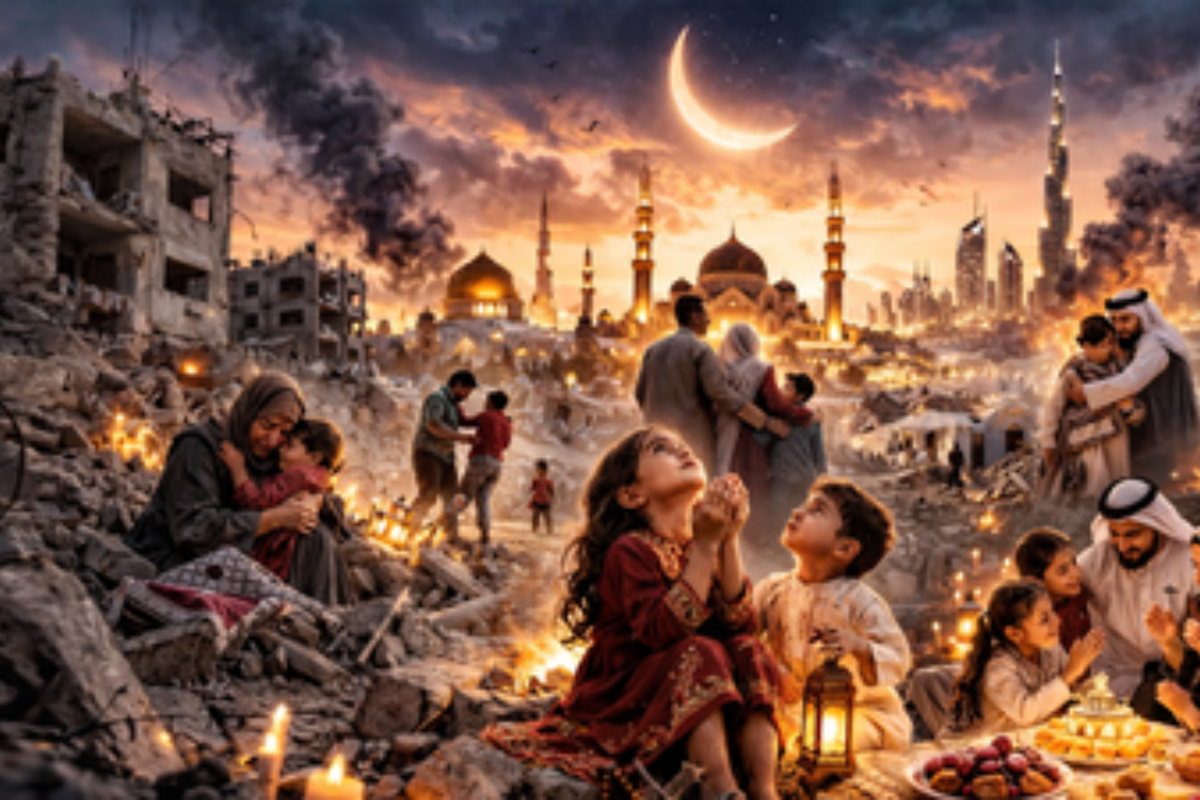
Across the Middle East, communities traditionally marking Eid al-Fitr with joy and celebration are instead enduring hardship, displacement, and uncertainty due to ongoing conflicts. In Beirut, Syria-born refugee Ala, who previously lived in the southern suburb of Dahieh, now wanders the city searching for shelter, leaving little room for festive reflection.
“I spent the day moving from place to place in central Beirut, just looking for somewhere safe,” Ala said. The area he once called home has been devastated by Israeli strikes, part of a conflict that has claimed over a thousand lives across Lebanon. Without a tent or stable refuge, he currently sleeps under the open sky, while others in his neighbourhood have managed to secure tents, transforming parts of the city into makeshift camps amid the chaos of displacement affecting over one million people in Lebanon.
The shadow of war has rendered Eid celebrations secondary to survival. Ala had no plans for the holiday; his only concern was finding temporary shelter. “When I couldn’t stay in a school, I slept on the cornice. The municipality eventually advised me to move into central Beirut, but I still haven’t found a tent,” he explained.
The situation is echoed across other conflict zones. In Iran, the third week of US-Israeli military strikes has left citizens struggling amid pre-existing economic difficulties. Even Tehran’s Grand Bazaar, a traditional hub for holiday shopping, has been damaged by bombings, making the purchase of typical festive goods both dangerous and expensive. Similarly, in Gaza, Palestinian families wish to celebrate Eid, but Israeli-imposed restrictions on imports and economic instability have made even basic provisions scarce.
Khaled Dib, 62, from Gaza City, described the impact: “From outside, Eid seems lively, but the reality is harsh. Families are displaced, living in tents, and have lost nearly everything. Fruits, vegetables, and gifts are beyond our reach—only the wealthy can afford them.” He added that customary Eid preparations, such as buying new clothes for children or festive sweets, are now impossible.
These hardships illustrate a stark contrast to the usual vibrancy of Eid celebrations. In countries and cities affected by conflict, the festival’s joy is overshadowed by the struggle for basic needs and safety, demonstrating how deeply war and economic crisis can disrupt cultural and religious life.
Middle East Eid Amid Conflict: Key Facts
| Aspect | Details |
|---|---|
| Regions Affected | Lebanon (Beirut, Dahieh), Gaza, Iran |
| Population Impacted | Over 1 million displaced in Lebanon; Gaza and Tehran affected by conflict |
| Main Challenges | Displacement, lack of shelter, economic hardship, restricted access to goods |
| Conflict Context | Israeli strikes in Lebanon and Gaza; US-Israel operations in Iran |
| Human Impact | Families living in tents, unable to afford basic Eid necessities |
| Cultural Impact | Traditional Eid celebrations heavily restricted or impossible |
The 2026 Eid thus presents a stark picture for many in the Middle East: a festival of faith overshadowed by fear, scarcity, and instability, reminding the world that the human cost of conflict extends far beyond the battlefield.


Comments