Sunday, 5th April 2026

Khabor Wala Desk
Published: 31st March 2026, 9:29 AM
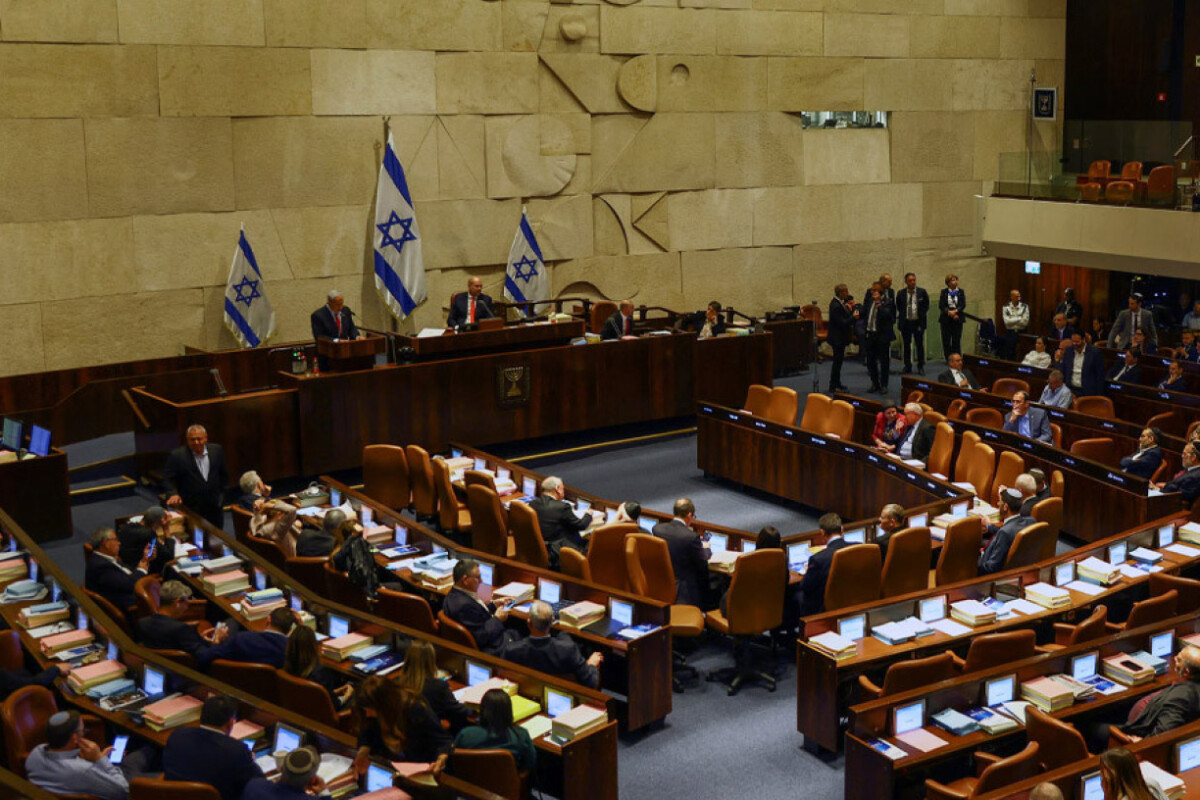
The Israeli parliament, the Knesset, has passed a highly contentious piece of legislation authorising the use of the death penalty against Palestinians convicted of so-called “terror-related offences”. The move, reported on Monday, has triggered sharp criticism from human rights organisations and renewed international concern over Israel’s legal approach in the occupied territories.
Under the new law, two separate legal pathways are established for imposing capital punishment based on national identity. In practice, this creates a distinct legal framework for Palestinians, particularly those tried in military courts in the occupied West Bank, where the death penalty may now function as a predetermined sentence in certain cases.
Human rights advocates argue that the legislation marks a profound departure from established legal and ethical standards. According to critics, it risks embedding discriminatory practices into the justice system by differentiating punishment on the basis of identity rather than individual criminal responsibility.
A senior legal representative from the Palestinian rights organisation Adalah described the law as institutionalising state-sanctioned killings under the guise of legal procedure. She argued that it targets individuals who do not necessarily pose an immediate or direct threat, thereby undermining fundamental principles of proportionality and justice.
The organisation has announced its intention to challenge the legislation before Israel’s Supreme Court, asserting that it violates principles of equality and anti-discrimination embedded within Israeli legal norms.
Similarly, the Israeli human rights group Association for Civil Rights in Israel has also filed a legal petition against the law. It argues that the Knesset lacks jurisdiction to legislate for the occupied West Bank, where Israel does not exercise recognised sovereignty under international law. The group further contends that the law is unconstitutional, as it undermines protections for human dignity, fair trial rights, and equality.
| Aspect | Description |
|---|---|
| Legal measure | Death penalty for “terror-related offences” |
| Application area | Occupied West Bank |
| Judicial system | Military courts |
| Core concern | Identity-based sentencing disparity |
| Execution method | Includes provision for covert executions |
| Prison conditions | Severe isolation of death-row detainees |
| Legal challenge | Pending petitions before Supreme Court |
The legislation reportedly allows for executions to be carried out in a highly restricted and secretive manner, while also imposing near-total isolation on prisoners sentenced to death. Critics argue that such provisions exacerbate concerns over transparency, due process, and humane treatment.
The law further specifies that individuals convicted of “terror-related” offences may face capital punishment. However, legal analysts warn that its wording could result in unequal application, effectively shielding Israeli citizens convicted of similar offences from the same penalty.
Under international law, occupying powers are generally prohibited from imposing their domestic legal systems on occupied populations. The West Bank has been considered occupied territory since 1967, when Israel assumed control following the war with Jordan. As such, the applicability of this legislation to the region has raised serious questions among legal scholars.
Experts suggest that the passage of this law may signal a broader political trajectory towards de facto annexation of parts of the West Bank, further blurring the legal distinction between Israel and the occupied territories. This development is likely to intensify diplomatic scrutiny and deepen existing tensions surrounding the Israeli–Palestinian conflict.


Comments