Monday, 6th April 2026

Khabor Wala Desk
Published: 7th March 2026, 4:38 AM
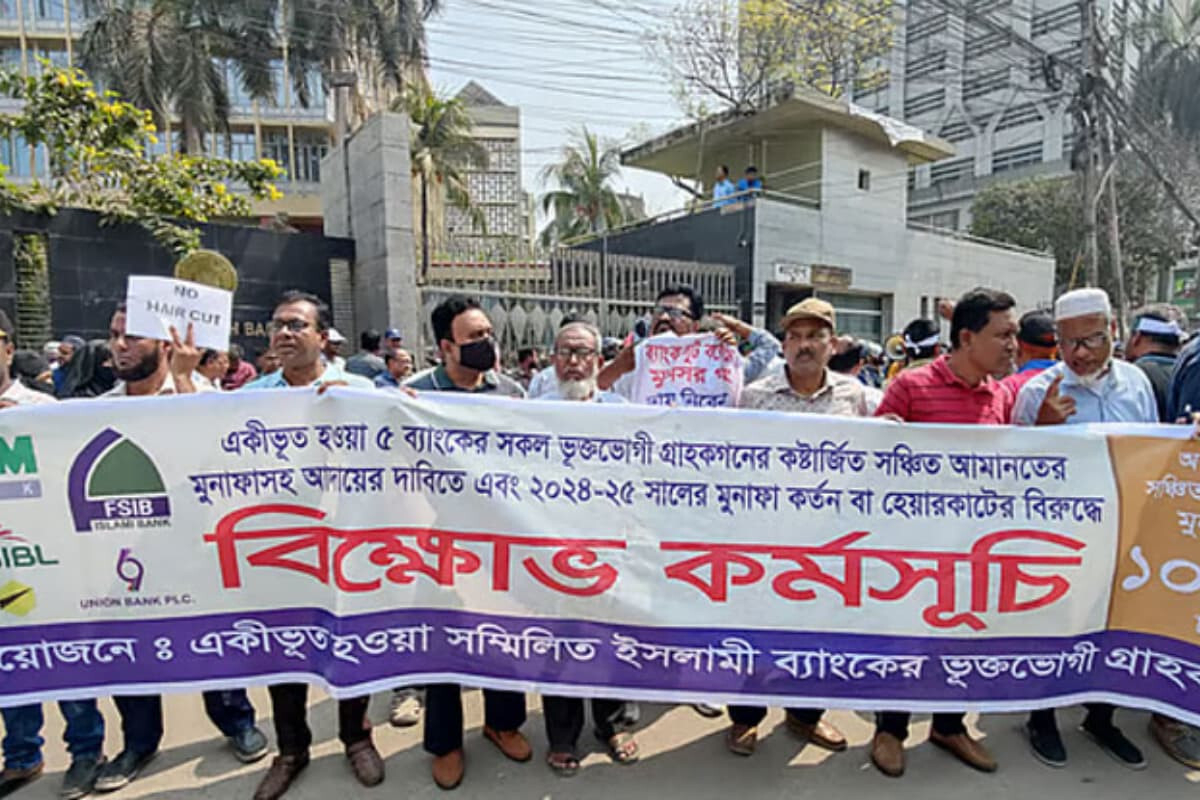
Depositors from five Shariah-compliant banks continue to stage protests outside the headquarters of Bangladesh Bank, demanding the full repayment of their deposits. The demonstrators are calling for the reversal of the contentious “haircut” policy and the resumption of normal banking operations, insisting on the immediate return of both principal and accrued profit.
The protest began on Thursday, 5 March, at around 11:00 am, with participants arriving from districts across the country. Many depositors claim they have been unable to access their funds for nearly two years, resulting in severe financial strain. Families report difficulty in meeting essential expenses, including medical treatment, school fees, and daily household needs.
According to the protesters, the former governor of Bangladesh Bank authorised a reduction of profits on Shariah-compliant deposits in the five banks, paying only four per cent instead of the contractual rate over the past two years. They describe this action as both unjust and inhumane, arguing that their original agreements entitle them to full repayment of deposits with profits.
The demonstrators emphasise that prolonged inaccessibility to their funds has forced some families to defer medical care and children’s education, creating widespread financial uncertainty and distress. Many assert that the policy undermines trust in the banking system and causes undue hardship for ordinary citizens.
The protesters’ key demands are summarised in the table below:
| Demand Number | Details |
|---|---|
| First Demand | Revoke the decision to deduct profit from deposits |
| Second Demand | Ensure full repayment of deposits and accrued profits for 2024 and 2025 as per contracts |
| Third Demand | Resume operations of the unified Islamic Bank and release funds from matured savings schemes in accordance with regulations |
The protesters have issued an ultimatum to Bangladesh Bank, warning that failure to meet their demands by the stipulated deadline will result in escalated action, including a complete blockade of the central bank on 12 March.
In response, the new governor, Mohammad Mostakur Rahman, stated that the unified Islamic Bank, formed from the merger of the five Shariah-compliant banks, would continue its operations. He confirmed that steps are being taken to restore financial discipline and that any individuals found guilty of misconduct or embezzlement would face legal consequences.
Economists emphasise that swift, transparent action is vital to restore depositor confidence. Without effective intervention, public trust in the banking sector could erode further, potentially threatening the stability of the country’s financial system.

Comments