Sunday, 5th April 2026

Khabor Wala Desk
Published: 22nd March 2026, 11:03 AM
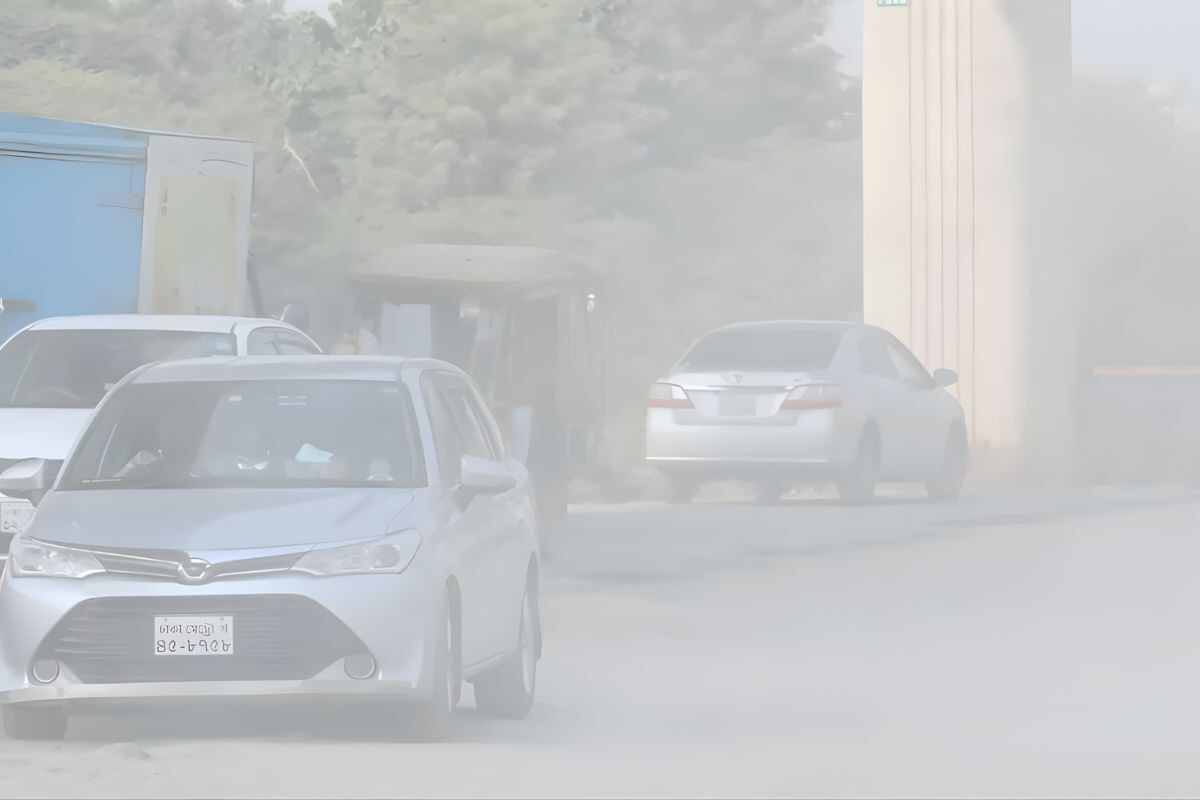
Despite the near-empty streets of Dhaka during the Eid holidays, air pollution levels in the capital remain alarmingly high. With millions of residents travelling to rural areas, traffic congestion has significantly eased, yet the city’s air has not seen a corresponding improvement.
On Sunday morning, 22 March, the air quality index (AQI) recorded by IQAir indicated that Dhaka’s atmosphere continues to fall within the “unhealthy” range. At 8:00 am, the AQI for Dhaka stood at 165, signalling conditions that pose a risk to public health, particularly for vulnerable groups such as children, the elderly, and individuals with respiratory issues.
According to IQAir, the global air pollution ranking for the day placed several major Asian cities at the top due to hazardous air quality:
| Rank | City (Country) | AQI Score | Health Category |
|---|---|---|---|
| 1 | Delhi (India) | 193 | Unhealthy |
| 2 | Beijing (China) | 178 | Unhealthy |
| 3 | Incheon (South Korea) | 174 | Unhealthy |
| 4 | Dhaka (Bangladesh) | 165 | Unhealthy |
Conversely, cities reporting the cleanest air today are predominantly in the United States. Denver topped the list with a score of 39, followed closely by Chicago with a score of 42, reflecting air quality considered “good” for all populations.
The AQI scale is defined as follows:
Environmental experts note that even during periods of reduced traffic, other factors such as industrial emissions, construction dust, and seasonal weather patterns contribute significantly to Dhaka’s persistent pollution. Authorities have repeatedly urged residents to minimise outdoor activities when the AQI is in the unhealthy range and to use protective masks, particularly for children and individuals with pre-existing respiratory conditions.
As the holiday lull eases and city traffic returns to normal, air quality in Dhaka may deteriorate further, making long-term mitigation strategies, including stricter industrial regulations and enhanced public transportation, ever more critical.



Comments