Sunday, 5th April 2026

Khabor Wala Desk
Published: 2nd March 2026, 6:33 AM
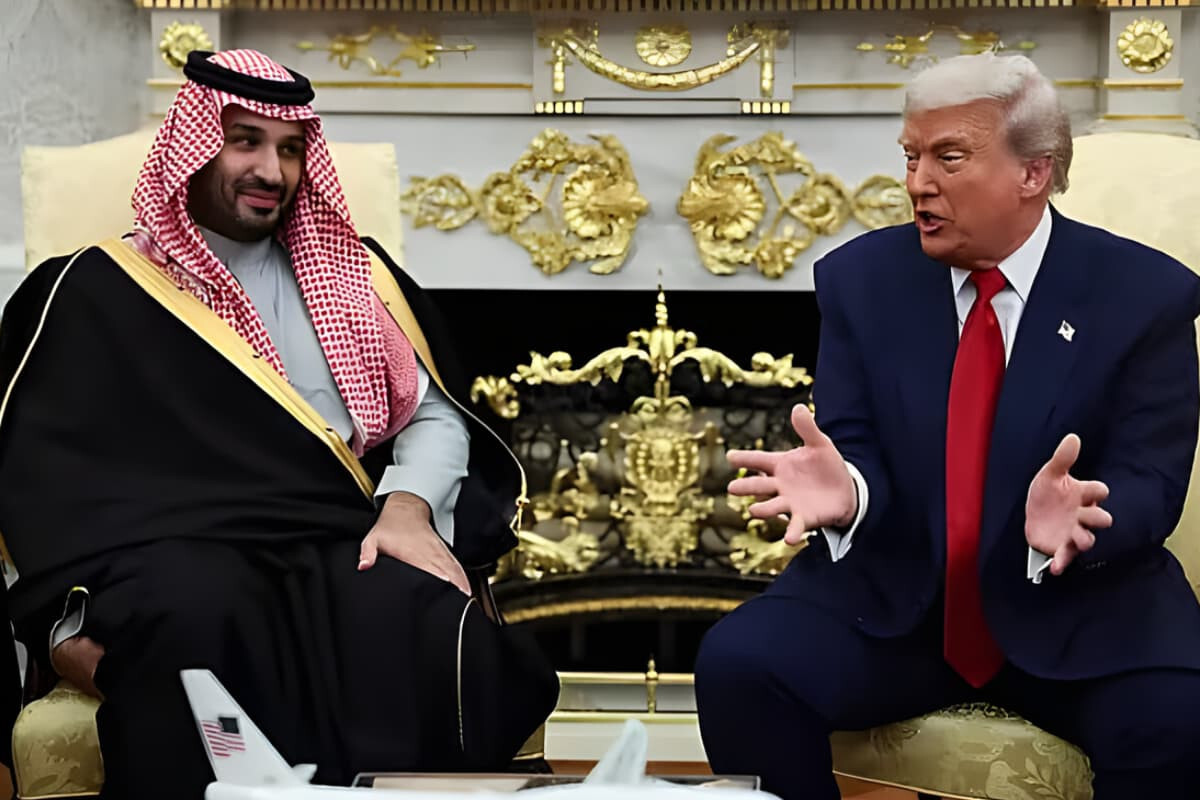
Tensions in the Middle East have reached unprecedented levels following a bold military strike by the United States against Iran. Multiple sources in Washington indicate that Saudi Arabia’s Crown Prince, Mohammed bin Salman, played a significant role in shaping President Donald Trump’s decision to launch the attack. At the same time, Israel, long considering Iran a national security threat, exerted additional pressure on the Trump administration to take decisive action.
According to intelligence sources, Crown Prince Mohammed personally contacted President Trump several times last month. Publicly, he has advocated for diplomatic solutions regarding Iran, yet behind closed doors he actively encouraged the United States to adopt a more aggressive stance. Concurrently, Benjamin Netanyahu publicly urged action against Iran, reinforcing the call for a military strike. These coordinated efforts ultimately influenced President Trump to authorise targeted airstrikes against Iranian military and leadership facilities.
Within the first hour of the operation, Iran’s Supreme Leader, Ali Khamenei, along with several senior officials, were reported killed. U.S. intelligence assessments suggest that Iran poses no immediate threat to the U.S. mainland over the next decade, yet President Trump proceeded with a daring and unprecedented course of action.
| Date | Event |
|---|---|
| 18 November 2025 | Meeting at the White House between Trump and Crown Prince Mohammed bin Salman |
| 19 November 2025 | U.S. Special Envoy Steve Whitkoff engages Iranian officials in Geneva discussions |
| 20 November 2025 | U.S. military conducts airstrikes on multiple Iranian targets |
| Post-attack | Iran retaliates with strikes against Saudi Arabia |
The Crown Prince voiced strong support for the U.S. strike, although he publicly announced that Saudi airspace or territory would not be used for the operation. This position was backed by his brother, Defence Minister Khalid bin Salman.
Protests erupted outside the White House in response to the strike. President Trump, addressing the public via a video message, stated: “What I am about to do, no president has ever done before. You now have a president who delivers what you want.”
Meanwhile, U.S. envoy Steve Whitkoff and Trump’s son-in-law, Jared Kushner, were attempting diplomatic discussions on Iran’s nuclear and missile programmes. Nonetheless, the combined pressure from Saudi Arabia and Israel accelerated Trump’s decisive action.
The strike marks a departure from the traditional U.S. “limited attack” doctrine, representing a broader and politically impactful military engagement. It leaves President Trump to navigate the considerable risks inherent in achieving political objectives through airpower, potentially reshaping the balance of power in the region.
This sequence of events highlights the complex interrelations among Iran, Saudi Arabia, the United States, and Israel, underscoring the fragile political and military equilibrium in the Middle East and raising concerns over potential future crises.




Comments