Sunday, 5th April 2026

Khabor Wala Desk
Published: 16th January 2026, 11:07 PM
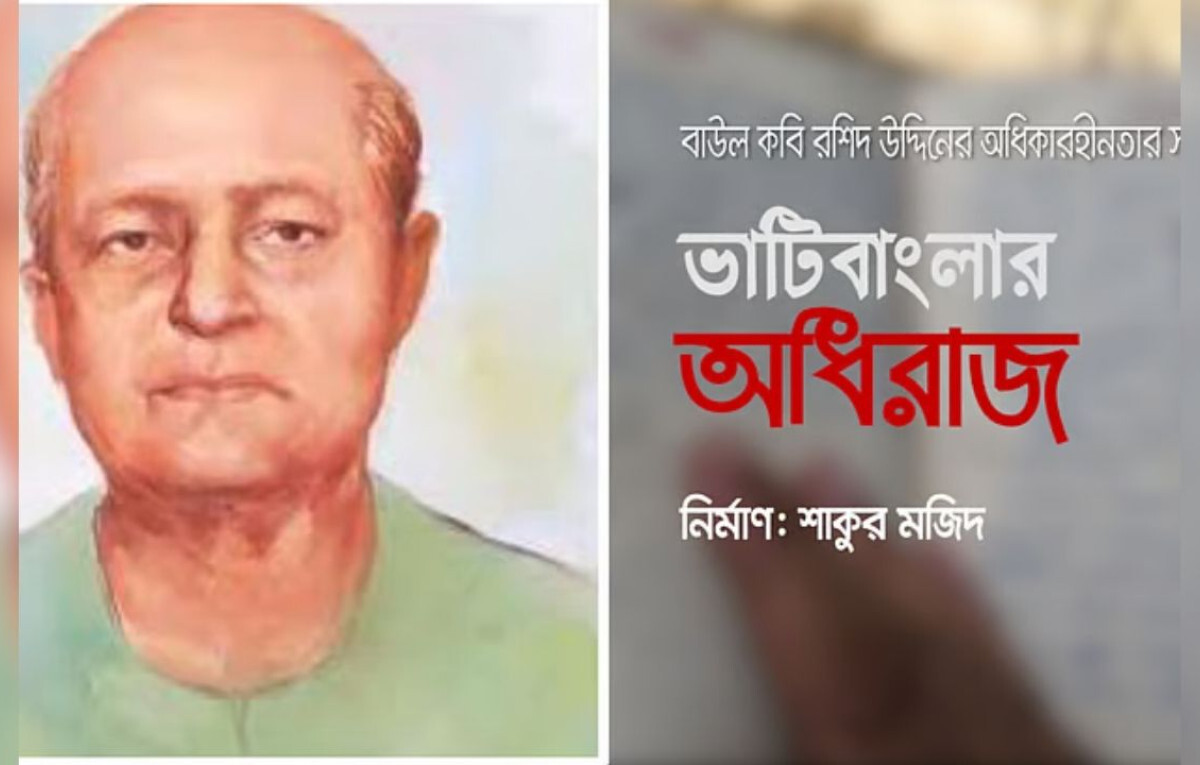
In the tapestry of Bengali folk music, many melodies have echoed through generations, yet the true architects of these verses often remain shrouded in obscurity. A compelling new documentary by filmmaker Shakoor Majid, titled The Sovereign of Bhati: In Search of the Dispossessed Baul Poet Rashid Uddin, seeks to correct a long-standing historical injustice. The film’s premiere was held at “View Finder” in Banani, Dhaka, on 21 January 2026, marking the 137th birth anniversary of the legendary yet forgotten mystic.
Born on 21 January 1889, in the village of Bahirchapra in Netrokona, Rashid Uddin was far more than a mere wandering bard. He was a Guru (mentor) to some of the most luminous figures in Bengali folk history, including Shah Abdul Karim, Ukil Munshi, and Jalal Khan. Despite his profound influence, his name has largely been erased from the mainstream narrative of folk heritage.
The documentary reveals a distressing truth uncovered during Majid’s visit to Rashid Uddin’s ancestral home on 11 November 2025. While examining the poet’s original handwritten manuscripts, his descendants shared a history of intellectual theft. They alleged that over the decades, numerous individuals took Rashid Uddin’s lyrics, altered a few notes, and published them under their own names.
The documentary provides evidence suggesting that several timeless classics, long attributed to others, were actually penned by Rashid Uddin. These include songs that define the spiritual psyche of the region:
“Ei Je Dunya Kishero Lagiya” (What is this world for?)
“Shua Chan Pakhi” (My beloved bird)
“Ma Go Ma Jhi Go Jhi”
“Dekbe Ki Shunbe Ki Ore O Mon Dhunda”
Currently, these songs are credited to various popular artists in media archives and textbooks. The film argues that this is not merely a mistake of memory, but a systematic failure to protect the intellectual property of rural mystics.
The following table illustrates the vast influence Rashid Uddin held over the “Golden Age” of Baul music:
| Disciple/Influence | Relationship | Legacy Status |
|---|---|---|
| Shah Abdul Karim | Direct Disciple | Nationally Celebrated |
| Ukil Munshi | Close Associate/Disciple | Iconic Folk Figure |
| Jalal Khan | Direct Disciple | Widely Recognised |
| Rashid Uddin | The Root / Mentor | Largely Forgotten |
The premiere was attended by notable intellectuals, including journalist Syed Ishtiaque Reza and Professor AKM Mazharul Islam of Shahjalal University of Science and Technology. Professor Islam emphasised that the documentary should be screened nationwide under government sponsorship to facilitate the “rebirth” of such a profound saint.
Shakoor Majid stated that his objective is twofold: to restore Rashid Uddin’s rightful place in history and to spark a conversation regarding the copyright and intellectual rights of folk creators. The film serves as a poignant reminder that while a song may belong to the people, the credit must always return to the soul that breathed life into the words.



Comments