Sunday, 5th April 2026

Khabor Wala Desk
Published: 10th December 2025, 7:01 AM
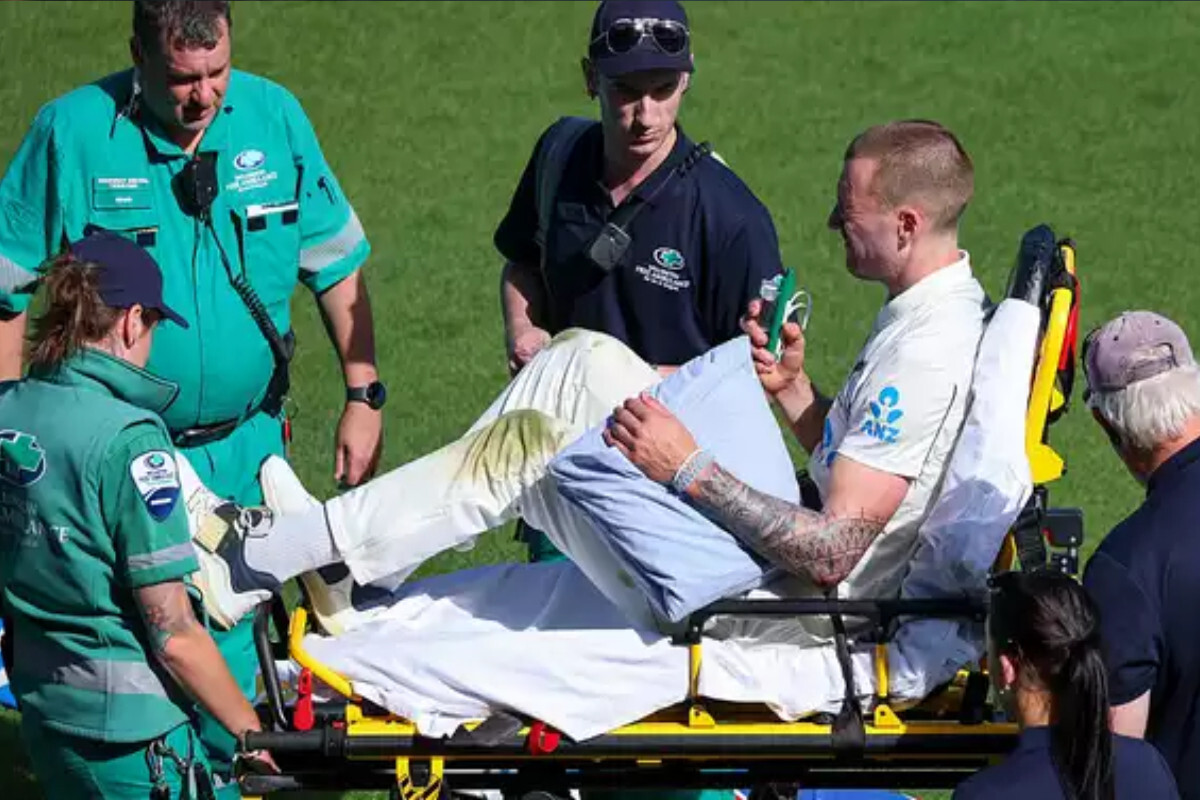
Blair Tickner’s eagerly awaited return to Test cricket ended in sudden heartbreak as the New Zealand seamer was stretchered off the field following a suspected shoulder dislocation on the opening day of the second Test against the West Indies at the iconic Basin Reserve.
Tickner, featuring in his first Test since early 2023, had initially made an emphatic impact with the ball, claiming four crucial wickets for just 32 runs and completely dismantling the West Indies’ top order. His early spell included trapping Brandon King and Kavem Hodge LBW, bouncing out Shai Hope, and uprooting Roston Chase’s leg stump—performances that had New Zealand fans hoping for a commanding position in the match.
However, the afternoon’s fortunes turned sharply in the 67th over when Tickner dived at fine leg in a desperate attempt to stop a boundary. The dive ended with him signalling immediate distress, prompting his teammates and medical staff to rush to his side. After a tense few moments, Tickner was carried off the field on a stretcher to an appreciative round of applause from the home crowd. The sight of the young seamer leaving the field prematurely sent shockwaves through the New Zealand camp.
This incident compounds New Zealand’s already pressing seam-bowling injury issues. Tickner had been drafted into the side following the unavailability of Matt Henry and Nathan Smith, making him the third frontline pacer to be sidelined mid-Test in the current series. The loss now leaves the team reliant on a trio of relatively inexperienced seamers—Jacob Duffy, Zak Foulkes, and debutant Michael Rae—to shoulder the burden of a demanding Test workload.
Before his injury, Tickner’s rhythm and accuracy had made him the standout bowler for the hosts. Yet with his absence, New Zealand face a peculiar scenario: part-time bowlers Glenn Phillips and captain Kane Williamson, each with only around 30 Test wickets, remain the team’s leading wicket-takers in the match. The situation is unprecedented in modern Kiwi cricket, reminiscent of the Kingston Test in 2012, when Boult, Southee, and Wagner debuted together, and the pace attack collectively had fewer than 50 Test wickets.
Despite dismissing the West Indies for just 205 in the first innings, New Zealand now confront the daunting prospect of navigating a Test with a depleted pace attack. The challenge mirrors the earlier fixture in Christchurch, where the visitors managed to secure a hard-fought draw despite New Zealand’s strong bowling display.
Tickner’s injury highlights the physical demands on fast bowlers and underscores the fragility of a seam attack that has been stretched to its limits. The Black Caps’ selectors will now need to rethink their approach, perhaps relying on inexperienced bowlers and part-timers, as they attempt to maintain control in the ongoing Test. For Tickner, what began as a triumphant return has instead turned into a bitter reminder of the risks inherent in elite-level cricket.




Comments