Sunday, 5th April 2026

Khabor Wala Desk
Published: 28th September 2025, 7:49 AM
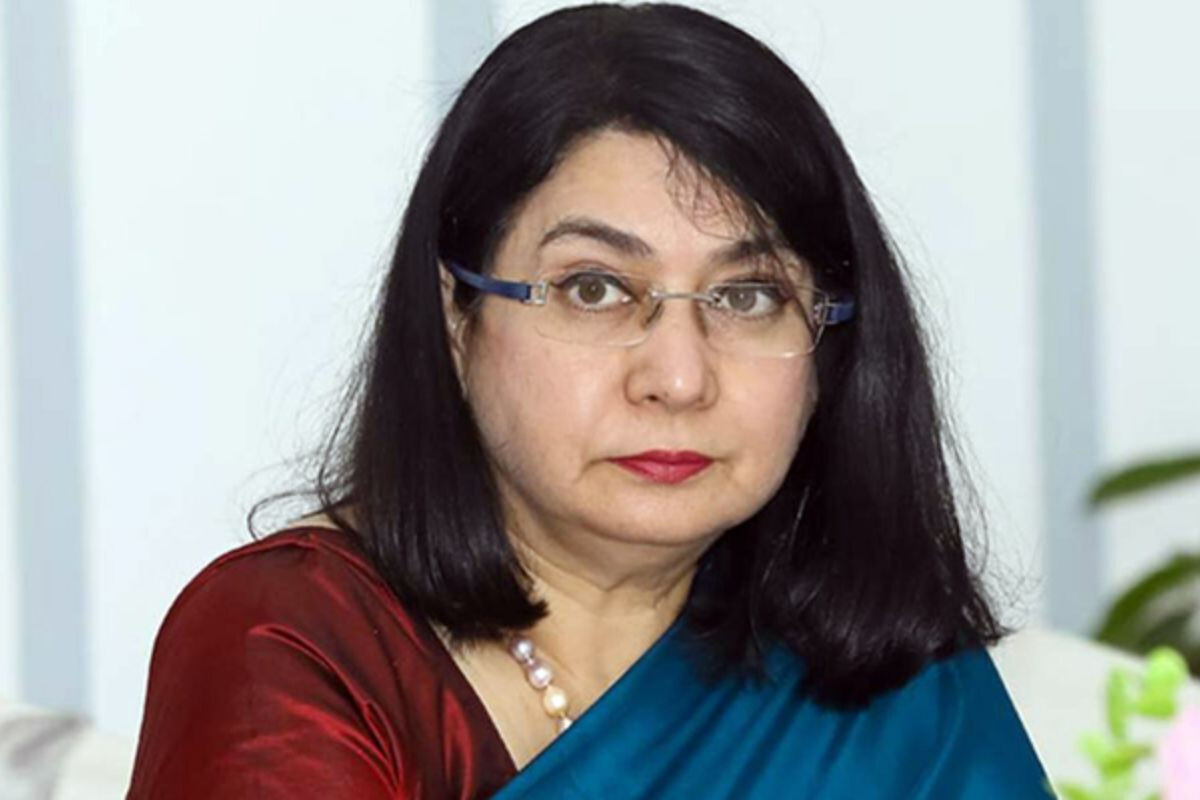
Dr Fahmida Khatoon, Executive Director of the Centre for Policy Dialogue (CPD), has emphasised that revitalising the economy requires prompt elections and the handover of responsibility to a political government. According to her, it is impossible to manage economic activities effectively under a weak caretaker government. She warned that the longer an interim administration remains, the more detrimental it becomes for the country’s economy.
Dr Fahmida made these remarks yesterday at an event focused on the banking sector.
Dr Fahmida noted that while the decline in some economic indicators has been halted over the past year, overall investment and employment creation remain stagnant, and poverty is increasing. She cautioned that if the current trajectory continues, it could lead to another crisis.
In response to a question on the importance of holding elections promptly to ensure economic stability, she said: “Elections are extremely important because the economy and politics are inseparably intertwined. During a caretaker period, no one is willing to invest. If we want to revive the economy, responsibility must quickly be handed over to a political government. This will restore both domestic and international confidence in Bangladesh. At present, there is a sense of mistrust, law and order is weak, mobs have arisen in various places, and there is no security for businesses or homes. Under such weak governance, conducting economic activity is impossible.”
On questions regarding bank account freezes, Dr Fahmida stated that indiscriminately freezing everyone’s accounts is harmful. Accounts of those actively engaged in production or employment generation, with no major allegations against them, should remain operational. She stressed: “The judiciary and authorities must analyse each case and allow legitimate business activities to continue as quickly as possible, to avoid harming the economy.”
Dr Fahmida highlighted the long-standing lack of governance in Bangladesh’s banking sector. Many banks were established for political motives rather than to support the economy. To address systemic weaknesses, Bangladesh Bank initiated banking sector reforms, including the merger of five weak banks. Asset assessments revealed that the majority of loans were non-performing.
| Aspect | Observation |
| Weak Banks | Five banks merged due to unsustainable operations |
| Non-performing Loans | Average 79% of loans are classified as bad |
| Reform Plan | Ten-year strategy under Bangladesh Bank supervision |
| Challenges | Varied operational structures, human resource capacity, corporate culture, and high NPL ratio |
| Central Bank Role | Success depends on independent decision-making by Bangladesh Bank |
Dr Fahmida explained that successful consolidation requires reducing costs and increasing capital. She acknowledged the challenges arising from differences in operational focus, workforce skills, and corporate culture across the merged banks. The biggest obstacle remains high levels of non-performing loans, which average 79%. To address this, a ten-year recovery plan is in place, implemented under Bangladesh Bank supervision. Failure could send negative signals, while success may provide a model for further bank mergers.
She stressed that sustainable economic management requires first correcting political governance. Without sound political practice, proper economic management is impossible. Dr Fahmida cited past examples where individuals diverted funds from the banking and energy sectors, including through large projects, often with direct political support.
She further highlighted that some banks had become like “bottomless pits,” and their consolidation required a sustainable system to ensure profitability. Continuous government bailouts are not a viable solution. Even after mergers, the extent of independence Bangladesh Bank will have in ensuring bank success remains a critical question. Although reforms through the Bangladesh Bank Ordinance and the Bank Companies Act have strengthened the central bank’s authority, she warned that without political will, even the strongest laws will be ineffective.
Dr Fahmida concluded that economic revival is impossible without both political stability and a proper legal framework, emphasising that politics and economics are inherently interlinked.


Comments