Sunday, 5th April 2026

Khabor Wala Desk
Published: 26th January 2026, 12:59 AM
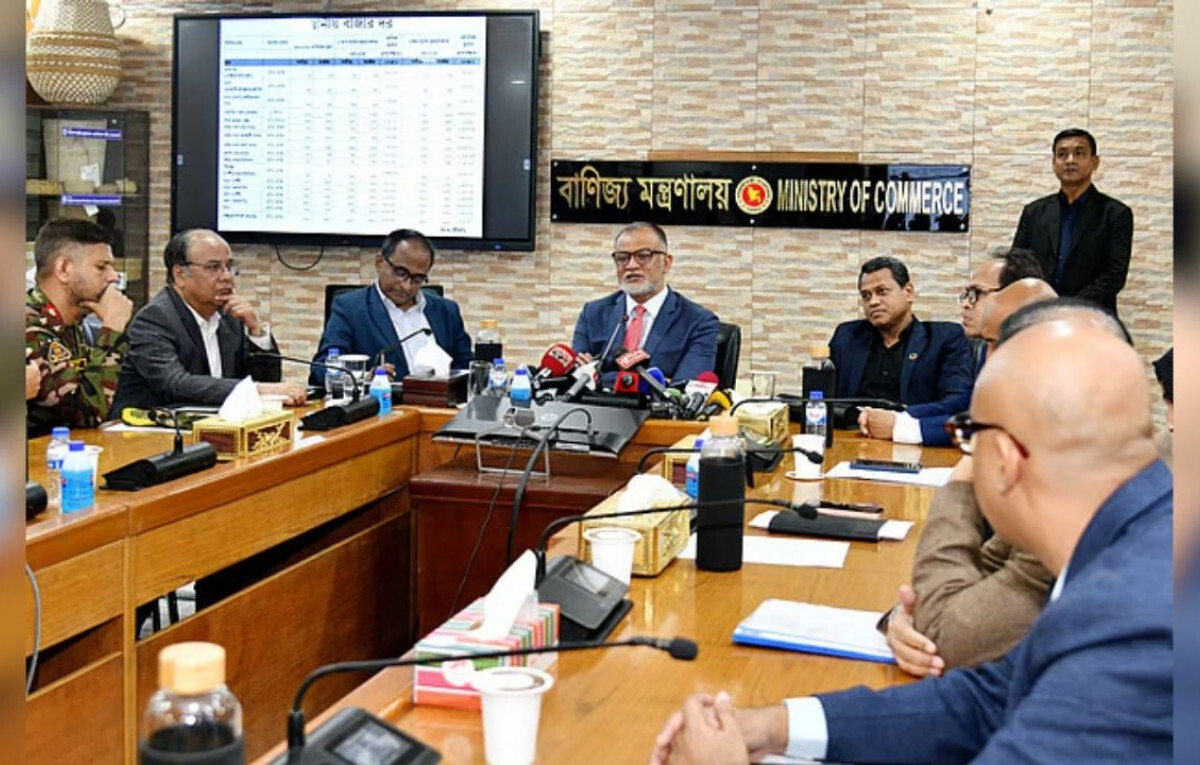
The interim government’s Commerce Adviser, Sheikh Bashiruddin, has provided a stark assessment of how “ill-conceived” infrastructure projects—most notably the Padma Bridge—have indirectly driven up the price of rice and other essential commodities. Speaking at the Secretariat on Sunday, 26 January 2026, following a task force meeting on essential goods, the Adviser argued that reckless spending and a staggering increase in national debt have destabilised the domestic market.
Addressing earlier remarks where he claimed the Padma Bridge project added 20 BDT per kilogram to the price of rice, Sheikh Bashiruddin explained the macroeconomic link. He noted that projects like the Padma Bridge, Karnaphuli Tunnel, and Payra Port were funded through massive debt that failed to generate expected returns.
“In 2008, the national debt stood at 2 trillion BDT. By the time the Awami League administration exited, it had ballooned to nearly 23 trillion BDT,” the Adviser stated. He argued that instead of creating a surplus, these debt-based expenditures created long-term liabilities. “Had this capital been diverted towards irrigation, fertilisers, and agricultural subsidies, our debt would be lower and our food security far more robust.”
| Economic Metric | 2008 Figures | 2026 Estimates / Status |
|---|---|---|
| National Debt | 2 Trillion BDT | ~23 Trillion BDT |
| Currency Depreciation | Baseline | 46% Devaluation (Last 15 Years) |
| Padma Rail Revenue | Projected: 1,400 Crore BDT | Actual: 26 Crore BDT |
| GDP Impact (Claimed) | +2% Growth Projection | Actual: Growth Stagnation/Decline |
| Import Stability | Moderate | 40% Increase in Food Imports |
The Adviser highlighted that the 46% devaluation of the Taka over the last 15 years necessitated substantial borrowing from the International Monetary Fund (IMF). This currency crisis directly impacts the cost of living, as the cost of importing fuel, fertilisers, and raw materials rises, eventually trickling down to the price of a plate of rice.
He pointed out the disparity between government promises and reality: “It was claimed the Padma Bridge would boost GDP by 2%. Instead, growth has dipped. The revenue from the rail link was expected to be 1,400 crore BDT, but it has yielded a mere 26 crore BDT.”
Despite the historical mismanagement, the Commerce Adviser offered a glimmer of optimism for the upcoming month of Ramadan. He noted that নিত্যপ্রয়োজনীয় (essential) food imports have increased by over 40% compared to last year.
“The supply chain is more stable now. Gas supplies are improving, the exchange rate has flattened, and the US dollar crisis has eased,” he remarked. Business leaders present at the meeting assured the task force that prices are currently on a downward trend and should remain stable during the holy month.
When questioned about recent reports regarding the construction of luxury flats for ministers amidst this economic strain, Bashiruddin maintained he was unaware of any such new projects, focusing instead on the immediate goal of market stabilisation.

Comments