Sunday, 5th April 2026

Khabor Wala Desk
Published: 21st October 2025, 11:34 AM
Ecuador has released a man who survived a US strike on a suspected drug-trafficking submarine, the country’s attorney general’s office announced on Monday, after finding no evidence that he had committed a crime.
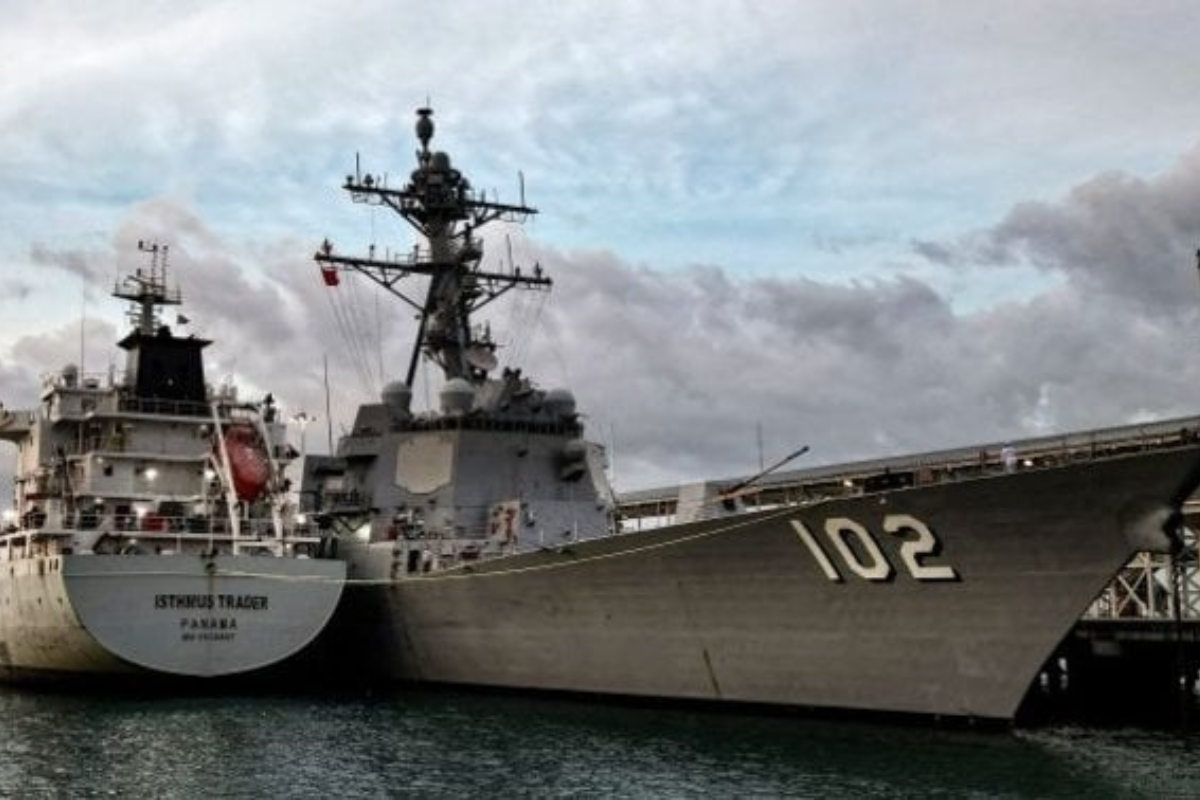
The United States has deployed warships to the Caribbean off the coast of Venezuela since August, targeting vessels that US authorities claim were transporting narcotics. These operations have killed at least 32 people and provoked strong reactions from several South American leaders.
US authorities repatriated the Ecuadorian man, who survived last week’s attack on what US President Donald Trump described as a “very large drug-carrying submarine” bound for the United States.
The Ecuadorian attorney general’s office said in a statement that there was “no report of a crime that has been brought to the attention of this institution” against the man, and therefore “he could not be detained.” They confirmed that he had “no pending cases against him.”
Another survivor of the same strike was sent to his native Colombia, where Interior Minister Armando Benedetti reported that the man had “arrived with brain trauma, sedated, drugged, breathing with a ventilator.” Authorities stated he would face prosecution.
Trump, in a social media post on Saturday, boasted about destroying the vessel and described those on board as “terrorists.” He claimed the submarine was carrying fentanyl and other drugs. The strike also resulted in the deaths of two crew members.
When asked why the two survivors were not taken to the United States for prosecution, Vice President JD Vance told reporters that “so long as they’re not bringing poison into our country,” he does “not really care” what happens to them.
Ecuador’s President Daniel Noboa reaffirmed his government’s commitment to combat drug trafficking. In a post on X, tagging Trump’s account, he stated: “Ecuador stands firm in the global fight against drug trafficking and illegal mining, challenges that demand unity among nations committed to peace and prosperity.”
Ecuador, historically one of Latin America’s safest nations, has experienced a sharp rise in violence in recent years. Positioned between Colombia and Peru — two of the world’s largest cocaine producers — Ecuador has become a key transit hub for narcotics.
Some regional leaders have sharply criticised the US strikes. Colombia’s President Gustavo Petro condemned the operation, describing it on X as a “failed strategy” to “control Latin America… and obtain cheap oil from Venezuela.”
Last month, Washington decertified Colombia as an ally in the fight against drugs. In response, Colombia halted arms purchases from the United States, its largest military partner.
Key Details of US Strike and Survivors
| Aspect | Details |
| Location | Caribbean, off the coast of Venezuela |
| Target | Suspected drug-trafficking submarine |
| US Deployment | Warships operating since August 2025 |
| Cocaine/Fentanyl | Allegedly on board; exact quantity unconfirmed |
| Casualties | At least 32 killed; two crew members died in strike |
| Survivors | Ecuadorian man repatriated; Colombian survivor sent home with brain trauma |
| US Officials’ Statements | Trump: Vessel destroyed, men were “terrorists”; Vance: Survivors’ fate not a priority if no poison is brought into US |
| Ecuador’s Position | Government determined to fight drug trafficking and illegal mining |
| Regional Reaction | Colombia’s President Petro criticised US strategy; halted arms purchases |
The incident underscores ongoing tensions over US anti-drug operations in Latin America and highlights Ecuador’s evolving role as both a transit hub and active participant in regional counter-narcotics efforts.


Comments