Sunday, 5th April 2026

Khabor Wala Desk
Published: 14th March 2025, 7:11 AM
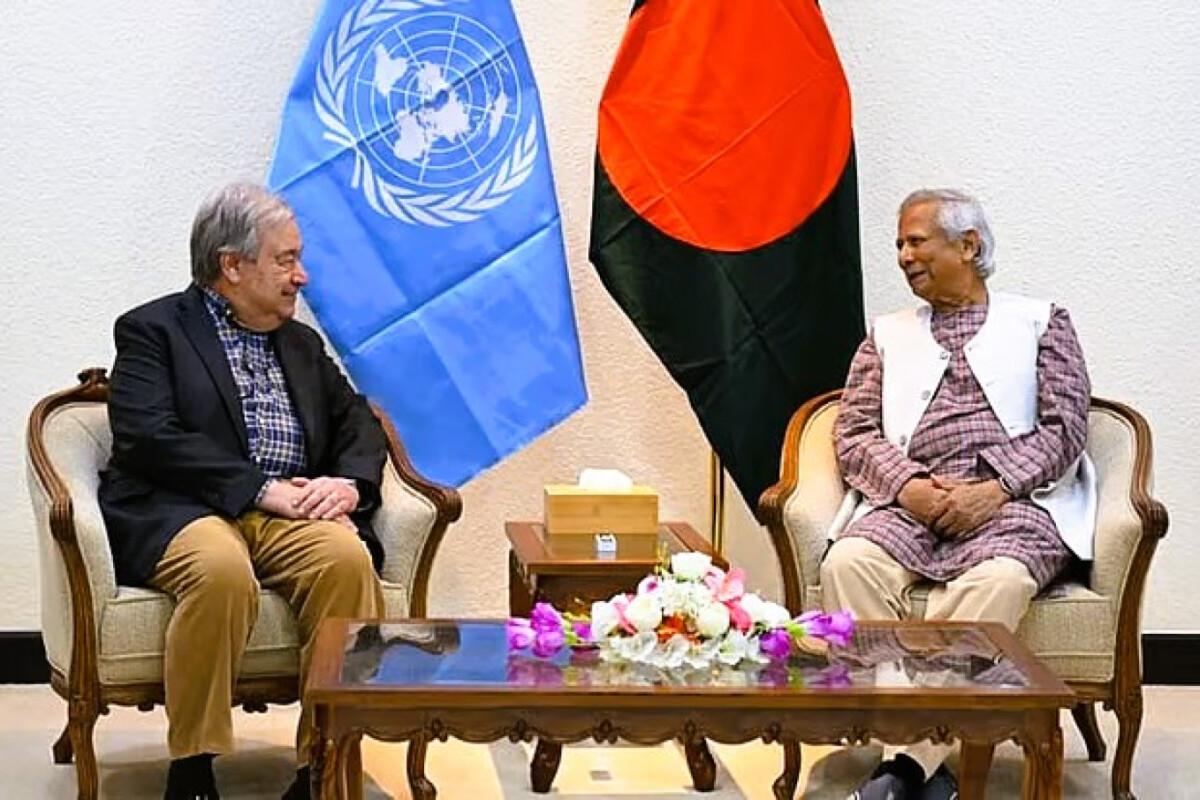
Chief Adviser Prof. Muhammad Yunus informed United Nations Secretary-General António Guterres today that Bangladesh could hold elections this December if political parties agree to “a short package” of reforms. However, if they opt for “a larger package,” the polls would take place by June next year.
The Chief Adviser said this during a one-hour meeting at his office in Tejgaon, Dhaka, where discussions focused on Bangladesh’s reform process, and the Rohingya crisis.
Prof. Yunus updated Guterres on the progress of six reform commissions set up by the interim government. He noted that around 10 political parties have already submitted their responses to commission reports. Once consensus is reached, the parties will sign a July Charter, which will serve as a blueprint for democratic transition and key reforms in political, judicial, electoral, administrative, anti-corruption, and police sectors.
Expressing his support for these efforts, Guterres said, “We wish you all the best. Whatever we can do, let us know.”
The UN chief also stressed the importance of these reforms leading to a free and fair election and a “real transformation” of Bangladesh, which underwent a political changeover in August last year following a mass uprising that ousted former Prime Minister Sheikh Hasina.
“I know the process of reforms can be complex,” Guterres added.
Guterres also expressed solidarity with Myanmar’s forcibly displaced Rohingya population, calling their plight one of the worst humanitarian crises in the world.
“I’ve never seen a population so discriminated against. The international community is forgetting the Rohingya,” he said, raising concerns over shrinking humanitarian aid for the 1.2 million Rohingya refugees in Bangladesh’s Cox’s Bazar.
“(Aid) cuts are a crime,” he added, criticizing Western nations for increasing defense spending while reducing humanitarian aid globally.
Prof. Yunus urged the UN chief to support the dignified return of Rohingyas to Myanmar’s Rakhine State and to mobilize adequate food and humanitarian assistance in the meantime.
“We are trying to raise attention to the plight of the Rohingya people. The world should know how they are suffering. There is a feeling of frustration,” Yunus said.
Guterres pledged to push for a resolution to the Rohingya crisis and mobilize international support for their cause.
The UN chief also praised Bangladesh’s contributions to global peacekeeping efforts, emphasizing their critical role in stabilizing conflict zones.
“Bangladesh peacekeeping forces are very important for us,” Guterres said. Their engagements have been extraordinary, and Bangladesh acts on the frontline for a fairer world, he said.
Prof. Yunus echoed this sentiment, saying Bangladesh’s military gains valuable global exposure through these peacekeeping missions.
“The deployments mean a lot to us,” he added.
Geopolitical issues, the status of SAARC (South Asian Association for Regional Cooperation), and Bangladesh’s relations with neighboring countries were also discussed.
Prof. Yunus emphasized his efforts to revive the SAARC forum and expressed Bangladesh’s interest in joining ASEAN to expand trade and investment opportunities with Southeast Asia.

Comments