Sunday, 5th April 2026

Khabor Wala Desk
Published: 6th December 2025, 3:40 AM
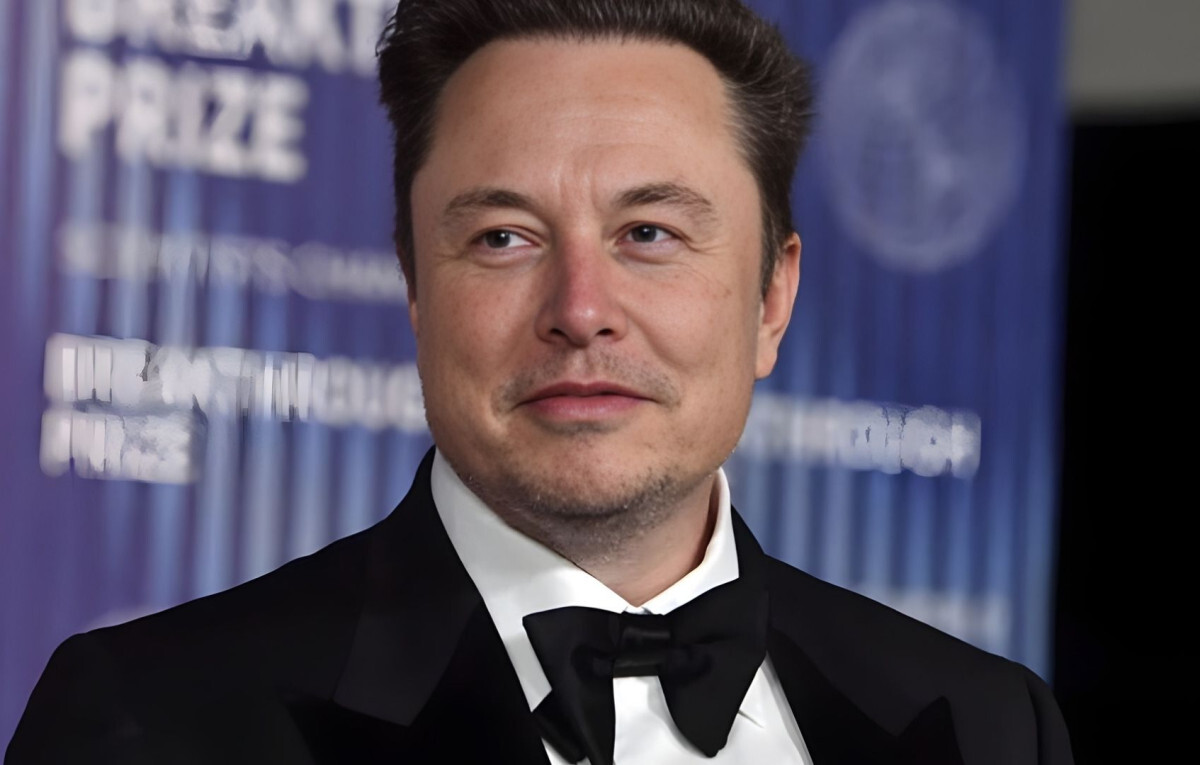
Speaking at the US–Saudi Investment Forum in Washington DC, technology magnate Elon Musk delivered one of his most provocative predictions to date, arguing that paid human work may cease to be a necessity within the next 10 to 20 years. Musk, the chief executive of Tesla and SpaceX, suggested that the rapid evolution of robotics and artificial intelligence will fundamentally reshape the global labour market, transforming the very meaning of employment.
During a session focused on the future of the economy, Musk claimed that the world is heading towards a period in which work becomes optional rather than mandatory. According to him, people will take up employment only for personal fulfilment, curiosity or enjoyment, not because they need wages to survive. In his vision, labour as the backbone of economic production will be replaced almost entirely by highly advanced machines.
Musk argued that millions of robots and AI-driven systems will operate future industries, from manufacturing and logistics to scientific research, public services, and administrative functions. Humans, he said, will contribute only in areas where creativity or emotional engagement are desired rather than required.
Pointing to Tesla’s long-term business strategy, he stated that nearly 80 per cent of the company’s future value could come from its humanoid robot programme, Optimus. Musk described Optimus as a general-purpose, human-shaped robot capable of performing a wide range of physical tasks—from factory work to domestic chores—potentially outperforming humans in speed, accuracy and endurance.
In addition to forecasting a radical transformation of work, Musk revived the concept of “universal high income,” a more ambitious version of the well-known universal basic income. Under this idea, governments would provide every individual with a comfortable level of income regardless of employment status, as machines generate abundant wealth. Musk even suggested that future societies might gradually drift towards a post-money economy, where basic needs—such as housing, healthcare, food and education—are universally guaranteed without financial anxiety.
He argued that technological abundance, not scarcity, will define the next phase of human civilisation. People may devote more time to art, exploration, research, community projects, or leisure, relying on automated systems for material production.
However, many economists and labour researchers remain sceptical of Musk’s projections. Critics argue that such predictions overlook complex political, social and ethical factors that shape economic realities. They maintain that even with advanced AI, equitable distribution of wealth will depend on policy decisions, governance structures, tax reforms and regulations—none of which can be guaranteed simply through technological progress.
Some warn of potential risks: rising inequality, job displacement without adequate safety nets, concentration of power in large technology corporations, and geopolitical tensions fuelled by automation. While automation may increase productivity, they caution that without strong democratic oversight, benefits may not reach the broader population.
Despite the controversy, Musk’s remarks reignited global debate about the future of work. As automation accelerates, governments, businesses and social institutions face mounting pressure to prepare for an uncertain—but undeniably transformative—technological era.




Comments