Sunday, 5th April 2026

Khabor Wala Desk
Published: 5th February 2026, 9:46 AM
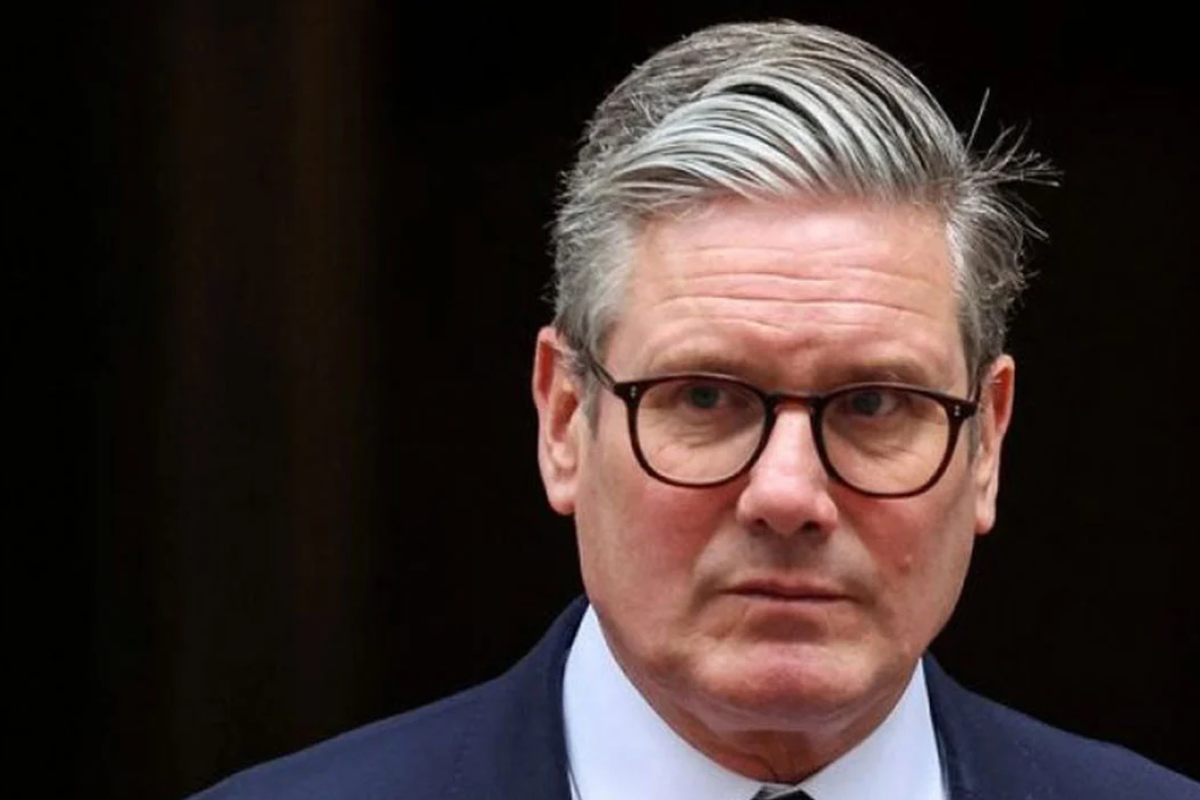
Although Sir Keir Starmer has no personal association with Jeffrey Epstein, the aftershocks of the disgraced financier’s global scandal have reached Downing Street with destabilising force. Political analysts warn that the controversy has become a severe test of leadership for the British Prime Minister, whose authority is already strained by a succession of domestic crises. With party discipline fraying and public confidence wavering, Mr Starmer’s premiership is increasingly described by commentators as precarious, hanging on the ability of his government to demonstrate rigorous accountability.
The contrast across the Atlantic is striking. In the United States, Epstein’s victims continue to press for justice amid what they describe as institutional inertia in Washington. While investigators maintain that Epstein died by suicide in custody in 2019 before standing trial, the renewed release of documents has revived scrutiny of elite social networks and raised uncomfortable questions about power and impunity. Yet few public figures in America have paid a substantial political price. By comparison, Britain’s political culture has proved more responsive to public anger, with Parliament, the media and internal party mechanisms exerting sustained pressure on those implicated by association.
The controversy has been magnified by the global circulation of Epstein-related documents, with references and allegations reverberating across Europe, from Scandinavia to Central Europe. This breadth underscores the reach of Epstein’s social orbit and the extent to which reputational damage now crosses borders. In the United Kingdom, the public mood hardened further after the King stripped his brother, the former Prince Andrew, of royal duties and privileges, signalling that proximity to the scandal carries tangible consequences.
The most acute pressure on the Prime Minister stems from the case of Peter Mandelson, a former senior minister and diplomat. Mr Starmer acknowledged in Parliament that he had been aware of Mr Mandelson’s past association with Epstein before appointing him as ambassador to Washington, a decision that has since proved politically ruinous. Newly disclosed material suggests that Mr Mandelson maintained contact with Epstein even after the latter’s 2008 conviction in Florida. More damaging still are allegations—now under formal criminal investigation—that confidential information linked to the 2008 global financial crisis may have been improperly shared, potentially benefiting Epstein’s financial associates. Mr Mandelson has resigned from the House of Lords and the Labour Party, issued a public apology, and expressed contrition to victims.
Meanwhile, in the United States, former Treasury Secretary and ex-Harvard president Larry Summers faced reputational fallout following the disclosure of emails with Epstein containing offensive remarks; he withdrew from public engagements and apologised. Former President Donald Trump has sought to close down renewed debate, with the Department of Justice indicating no new charges are forthcoming and no indictments arising from the latest disclosures, notwithstanding the presence of untested allegations within the released material.
Key Contrasts in Political Consequences
| Aspect | United Kingdom | United States |
|---|---|---|
| Institutional response | Parliamentary scrutiny; party discipline active | Limited new legal action |
| Political consequences | Senior resignations; leadership pressure | Reputational damage, few formal penalties |
| Public accountability | Strong media and public pressure | Divided public reaction |
| Royal or symbolic actions | Withdrawal of titles and privileges | No comparable symbolic sanctions |
| Ongoing investigations | Active criminal inquiries in related cases | No new prosecutions announced |
Beyond the immediate scandal, the episode has aggravated three long-running pressures in British public life: the erosion of trust in elite networks, the politicisation of ethics in appointments, and the fragility of leadership in an era of rapid turnover at the top. Britain has changed prime ministers repeatedly over the past decade, cultivating a political culture in which new leaders are judged not only on policy outcomes but on their resilience under scandal. Mr Starmer’s recent parliamentary performances, widely criticised as defensive, have emboldened murmurs of a leadership challenge within Labour.
Ultimately, the Epstein affair has become less about direct culpability and more about standards of judgement. For Mr Starmer, the question is whether his government can restore credibility through transparent inquiry and decisive action. Failure to do so may transform a reputational storm into an existential threat to his premiership.


Comments